


Can students afford to lose more school days?
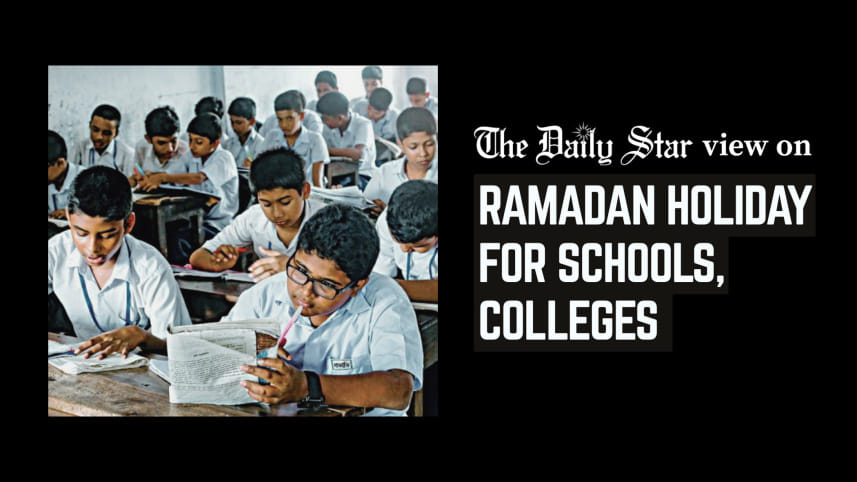
At a time when our education sector is struggling to recover from repeated disruptions, the announcement of long Ramadan and Eid holidays in schools and colleges does raise concerns. According to the 2026 academic calendar, schools and colleges are to remain closed during Ramadan from February 18 till March 26, combining Ramadan, Eid-ul-Fitr, and summer holidays, before reopening on March 29 (Sunday). While religious and cultural observances are integral to our national life, the prolonged closure at this point demands careful review.
Over the past one and a half years, students across the country have endured frequent disruptions in academic activities caused by political unrest, administrative chaos, climatic events, forced teacher resignations, and other issues. Clashes between students at several institutions have also caused disruptions. The cumulative effect has been devastating, particularly for students from disadvantaged backgrounds who lack access to private tutoring, digital resources, or supportive learning environments at home.
 For all latest news, follow The Daily Star's Google News channel.
 Last year’s HSC results starkly revealed the deterioration in college education standards. The pass rate was only 58.83 percent, the lowest in 21 years, and more than five lakh students failed. While school enrolment rates may have improved over the years, the learning outcomes remain alarmingly weak. A significant proportion of primary students struggle with basic literacy and numeracy. At the secondary level, rote learning continues to dominate classrooms, while critical thinking and problem-solving skills remain underdeveloped.
In this context, prolonged closures in educational institutions will have serious negative consequences. Long holidays inevitably reduce the time for meaningful teaching and assessment. As a result, teachers are forced to rush through syllabi, and students rely more on guidebooks and coaching centres, leaving learning outcomes weak and uneven. The government must therefore carefully reassess whether such duration and structure of breaks truly serve the best interests of students. If it is serious about achieving quality education for all, learning outcomes must guide policy decisions. Education must be treated as a national priority, and the government must commit to genuine systemic reforms required to strengthen the sector.
Comments