19 killed as Nepal’s youth demand change

Police crackdown on protesters also injures 400 as they try to storm parliament complex
By Agencies
  • Young protesters demand an end to 'institutionalised' corruption
  • Curfew imposed near parliament, other key areas; army deployed
  • Home minister resigns on 'moral grounds'; UN calls for probe  

Police clashed with young protesters yesterday in Kathmandu, killing at least 19 people as the unrest in the Himalayan country over the social media ban turned into a wider protest against endemic corruption.

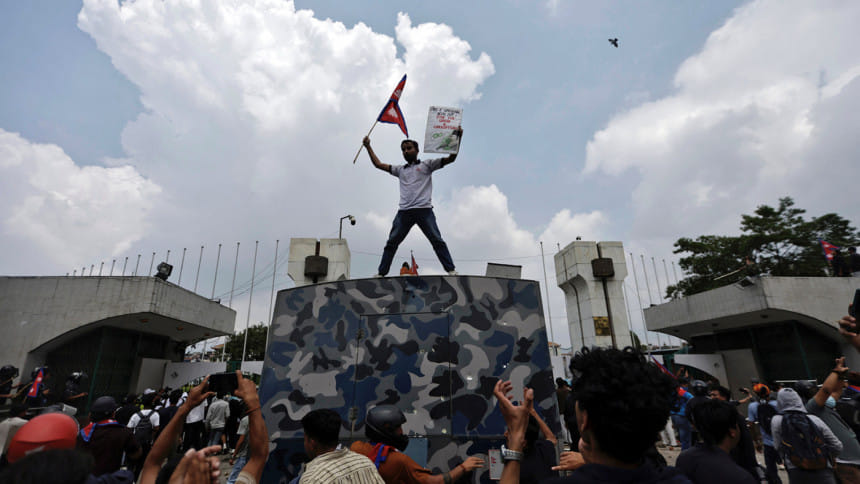
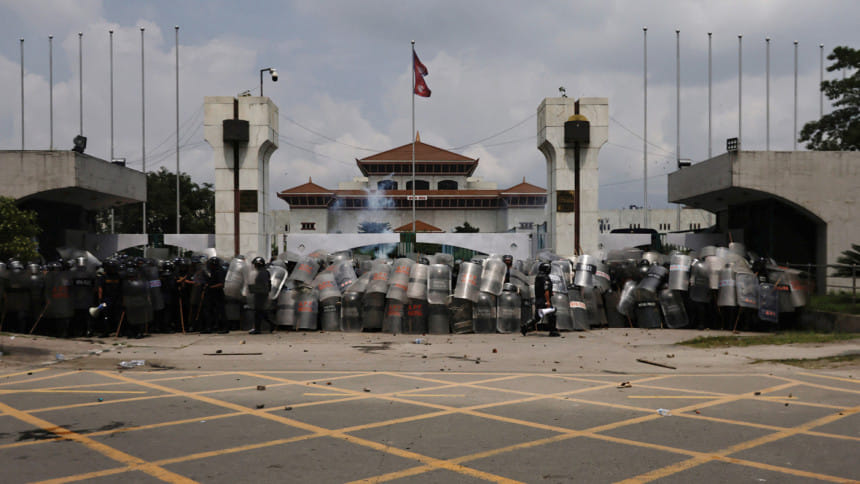
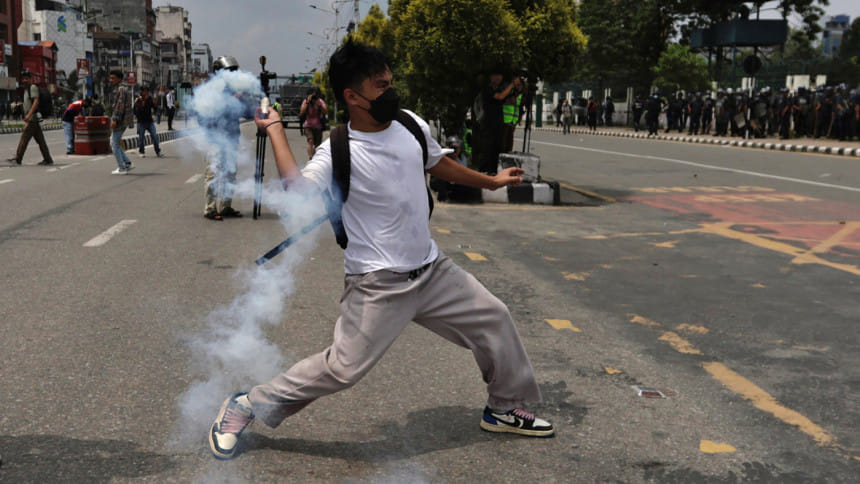
Some protesters tried to storm the parliament complex by breaking through a barricade, a local official said, setting fire to an ambulance, and hurling objects at riot police.

Police responded with rubber bullets, tear gas, water cannon and baton-charges.

Nepal's Home Minister Ramesh Lekhak resigned yesterday on "moral grounds". He tendered his resignation to Prime Minister KP Sharma Oli during a Cabinet meeting at the prime minister's residence in Baluwatar yesterday evening.

According to The Kathmandu Post, at least 400 people were injured in the clashes.

"The police have been firing indiscriminately," one protester told the ANI news agency. "(They) fired bullets which missed me but hit a friend who was standing behind me. He was hit in the hand."

Nepali media reported police used live fire against the protesters, a claim AFP could not immediately verify.

"Sixteen people have sadly died," Shekhar Khanal, spokesman for the Kathmandu valley police, told AFP. "About a hundred are under treatment, including police."

However, a Reuters report put the death toll at 19.

The district administration imposed a curfew in several key areas of the city, including the parliament, the president's residence and Singha Durbar, which houses the prime minister's office.

Ekram Giri, a parliamentary spokesperson, said some protesters had entered the parliament premises but not the main building, and had been driven out by police.

Some of the demonstrators had climbed over the wall into the parliament premises, and its gate was vandalised.

nepal_protest_1.jpg
Photo: Reuters

Dr Dipendra Pandey of the National Trauma Centre said that protesters were brought in with critical condition, some with gunshot wounds to the head and chest, reports The Kathmandu Post.

Organisers of the protests, which spread to other cities in the Himalayan country, have called them "demonstrations by Gen Z". They say the protests reflect young people's widespread frustration with the government and anger over its policies.

"We were triggered by the social media ban, but that is not the only reason we are gathered here," said student Yujan Rajbhandari, 24.

"We are protesting against corruption that has been institutionalised in Nepal."

Another student, Ikshama Tumrok, 20, said she was protesting against the "authoritarian attitude" of the government.

"We want to see change. Others have endured this, but it has to end with our generation," she told AFP.

A government decision to block access to several social media platforms, including Facebook, last week has fuelled anger among the young. About 90 percent of Nepal's 30 million people use internet.

Officials said they imposed the ban because platforms had failed to register with authorities in a crackdown on misuse, including fake social media accounts used to spread hate speech and fake news, and commit fraud.

nepal_protest_3.jpg
Photo: Reuters

Police had orders to use water cannons, batons and rubber bullets to control the crowd and the army has been deployed in the area of the protests to bolster law enforcement officers, Muktiram Rijal, a spokesperson for the Kathmandu district office, told Reuters.

He said the curfew will remain in force until 10:00pm local time (1615 GMT.

Police said similar protests were also organised in Biratnagar and Bharatpur in the southern plains and in Pokhara in western Nepal.

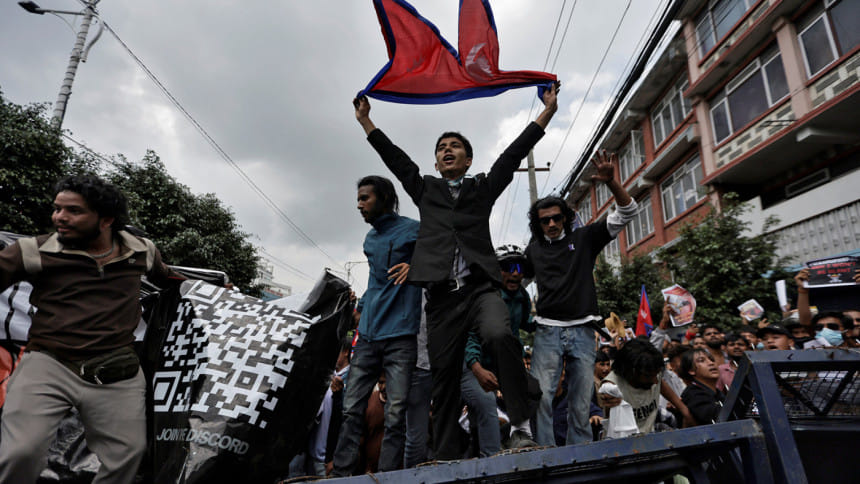
Thousands of young people, including students, many in their school or college uniforms, joined the protest earlier yesterday.

nepal.jpg
Protesters carrying Nepal’s national flag stage try to storm the complex. Photo: AFP

Many carried the national flag and placards with slogans such as "Shut down corruption and not social media", "Unban social media", and "Youths against corruption", as they marched through Kathmandu.

There have been several corruption cases reported in the last few years involving ministers, former ministers and high-profile officials.

Since the ban, videos contrasting the struggles of ordinary Nepalis with the children of politicians flaunting luxury goods and expensive vacations have gone viral on TikTok, which is still operating.

"There have been movements abroad against corruption, and they (the government) are afraid that might happen here as well," said protester Bhumika Bharati.

Nepal's social media shutdown comes as governments worldwide, including the US, EU, Brazil, India, China and Australia, take steps to tighten oversight of social media and Big Tech due to growing concern about issues such as misinformation, data privacy, online harm and national security.

Critics say many of these measures risk stifling free expression, but regulators say stricter controls are needed to protect users and preserve social order.

nepal_protest_4.jpg
Photo: Reuters