


How modern wind turbine technology can reshape Bangladesh’s energy future
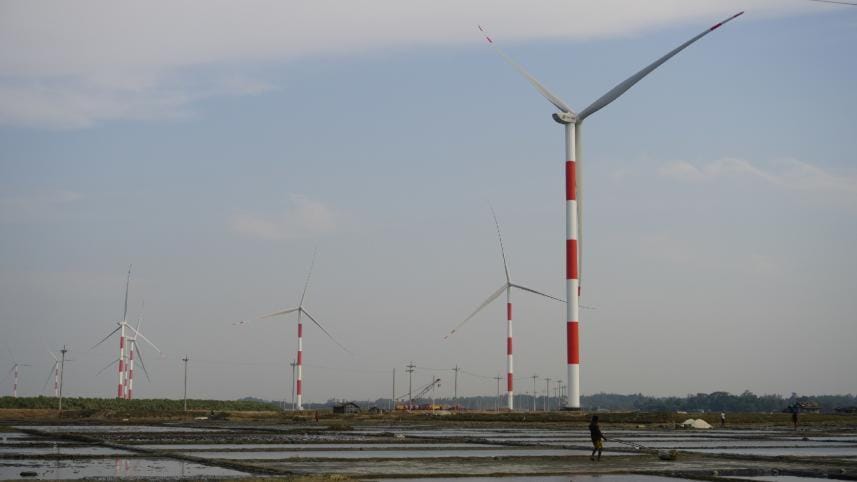
Bangladesh, a developing economy heavily reliant on fossil fuels, is entering a critical phase of its energy journey amid rising energy demand and environmental challenges. The power sector, being the largest consumer of natural gas in the country, not only contributes to greenhouse gas emissions but also incurs high energy import costs, as evident in the 13.86 percent surge in LNG imports in FY2024-25. Thus, wind power is becoming a more practical choice as Bangladesh moves towards renewable energy sources.
Bangladesh has considerable potential for wind energy resources. However, the development of the wind energy sector is experiencing slow growth due to a challenging regulatory situation and investment uncertainty. Currently, there are 15 wind energy projects either in operation or in the planning stages, with a total capacity of 777.902 MWp, according to the SREDA. Bangladesh’s first commercial wind power plant began its full-scale operation in March 2024. This marked a significant milestone for Bangladesh in its transition towards renewable energy. Other projects are underway, including the 100 MW Anwara Wind Power in Chittagong, which is currently in the planning stages. This is expected to make to a significant contribution to the country’s renewable energy capacity by 2035. In addition, the 100 MW Wind Power Plant in Matarbari is set to be completed in 2026. Plans are also underway for wind power plants with lower capacity in Chandpur and Feni.
 For all latest news, follow The Daily Star's Google News channel.
 The wind energy sector is undergoing a major transformation due to recent revolutionary innovations in the way wind is harnessed for electricity generation, which also reduces costs. The recent developments are not only translating into higher efficiencies, but they are also bringing wind power closer to accessibility and affordability than ever. Optimisation of turbines for aerodynamic performance is highlighted as a key research theme in wind technology today. An increase in turbine efficiency is achieved via improved blade design and materials used. New blade designs provide an optimal aerodynamic profile that captures more wind energy over a wider range of wind speeds.
Notable advancements such as variable pitch and twist technologies enable blades to continuously vary to changing wind conditions over their entire span, optimising performance, minimising mechanical loads, and increasing their longevity. At present, the shift towards advanced materials is crucial. Today, most turbine blades are made of composite materials such as fibreglass and carbon fibre with good strength-to-weight ratios. This progress enables building larger blades that can capture more wind energy whilst also extending operational lifetime and reducing maintenance costs. Modern wind turbine towers now exceed heights of 160 metres, enabling the deployment of large rotors with diameters of up to 150 metres that can access stronger and more consistent winds at higher altitudes. Meanwhile, the use of segmented blades, which can be converted into long blades to improve the energy capture per turbine, reduces the cost of transportation, a key factor in lowering installation costs.
One way to overcome limitations associated with regions with lower wind resources, such as Bangladesh, is a concept called “Low Wind”, which uses special turbines for low wind speeds. The goal of this design is to produce power when traditional windfarms are not doing so, and eliminate the “cannibalisation effect” responsible for making electricity less expensive when suddenly all farms produce renewable energy at the same time, thus driving down prices. Low Wind turbines are identified by their very-long blades to optimise power at the lowest wind speed, and low cut-out speed around 12–13 metres per second.
Bangladesh can take advantage of the state-of-the-art technologies in wind turbines to enhance its renewable energy capacity. According to a detailed study conducted in 2018 by the US Department of Energy’s National Renewable Energy Laboratory, Bangladesh has wind energy potential of at least 30,000MW. The coastline is 710 km, and in the southwest lies the Sundarbans mangrove and in the southeast the Saint Martin’s coral island. Since fixed wind turbines cannot be installed in the Bay of Bengal, floating wind farms can be positioned further out from shore. If we build seaside windfarms, for instance, using 153-metre blades, we could supply energy to a lot of homes simultaneously. Residential areas are best suited for bladeless turbines. They are easily manageable because they are small, quiet, and less demanding.
The adoption of wind power is expected to speed up the development trajectory for Bangladesh, as it will not only be a green energy source for households but also a powerhouse for the national economy. The growing wind power industry is also expected to nurture a new generation of trained workers, from engineers and maintenance staff to power managers, another factor contributing to the country’s development. Also, the environmental benefits of wind power go far beyond simply reducing carbon emissions. With an increasing demand and production of wind farms, the country will rely less on imported fossil fuels. This shift promises much cleaner air because burning coal releases toxic pollutants such as sulphur dioxide and nitrogen oxides, which conventional power plants continuously spew into the atmosphere daily.
Although there may still be some reliance on traditional sources in the short term, every step forward is crucial. The wind energy sector’s coming-of-age can mean a solid green footing for a cleaner future and a better way of life in Bangladesh. In fact, we can lead the way in the deployment of advanced wind technologies with floating offshore farms and low-wind turbines, thus creating energy independence, new industries, and sustainable economic development, while ensuring a large reduction in national emissions.
Sudeepto Roy is research associate at the South Asian Network on Economic Modeling (SANEM). He can be reached at sudeeptoroy232@gmail.com.
Israt Hossain is director at SANEM. She can be reached at hossain.israt698@gmail.com
Views expressed in this article are the author's own.
Follow The Daily Star Opinion on Facebook for the latest opinions, commentaries, and analyses by experts and professionals. To contribute your article or letter to The Daily Star Opinion, see our guidelines for submission.
Comments