


Bangladesh’s economic roadmap: Priorities for the next government

In January 2025, a 12-member task force led by Dr K.A.S. Murshid submitted a report to Bangladesh’s interim government, outlining an urgent reform agenda to address the nation’s economic crisis and chart a path towards sustainable development. The 550-page document represents not just a diagnosis of current challenges but also a call to action—identifying opportunities that can yield results quickly while laying the foundations for deeper structural transformation. This short article presents the core recommendations of the report.
The report emerges from a critical moment in Bangladesh’s history. The country faced mounting economic pressures: depleted foreign exchange reserves, inflation hovering above 10 per cent, a fragile banking sector haemorrhaging from non-performing loans, and growing social unrest. Yet within this crisis lies opportunity—a rare window to review the glaring shortcomings of the past and an opportunity to implement vital reforms that have been stalled for decades. These reforms are needed to help build a more equitable and prosperous society and to ensure that our most valuable resource—the entrepreneurship and creativity of the people—is put to good use.
Restoring Macroeconomic Stability
The task force identified macroeconomic stabilisation as the most urgent priority. Bangladesh’s economy has been buffeted by external shocks—COVID-19, the Ukraine war, and global commodity price spikes—but domestic mismanagement has deepened the crisis. Food inflation has come down from around 10 per cent in January 2025 to 7 per cent currently, while non-food inflation remains elevated at around 9 per cent. In the meantime, the taka has depreciated by 35–40 per cent against the dollar since 2022, and the tax-to-GDP ratio languishes at just 8.67 per cent, the lowest in South Asia. A huge amount—perhaps as much as 50 per cent of total tax revenue—is used up in interest payments, a consequence of large fiscal deficits that must be financed by increased borrowing.
The report challenges conventional wisdom by recommending an accommodative monetary policy rather than ultra-tight measures. The Bangladesh Bank has raised policy rates to 10 per cent and has kept them fixed, to be adjusted once inflation comes down substantially. This approach has made domestic production costlier without adequately addressing supply-side inflation drivers. Instead, the task force advocates moderate monetary tightening combined with aggressive supply-side interventions: improving food logistics, building strategic reserves of essentials such as diesel and fertiliser, and streamlining import procedures to prevent artificial scarcity.
On the fiscal front, the report calls for immediate revenue mobilisation reforms. The government must broaden the tax base, digitise revenue collection, and eliminate discretionary exemptions that have eroded fiscal capacity. The National Board of Revenue requires fundamental restructuring, moving away from arbitrary enforcement towards a transparent and predictable tax administration that encourages, rather than punishes, compliance. It is important to point out that the private sector has time and again expressed its unhappiness with the operations of the NBR. Effective NBR reforms could, by themselves, send out a strong signal of commitment to economic recovery and reform.
Trade Diversification as a Survival Strategy
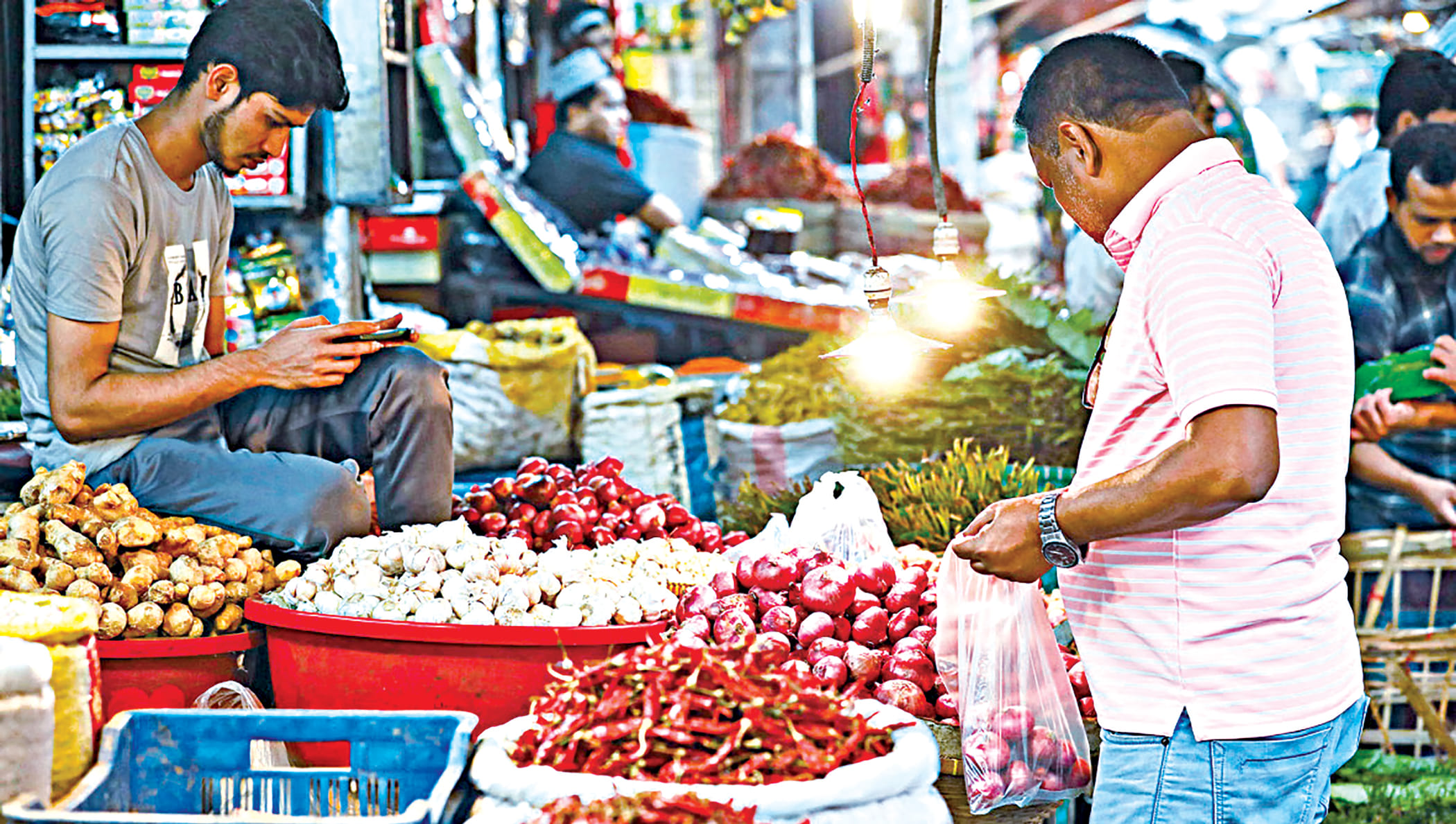
Bangladesh’s export basket remains dangerously concentrated, with ready-made garments accounting for over 80 per cent of merchandise exports. As the country graduates from Least Developed Country status by 2026, it will lose preferential market access that has sustained this model. The task force presents export diversification not as an aspiration but as an existential necessity.
The report recommends “cherry-picking winners”—identifying the most promising non-RMG exporters among the approximately 500 firms currently exporting over one million dollars annually and providing them with targeted policy, financial, and technical support. This approach, successful in East Asian economies, contrasts with scatter-shot incentive schemes that dilute resources without generating champions. Government support to promising exporters must, however, be linked to performance, which may initially be defined in terms of increased exports and later, in terms of improved productivity.
Critical reforms include unifying trade and investment policy to eliminate the anti-export bias embedded in the high-tariff regime, establishing a fund for backward-linkage industries, and aggressively pursuing bilateral and multilateral free trade agreements. The report emphasises economic diplomacy: broadcasting Bangladesh’s capabilities through satellite television, social media, and cultural exports in Chinese, Hindi, Korean, Japanese, English, and Russian to build soft power and market access.
Particularly promising is the recommendation to revitalise Special Economic Zones. Despite considerable political attention, SEZ progress has been meagre. The task force had urged selecting a handful of zones for focused development, addressing bureaucratic hurdles and infrastructure deficits that have deterred investors. The interim government appears to have taken this recommendation seriously. Success in even two or three zones could create demonstration effects that unlock broader FDI inflows. One may note that so far less than 5 per cent of investment in SEZs is from FDI.
Pilot Projects That Signal Change
Understanding that comprehensive reform takes time, the task force identifies several pilot initiatives that can generate quick wins while building momentum for deeper transformation:
Public Hospital Reform: Select one Dhaka hospital for comprehensive overhaul—appointing qualified administrators instead of generalist bureaucrats, establishing a governing board with stakeholder representation, and implementing real-time monitoring dashboards that give youth and citizen groups access to performance data and complaint mechanisms. User feedback would drive continuous service improvements.
Automatic Traffic Signals: This seemingly simple measure has been sabotaged repeatedly by vested interests. Implementing automatic traffic signalling in Dhaka, using advanced technology and data analytics, would demonstrate that the government can break entrenched interests while providing immediate congestion relief.
Single-Operator Bus Franchise: Consolidate Dhaka’s chaotic bus system under a single franchise operator, shifting drivers from commission to fixed salaries. This would enhance safety, reliability, and service quality while establishing a model for urban transport modernisation.
Reviving the Buriganga River: The task force declares the Buriganga “on the brink of extinction” and urges emergency legislation to enable immediate action. Leadership should come from a dedicated minister with strong technical and legal support, backed by judicial dispensations to counter sabotage from vested interests. Restoring this river would signal an unambiguous commitment to environmental protection.
Institutional Innovation: New Bodies for New Challenges
Beyond pilot projects, the report recommends establishing new institutions to address systemic weaknesses:
A Regulatory Reform Commission would continuously monitor and streamline the rules that are strangling business growth. Current over-regulation—excessive paperwork, arbitrary discretion by customs and revenue officials—deters both domestic entrepreneurship and foreign investment. This commission would flag inefficiencies and advocate reforms that balance facilitation with necessary safeguards.
A Center of Global Excellence in STEM, engineering, and ICT/AI should be established within five years, learning from institutions like the Indian Institutes of Technology.
This would attract international scholars while upgrading local research capacity, positioning Bangladesh as a regional knowledge hub.
The report also proposes fundamentally reassessing Biman Bangladesh Airlines, which has failed to meet modern standards despite five decades of operation. If performance targets are not met, a new carrier—Bangladesh Airways—should be created using half of Biman’s assets but managed by independent, world-class operators. Competition between the two airlines would improve service or result in market exit for the non-performer. Rethinking implementation hurdles has emerged as the single most critical institutional barrier to development. The task force report discusses this threadbare, particularly in the context of infrastructure projects that are systematically bedevilled by time and cost overruns, poor quality delivery, and inadequate scrutiny due to weak monitoring and implementation. A priority task would be to create a new, high-calibre, and truly independent monitoring and evaluation entity as a fully autonomous, well-resourced body.
Transforming Key Sectors: Agriculture, Energy, and Digital Infrastructure
Agriculture remains vital despite its declining GDP share, employing much of the workforce. The task force advocates a dual strategy: deploying cutting-edge technologies like precision agriculture, improved crop varieties, and smart financial instruments, while strengthening both traditional and modern extension systems. Corporate agriculture and modern retail have assumed importance. These developments require careful management to balance innovation with smallholder protection.
Energy policy requires urgent correction. Misguided quick rental policies have created overcapacity, enormous capacity charges, and crushing financial burdens. The report recommends closing rundown plants, transitioning to renewable energy (particularly solar installations on degraded tea garden lands and unused public property), and establishing diesel security reserves to buffer against global price volatility. Regional power trade offers significant potential and should be pursued immediately.
Digital infrastructure holds transformative potential. The task force urges immediate withdrawal of the 20 per cent supplementary tax and 2 per cent surcharge on internet services, recognising internet access as a “social good” essential for equitable development. Current taxation exceeding 50 per cent directly contradicts commitments to inclusive growth. Bridging the digital divide through lower data costs, affordable smartphones with appropriate safeguards, and fostering domestic ICT industry growth would accelerate digital economy development across education, health, agriculture, and governance.
Banking Sector: From Crisis to Resilience
Bangladesh’s banking crisis demands immediate attention. Non-performing loans have surged, weak governance has enabled massive capital flight, and public confidence has eroded. The report advocates strengthening both private and state-owned banks, upholding Bangladesh Bank independence, and creating a conducive legal environment with professional accounting standards.
Critically, the task force recommends removing political influence from banking—dismantling vested interest groups that have weakened the sector for decades. Single individuals or groups should not control multiple banks. No new licences should be issued on political grounds. Using public funds to recapitalise poorly governed banks must stop. An exit policy for troubled banks should protect depositor interests while preventing moral hazard. It is noted that very few bank defaulters have been brought to book or have had their assets confiscated—which signals weak commitment and excessive leniency. A major constraint is the weak legal system that seems unable to restrain massive corruption.
Social Protection and Inequality: Building Human Capital
The current social protection framework is fragmented, inadequately funded, and plagued by targeting inefficiencies. The report advocates streamlining budget allocations, consolidating overlapping programmes around a lifecycle-based framework, and focusing resources on the most marginalised groups. Priority should go to old-age allowances, disability benefits, mother and child schemes, and food security interventions.
A crucial but under-emphasised recommendation is expanding urban coverage, bringing vulnerable urban households under the Public Food Distribution System (PFDS). This requires developing an official database of poor and vulnerable households nationwide through community participation, validated by sample checks and updated periodically. Modern blockchain technology could ensure efficient, seamless distribution. In the medium term, we need to put in place a comprehensive, universal food distribution system. We can recall that even in the sixties, seventies, and eighties we had universal rationing. There were many problems with the Ration System as it was then known. Now we are much better resourced and already have a huge, complex, cumbersome, wasteful, and inefficient social safety net programme. Better planning with the use of digital technology And blockchains and modest additional resources could transform the PFDS into a powerful social safety net vehicle. The conversion of the National Identity Card into an open data platform like the Aadhar Card in India could make PFDS distribution far more effective and efficient, including opening up many other avenues of change, particularly in the sphere of banking, finance, and credit access.
On inequality, the task force advocates not just progressive taxation but ensuring equitable access to quality public services at reasonable cost—a seemingly simple goal that has proven maddeningly difficult. Structural constraints related to gender, rural-urban divides, asset distribution, and social class require an intergenerational approach: building human capacities in health and education while opening markets and non-market spaces to broader participation. It would be a great step forward if all public sector appointments and transfers were based on merit and not on patronage and bribery.
Infrastructure
Huge infrastructural gaps continue to hamstring investment. A major focus on energy and connectivity is required with a view to spur growth, especially in the economic zones and in more remote areas. However, a major deficit in policy has been the neglect of investment in operation and management required to protect and preserve the value of infrastructural investments already made. This problem has now assumed urgency given the recent seismic activity experienced in the country, especially in Dhaka. Major initiatives need to be taken urgently to safeguard both public and private infrastructure, keeping in mind that protection will be far less expensive compared to rebuilding, should an earthquake of higher intensity strike.
Youth Engagement: From Protest to Partnership
The July uprising demonstrated youth potential as agents of change. The report proposes channelling this energy through youth councils and forums with community service mandates, linked to city councils and municipalities. Mentorship and capacity development programmes outside formal education would encourage activism promoting better public services.
Youth representatives suggested using cartoons and anime to target young people with sensitive messages on mental and sexual health—creative approaches that resonate with digital-native generations. This youth engagement framework represents a fundamental reimagining of citizenship, moving from passive recipients of services to active participants in governance.
The next government must encourage platforms that create space for youth participation and civic action to give purpose and motivation to a vast, restless section of society that has high aspirations but relatively limited avenues to meet those.
Conclusion: Seizing the Opportunity
The task force characterises the current moment as crucial. If not firmly grasped and appropriately leveraged, Bangladesh risks being set back by years, if not decades. The recommendations represent not wishful thinking but pragmatic, actionable measures drawn from successful experiences in comparable economies.
Success requires shared responsibility between government officials and citizens. Strong leadership and strategic planning can transform challenges into opportunities, fostering a prosperous, equitable, and resilient nation. The alternative—returning to crony capitalism, weak governance, and the drift that characterised the previous era—would betray the hopes and aspirations of millions who will be electing a new set of leaders into power, hoping against hope that this time, finally, we will be able to move away from the catastrophic ‘business as usual’ approach of the past.
The path forward is clear. What remains uncertain is whether Bangladesh’s leaders and citizens possess the will to walk it. The task force has provided the map. Now comes the harder part: the journey itself. We highly recommend the establishment of a results-oriented consultative mechanism through which stakeholders will help identify reform priorities from the report, refine some of the proposals if needed, and monitor progress in implementation.
The Task Force Report on Re-strategising the Economy and Mobilising Resources for Equitable and Sustainable Development was submitted to Chief Adviser Professor Muhammad Yunus in January 2025. The full report is available at https://gedkp.gov.bd/task-force-report-on-re-strategising-the-economy-and-mobilizing-resources-for-equitable-and-sustainable-development/
Dr KAS Murshid is an economist and the Chairman of the Task Force on Re-strategising the Economy and Mobilising Resources for Equitable and Sustainable Development.
Send your articles for Slow Reads to slowreads@thedailystar.net. Check out our submission guidelines for details.