


'Nothing left to feed them': Flood-hit haor farmers forced to sell cattle at a loss

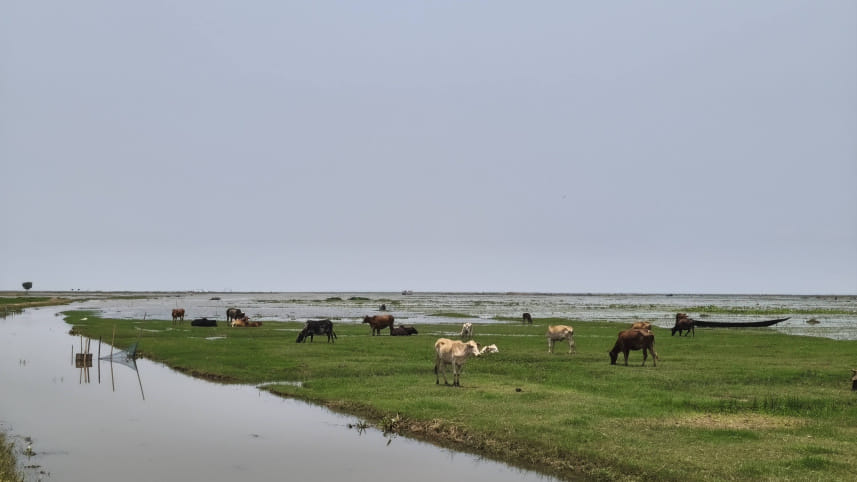
When Darach Mia sold two of his cows last week, he received Tk 45,000 each for animals he had valued at around Tk 65,000. He still has four more cattle left, and plans to sell those too.
“The straw has all rotted. There is nothing left to feed them,” said the farmer from Bhuksimoil area in Kulaura upazila of Moulvibazar, within the Hakaluki Haor region.
 For all latest news, follow The Daily Star's Google News channel.
 Across the haor belt in Sylhet, a severe fodder shortage caused by prolonged flooding and widespread crop submersion is forcing farmers to sell cattle at sharply reduced prices, in some cases nearly half their expected market value.
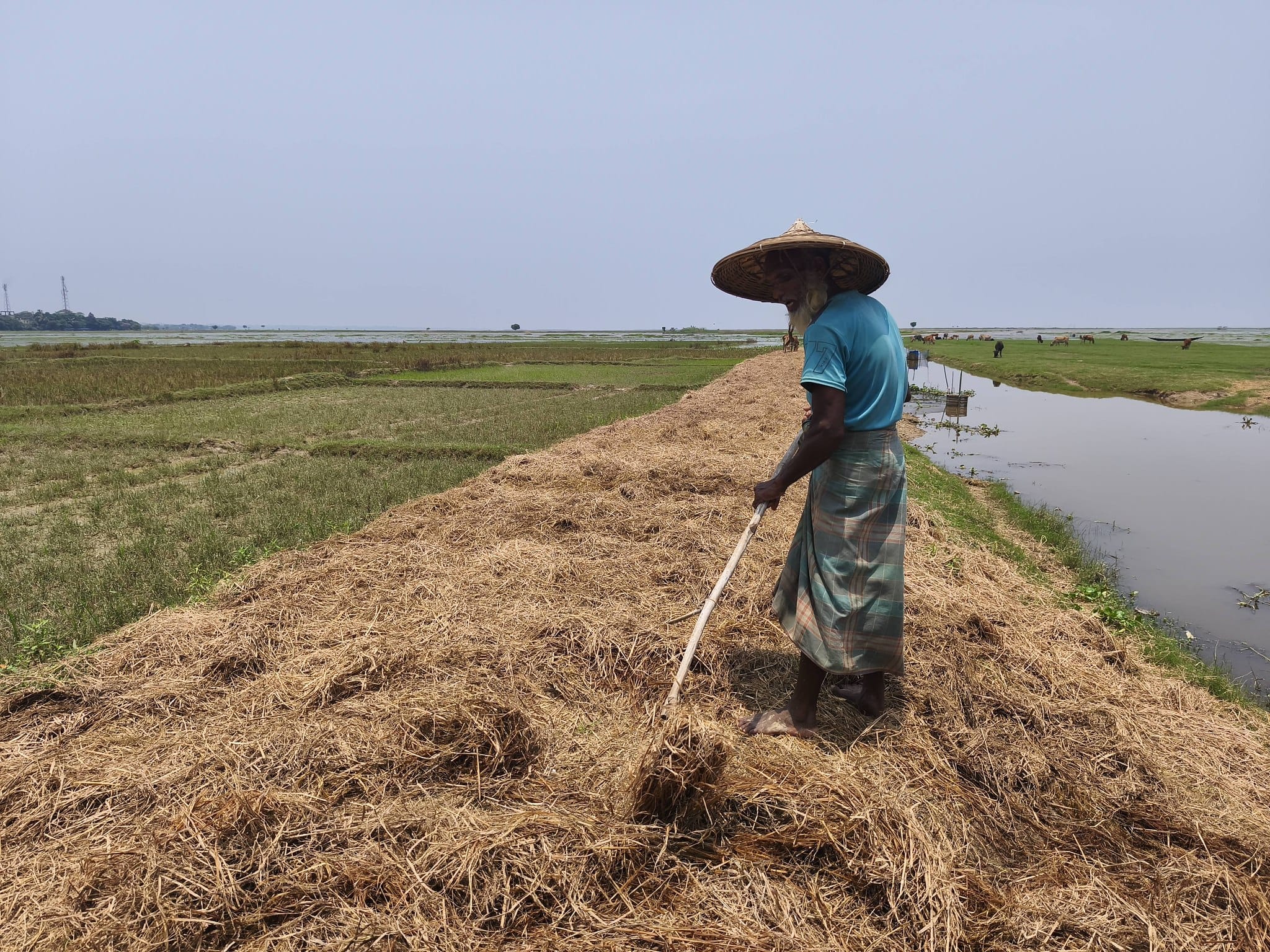
With paddy fields submerged and straw stocks destroyed after weeks of flooding, livestock owners say they are being pushed into distress sales before the animals lose further weight and fetch even lower prices.
The scale of the losses is already visible.
Abdul Sattar, from the same area, sold four cows worth around Tk 200,000 for Tk 150,000 — and has yet to receive the payment.
“The wholesaler said he will pay later,” he said, looking towards the five cattle he still owns.
“Let’s see what Allah does with these.”
Another farmer, Motin Mia, sold three cows valued at Tk 85,000 for only Tk 60,000.
“It’s not just me. Thousands of households are facing the same situation,” he said.
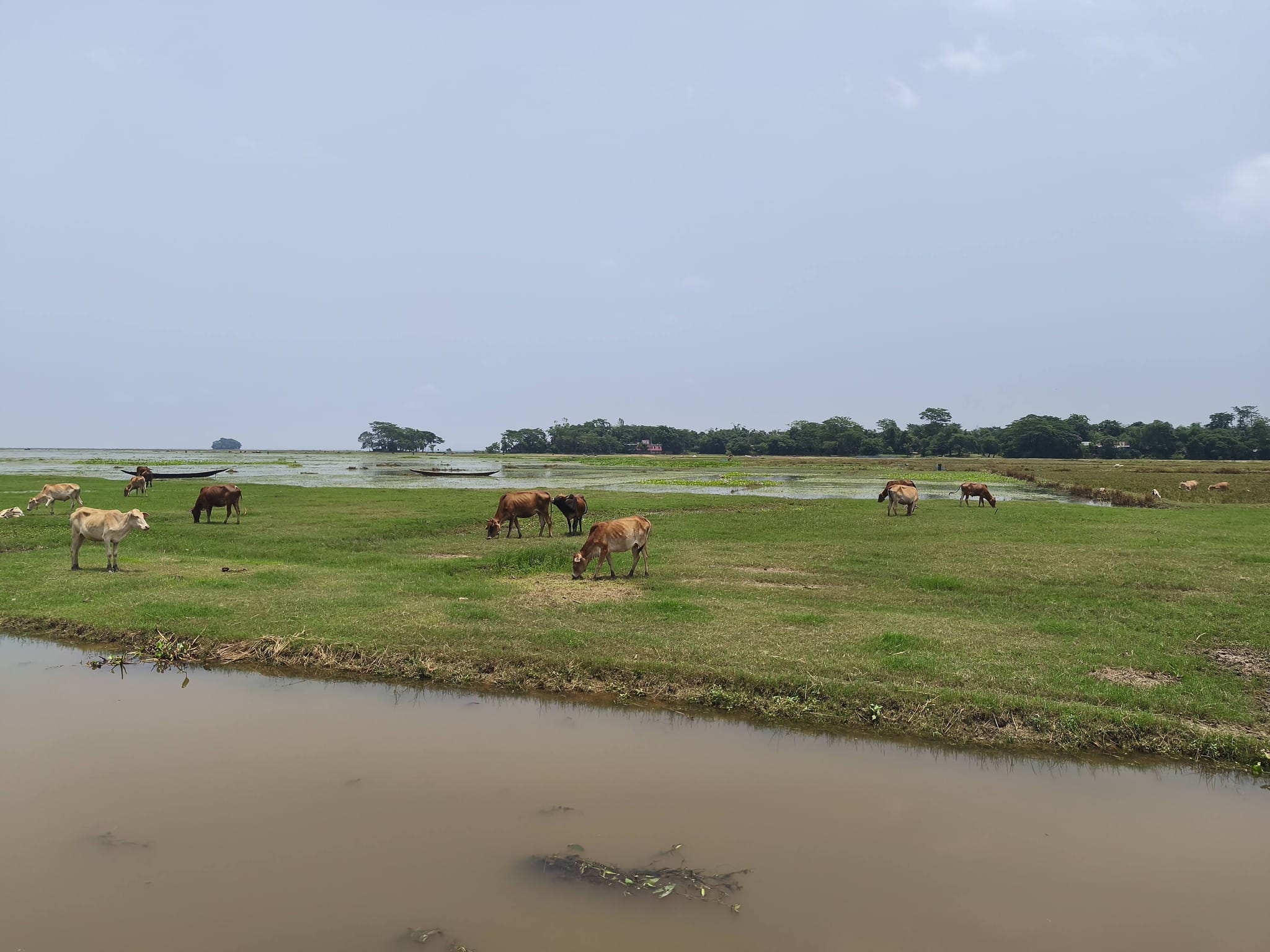
Farmers said the crisis stemmed from near-total crop destruction across several haor areas this season. Many reported being able to harvest only a small portion of their land before floodwaters submerged the rest. The remaining straw, left underwater for days, has largely decomposed.
On Wednesday afternoon, several farmers in Darach Mia’s village were seen spreading damaged paddy and decomposed straw beside roads in an attempt to salvage fodder for their livestock.
Carrying a bundle of blackened, foul-smelling straw tied with rope, Darach Mia said, “Even cows won’t eat this. But I am taking it home anyway. If there is nothing else, maybe they will somehow manage.”
Shattar Mia, an established farmer from Ikram Haor in Habiganj’s Baniachong upazila, said he has been advising both large and marginal farmers to sell their cattle immediately rather than wait.
“If cows are not fed properly, they will lose weight and become bony. Prices will fall even further,” he said.
“At least if they are sold now, farmers will get something. For now, the priority is survival.”
Development worker Saidul Islam, who has been working in Baniachong, described the situation as alarming. “Many farmers told me the cattle cannot be saved. They are struggling to save themselves,” he said. “If people cannot arrange food for their families, how will they feed their livestock?”
He warned that the consequences of large-scale cattle sales could extend far beyond immediate financial losses.
“Cattle are central to the haor economy and to household nutrition,” he said.
“Milk from cows is one of the main sources of nutrition for poor families, especially children. If farmers sell these animals now, many will not be able to buy new ones later. It could disrupt the entire agricultural cycle of the haor region.”
Asked how they would manage cultivation next season without cattle, many farmers had no clear answer.
Some spoke of taking loans, while others said they would decide when the time came.
However, Abu Zafar Md Ferdous, director of the divisional livestock office in Sylhet, said reports of falling cattle prices in haor areas were “partly true, but not entirely accurate”.
“I have personally observed the situation in the haor regions,” he said.
According to him, around 280,000 sacrificial animals have been prepared across Sylhet division this year, with nearly 10,000 considered surplus.
Comments