The great Bangladeshi cattle reality show

Can you imagine a country where sacrificial cattle receive serious public attention? Cattle markets become dramatic theatres, more than just places of trade.
Cameras arrive before many buyers do. Content creators ask about the weight, height, colour, breed, diet, price and temperament of a cow. Farm owners prepare funny stories. Audiences wait for the next unusually named bull, buffalo or goat.
And then social media does the rest.
The Qurbani cattle market is one of the country’s largest seasonal economies, involving farmers, traders, transporters, feed suppliers, veterinarians, city authorities, waste workers, consumers, law enforcement agencies and, more recently, online marketing platforms. But a growing part of the coverage seems less interested in this economy than in turning animals into viral attractions.
That is where the distraction begins.
From livestock to characterisations
One of the most visible features of recent Eid coverage is the naming of sacrificial animals after global leaders, political figures, footballers, actors and social media personalities. Recent social media clips have featured animals carrying names such as Trump, Netanyahu, Messi, Shakib Khan, Zayed Khan, Dipjol, Hero Alam, Boss and Yubraj.
The case of the pink albino buffalo named “Trump” captures the absurdity well. It requires a remarkable stretch of imagination to see the US president in a pink albino buffalo. But that is precisely how social media turns absurdity into content. The stranger the comparison, the faster it goes viral.
At one level, this may sound humorous. A catchy name draws attention. Attention brings content creators, cameras and curious visitors. The logic is simple: content brings views, views go viral, and virality attracts business.
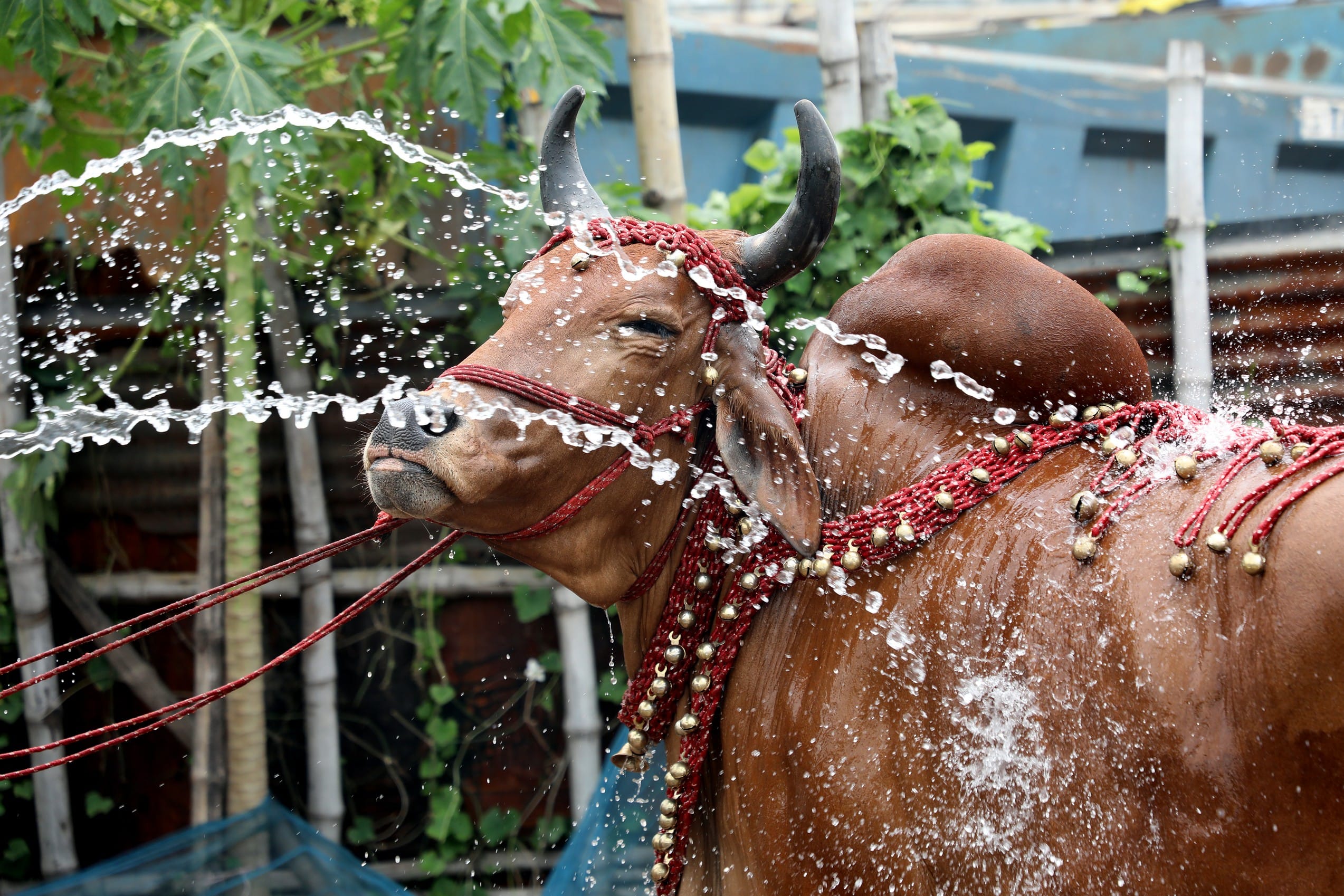
But the practice is not entirely innocent. When animals are named after living public figures, especially controversial ones, the joke can carry insult, mockery or symbolic aggression. The matter becomes even more uncomfortable when such naming is tied to an act of sacrifice. Even when no serious political meaning is intended, the language of ridicule enters a space that should be shaped by humility and restraint.
The pattern also reveals something about public culture. The names are often attached to power, aggression, size, fame or masculinity. A large bull needs a strong male name. A restless buffalo becomes a political strongman.
Interestingly, animals are seldom named after women. The pattern suggests that this naming culture is shaped by masculine ideas of power, valour, aggression and physical strength.
The way these animals are named, priced, displayed and circulated says something about class aspiration, masculinity, social media performance, and the uneasy meeting point between faith and spectacle.
The business behind virality
Many commercial farms now treat viral visibility as a marketing tool. A distinctive name, dramatic lighting, decorative arrangements, claims about special diets and a high asking price can turn an ordinary market animal into a viral product.
Social media has made this easier. A short video of a giant bull, a strangely coloured buffalo or a goat with a shocking price can travel faster than a detailed market report. Facebook reels, YouTube shorts, TikTok clips, live videos and influencer-style captions create a new kind of Eid-season publicity.
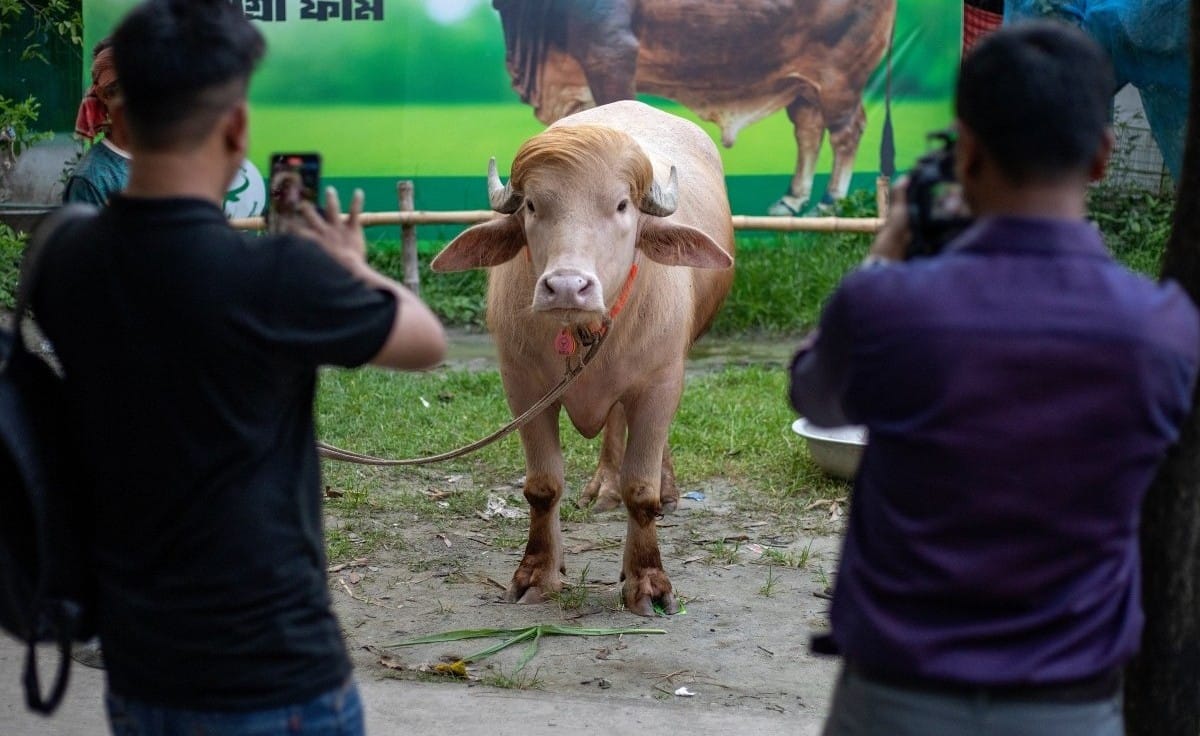
Many people visit not to buy, but to see, photograph, film and share, turning a bull or buffalo into a celebrity character. Once it starts circulating, FOMO takes over: audiences, content creators and media outlets follow because everyone else is already talking about it.
Professional newsrooms are not outside this loop. They often reproduce the same language used by farm owners: “royal,” “rare,” “record-breaking,” “special breed,” “fed on fruit,” “worth lakhs.”
When asking prices become news
Price is the strongest ingredient in this seasonal drama. A bull is said to be worth Tk 25 lakh, Tk 50 lakh or more. A buffalo is presented as a record-breaker. A goat becomes famous because of its astonishing asking price.
Thereafter, the follow-up is often missing. At what price was the animal actually sold? Who bought it? Was the transaction verified? Was the price a market reality or simply a promotional claim? Too often, these questions remain unanswered.
This exaggerated price reporting can distort public understanding. Most families calculate affordability carefully. They worry about transport charges, animal health and whether they are paying a fair price. For them, a report about an animal with an inflated asking price provides little useful information.
There are more useful questions to ask. What is happening to feed prices? How much have transport costs increased? Are small farmers recovering their investment? Are animal health checks being carried out properly? Are online cattle sales being monitored?
Sagolkanda: the goat that changed the question
The widely discussed Tk 15 lakh goat episode of 2024 showed how a shallow viral story can evolve into serious journalism.
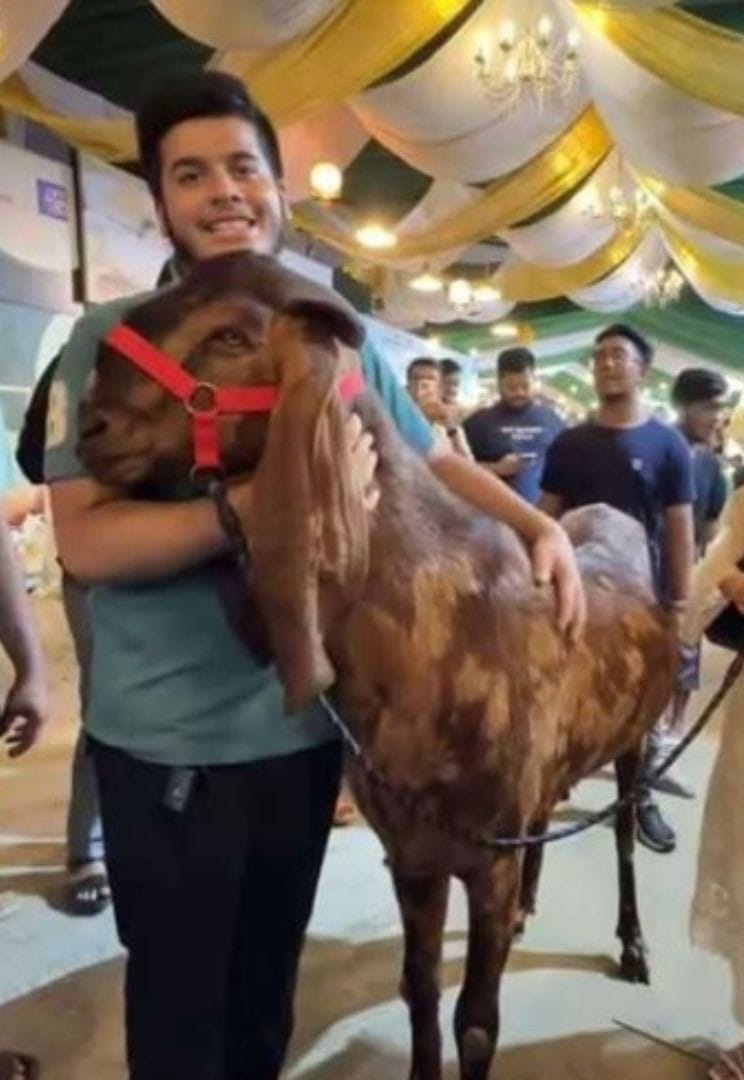
The story first appeared as a tale of an expensive goat, a young man displaying wealth and a social media storm. But public curiosity quickly shifted from the animal to the money once the right questions were asked. How could such a purchase be made? What did it reveal about wealth, privilege and access?
Those questions led to allegations involving unexplained wealth linked to a public official. The story moved from amusement to accountability. It is often claimed, somewhat ironically, that the goat story, “Sagolkanda”, marked the beginning of the downfall of a regime in Bangladesh.
Newsrooms in the age of reels
Professional journalism now sometimes operates within the same attention economy that drives Facebook reels, YouTube shorts and TikTok clips. Speed, visual oddity, humour and emotional reaction are rewarded more easily than context or nuance. This may create pressure on newsrooms too.
Nevertheless, mainstream media is not supposed to be just another competitor to content creators. Its role is to verify claims, provide context, question narratives and inform the public. When a claimed price becomes a headline without verification, or when a farm owner’s marketing line becomes news, journalism risks serving the seller more than the reader.
This is why the annual fascination with viral Qurbani animals should not be dismissed as harmless fun. The more we turn sacrificial animals into seasonal content, the less visible the spirit of sacrifice becomes.
Badrul Hassan is a development and humanitarian professional. He can be reached at badrulsocial@gmail.com.
Send your articles for Slow Reads to slowreads@thedailystar.net. Check out our submission guidelines for details.

Will Ramisa get justice in Bangladesh’s broken rape trial system?
Interview / Why the Padma Barrage will be a disaster for Bangladesh

How secular is the orna?
Haor crisis turning into a national crisis: Is the government aware?
Photo Story / The Mro children who could not reach the vaccine
The slow death of the haors and their swamp forests
‘Development’ tragedy in haor: Ami jamu hourbari pakka rasta chai
How Asia negotiated with Washington while Bangladesh lost out

The disagreements over presidential power and state religion