


Is your toddler distracted by screens at mealtime? Here’s why
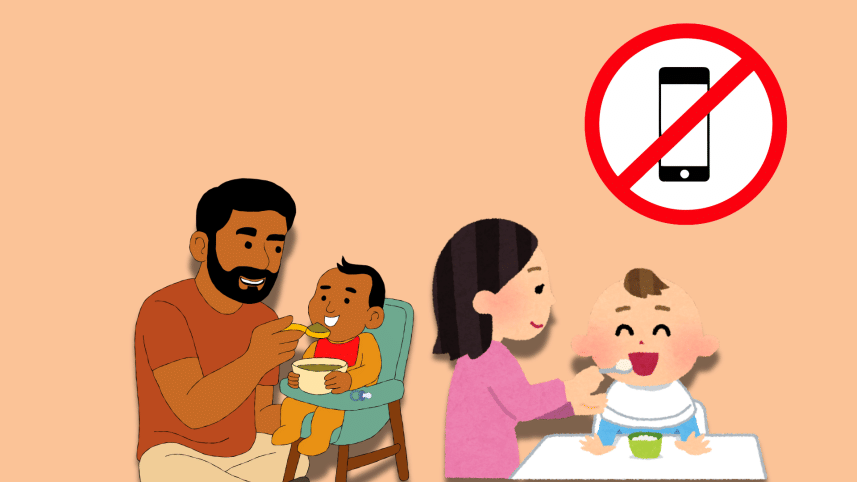
If you are a toddler parent, you are likely familiar with the frustrating sight of your child passionately gnawing on their sponge toys like they are some kinds of delicacy, while turning their heads away when a spoonful of real food comes their way.
So, you turn on the cartoon with crazy beats, and your child finally decides that finishing the plate isn’t such a bad idea after all. Though the meal actually gets eaten, does this practice have a good impact on the long-term development of the child?
 For all latest news, follow The Daily Star's Google News channel.
 Studies show that this habit quietly interferes with how they learn to eat, and connect, even though it may look harmless in the moment. When a child’s attention is fixed on a screen, hunger and fullness cues are easily missed. As a result, children are less likely to notice flavours, explore new foods, or build curiosity, which can develop the habit of picky eating over time.
That is why we are here with a trusted guide to make mealtime enjoyable for your child, and less bothersome for you, without the screens.
Routine plays a quiet but powerful role. As toddler brains are still developing, and they often struggle with transitioning from one activity to another. Giving a reminder before meals, keeping meal times consistent, helps children transition from play or screen time to eating without resistance.
Sitting together as a family strengthens this rhythm, because children instinctively mirror adult behaviour, and seeing parents eat without phones or televisions sends a stronger message than any instruction.
Another effective approach is to involve the child in the process of making food. Even if their contribution is as simple as peeling garlic or, in most cases, creating a mess, it can still be beneficial. On the bright side, when toddlers understand where food comes from and participate in preparing it, they are more likely to enjoy the meal.
Asking toddlers about their food preferences can make mealtime more engaging for them. Before serving food, you can ask if they would like carrots or peas, or mangoes or lychees. This gives them a sense of control and can help prevent them from pushing the food away. Also, research says they are open to trying more food options this way.
Incorporating bright colourful vegetables and familiar favourites alongside new foods encourages curiosity and exploration. You don’t necessarily need to cut food into star and moon shapes. You can also use the classic move your mom pulled, make round-shaped morsels, and call them quail or penguin eggs. This often makes kids giggle and eat with enthusiasm.
Additionally, if you describe the food they are eating to your toddler, it grows their inner scientist, and they are more likely to grab the food. For example, how chicken and eggs help us grow taller and stronger, and rice gives us energy to play.
You can also try playing guessing games with the child if you are feeding them. Put some food in their mouth and let them guess what they are eating; in this way, they are not only passively swallowing food but also attentively experiencing its texture and taste.
Most importantly, keeping meals short and pressure-free is essential. Long, tense meals make screens tempting because they ensure quick calm, but 10 to 15 minutes of relaxed eating is often enough. Mess, pauses, tantrums, and uneven appetite are part of the process, and do not mean you are failing at feeding your child.
Sometimes, when you tell your child it is time for lunch, they might immediately say they don't want to eat. Instead of quickly offering their favourite snacks in fear that your child will lack nutrition, reassure them that they can eat whenever they feel hungry. Studies show that this approach can work wonders even for stubborn toddlers.
In the end, screen-free mealtimes are not about winning a daily battle or proving you are a “perfect” parent. They are about choosing connection over convenience most days, and forgiving yourself on the messy ones.
Some meals will be loud, some will be slow, some will end with food on the floor and zero patience. And that is absolutely normal. What matters is that the table slowly becomes a place where kids learn to notice hunger, taste food, and talk freely. Starting small and staying consistent is the key, and remember that children don’t need constant entertainment to eat well; they just need your presence.
Comments