


Rethinking wellness wear: Faiza Ahmed’s conscious style walk
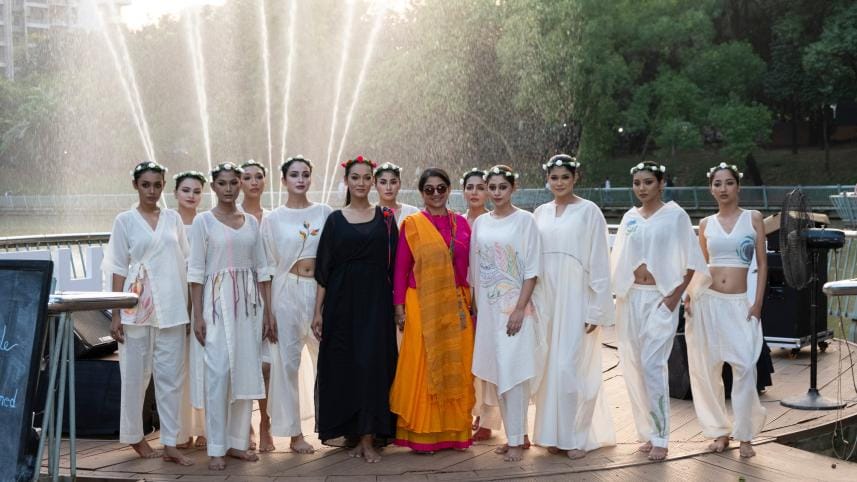
On the second day of The Flow Fest Dhaka 2025 — held from 6 to 8 November, at Justice Shahabuddin Ahmed Park — fashion designer Faiza Ahmed, founder of the sustainable clothing brand Manas, presented a show that stood apart; not just for its aesthetic, but for its intent.
Titled "Conscious Style Walk by Faiza," the showcase did not follow the formula of tight athleisure or flashy wellness branding. Instead, it raised a question: Why have clothes — even those marketed as "wellness wear" — become another source of pressure?
 For all latest news, follow The Daily Star's Google News channel.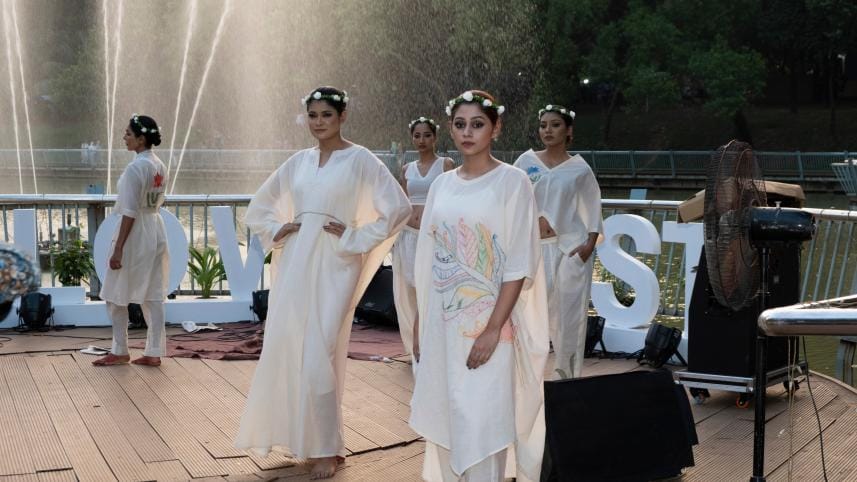
Speaking after the show, Faiza explained her initial idea was to create a garment that mimicked conventional yoga or wellness outfits, typically made from synthetic, imported materials like spandex. But the concept evolved.
"If I went ahead with that idea, people would expect me to produce some high-performance, body-fitting clothing," she said. "But that's exactly what I didn't want to do."
Instead, Faiza designed a breathable, cotton outfit — unstructured, minimal, and layered with meaning. The clothes used no synthetic materials or inner linings. They were almost transparent, not for shock value, but to emphasise ease and openness.
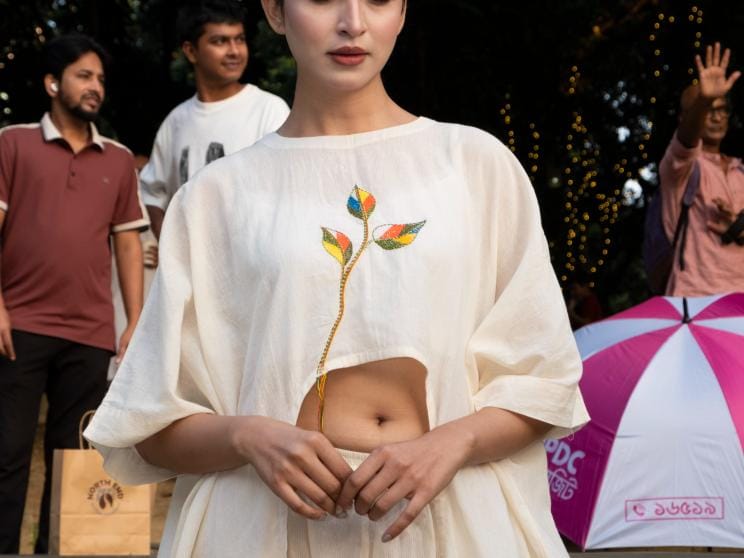
"We're born naked and leave the world naked," she said. "Everything else we put on in between is shaped by social tension — what to reveal, what to hide. I wanted to create an outfit where you could sit in meditation without thinking about how your body looks."
True to her philosophy, the garments were made using handloom fabric from Panchagarh, without any imported components. Production was handled in collaboration with a community project called Sudin Shotta, based in Beraid, Muchipara. This initiative trains the wives of local cobblers in needlework and craft-based skills. The gratitude partner for this show was Delvistaa Limited.
"All of the Nakshi Kantha embroidery was done by women artisans from the Sudin Shotta project," Faiza said. "About 30 women were involved in this production."
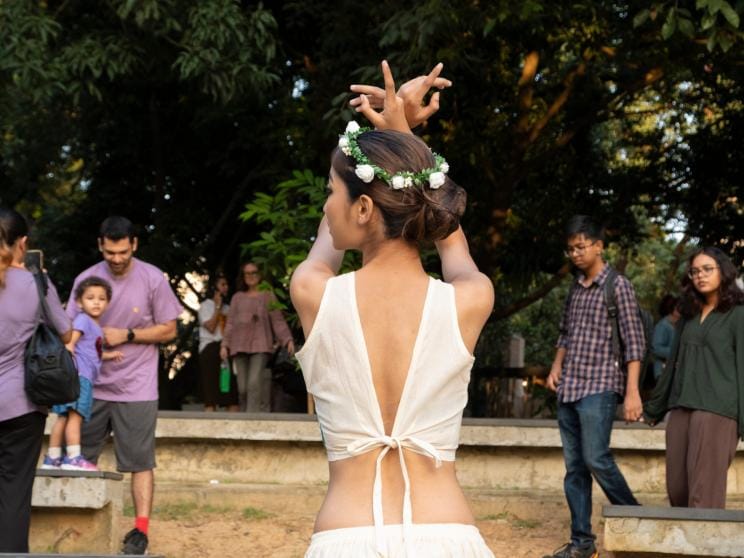
By integrating handloom and traditional embroidery into a new format, the garments bridged cultural craft with present-day questions of comfort, visibility, and ownership over the body.
The show was set to a song by Shah Abdul Karim, the legendary Baul singer known for his spiritual and socially reflective lyrics. Faiza chose his music as a counterpoint to the usual visual language of fashion shows, which often equates revealing clothes with sex appeal.
"Every time people wear less on stage, it's always read as 'sexy.' But what if we remove that lens? What if we wear something loose, open, light, because it helps us breathe better, not because it draws attention?"
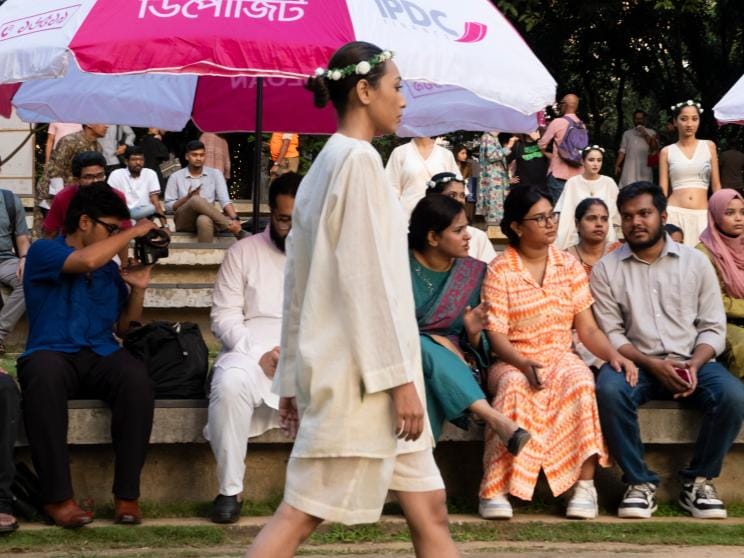
The performance wasn't flashy. It was quiet. Intentional. Models walked slowly, with soft steps, letting the fabric move naturally.
"We call everything 'wellness' now," she said, "But even wellness culture creates pressure. What if our clothes didn't add to that?"
With no logos, no synthetics, and no marketing language, Faiza Ahmed's garments stood on the edge of visibility — soft enough to be worn in silence, but bold enough to leave a mark.
Photo: Silvia Mahjabin
Comments