


Law Vision / Recognising a judicially enforceable right to education
13 December 2025, 18:00 PM
Law Vision

Law Vision / The rise of tech-facilitated intimate partner violence in Bangladesh
25 November 2025, 18:00 PM
Law Vision

Law vision / Preventing land-related fraud through digitalisation
29 October 2025, 18:00 PM
Law Vision

Law Vision / Artificial Intelligence and the court
21 October 2025, 18:00 PM
Law Vision

Law vision / Regulating battery-run rickshaws
4 October 2025, 18:00 PM
Law Vision

Law Vision / Bangladesh’s Constitutional Crossroads: The Imperative of a New Charter
22 July 2025, 18:00 PM
Law Vision

FDI in Bangladesh: A Supplement to BIDA’s recent Investment Summit
9 May 2025, 18:00 PM
Law Vision

Law vision / Problems and Prospects of ADR in Bangladesh
27 March 2025, 18:00 PM
Law Vision

Law Advocacy / Judges’ appointment in Bangladesh
6 February 2025, 18:00 PM
Law & Our Rights
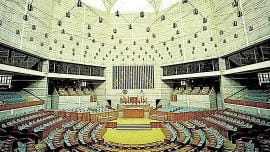
LAW VISION / Rethinking our parliamentary accountability
15 August 2024, 18:00 PM
Law & Our Rights

Recognising a judicially enforceable right to education
Education has long been called the backbone of the nation, yet Bangladesh’s Constitution refrains from recognising this basic human right in a way that would be meaningful for the people of the country.
13 December 2025, 18:00 PM

The rise of tech-facilitated intimate partner violence in Bangladesh
Tech-facilitated intimate partner violence (TF-IPV) is the act of threatening, stalking or abusing a current or former partner through the misuse or abuse of technology.
25 November 2025, 18:00 PM

Preventing land-related fraud through digitalisation
In our country, land-related disputes and fraudulent practices have become very common. Such fraudulent practices not only deprive individuals of their legitimate ownership of property but also erode public confidence in the legal and administrative system. Safeguarding the people against such activities are therefore both a legal and ethical imperative.
29 October 2025, 18:00 PM

Artificial Intelligence and the court
Artificial Intelligence (AI) is revolutionising human functions across different industries.
21 October 2025, 18:00 PM

Regulating battery-run rickshaws
Battery-run rickshaws are the blind spot for the laws governing the streets in Bangladesh, and we might be suffering all the more for it. In this piece, I will attempt to discuss the relevant legal framework and give my views on what ought to be done.
4 October 2025, 18:00 PM

Bangladesh’s Constitutional Crossroads: The Imperative of a New Charter
The seismic events of July-August 2024 plunged Bangladesh into a profound crisis far exceeding a mere political leadership change.
22 July 2025, 18:00 PM

FDI in Bangladesh: A Supplement to BIDA’s recent Investment Summit
The Bangladesh Investment Development Authority (BIDA) recently hosted an Investment Summit to attract Foreign Direct Investment (FDI) to the country.
9 May 2025, 18:00 PM

Problems and Prospects of ADR in Bangladesh
The judiciary is considered the foundational rock of any nation’s pursuit of justice and rule of law.
27 March 2025, 18:00 PM

Judges’ appointment in Bangladesh
The appointment of judges is a cornerstone of judicial independence and the rule of law. Article 95(2)(c) notes that judges of the supreme court shall have “such qualifications as may be prescribed by law for appointment as a Judge of the Supreme Court”.
6 February 2025, 18:00 PM
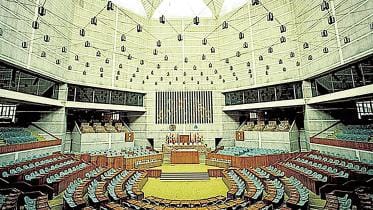
Rethinking our parliamentary accountability
Bangladesh is a parliamentary democracy with a constitutional mandate for responsible government. Responsible government is a conception of a system that embodies the principle of parliamentary accountability.
15 August 2024, 18:00 PM

An Overview of Bangladesh National Artificial Intelligence Policy 2024
Bangladesh has very recently formulated the National Artificial Intelligence Policy 2024 (AI Policy 2024) to effectively address the social, legal and ethical issues associated with Artificial Intelligence (AI).
18 April 2024, 18:00 PM

Data Localisation and Data Protection in Bangladesh: A Review
Data localisation requires for data, particularly personal and/or arguably sensitive, to be stored and processed within a specific geographical location or jurisdiction.
25 January 2024, 18:00 PM
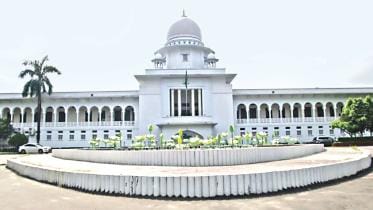
Notable Decisions of the Supreme Court of Bangladesh
In view of the end of 2023, the write-up compiles certain landmark decisions that were handed down by the Supreme Court of Bangladesh last year.
4 January 2024, 18:00 PM

Renewable energy business: A Promising Sector in Bangladesh
Recently, the government has given the highest priority to the improvement of the energy business. In this context, the government has
21 July 2022, 18:00 PM

In quest for rules to be laid down under the Arbitration Act, 2001
In many instances, an Act of Parliament includes a provision allowing the government or the relevant authority to make rules for carrying out the provisions of the concerned Act. Under an Act of Parliament, the rules are framed as directives and/or instructions for the users of the legislation in question. If rules are framed as such, more clarity is brought about and confusion about many provisions of the relevant statute gets dispelled. It also helps to carry out the purpose of the legislation in line with the intention of the legislature.
6 May 2022, 18:00 PM

Improving higher education in Bangladesh: A case for collaboration with Australia
Australia and Bangladesh have concluded the Trade and Investment Framework Agreement (TIFA) on 15 September 2021 to boost their trade and
17 December 2021, 18:00 PM

Urgent reforms to ADR in South Asia to achieve SDG-16
The traditional process of litigating has been one of the best ways of resolving disputes from time immemorial because of its credible methods of examination, depiction, and judgment-giving.
13 September 2021, 18:00 PM

The quest for special courts for adjudication of corporate disputes
In the last few years, Bangladesh has given its business environment a facelift to attract investments. To curtail excessive red tapism in company registration, the incorporation of company has been simplified by digitalisation.
6 September 2021, 18:00 PM
Street law in medical negligence: Making tort law easy for the people
Street Law is a method of teaching practical law to the general public through interactive methods. This year throughout February, iProbono (Bangladesh) hosted a series of virtual street law workshops to spread awareness on the legal aspects of medical negligence in Bangladesh.
30 August 2021, 18:00 PM

Virtual court system in Bangladesh
On May 9, 2020, the President of Bangladesh, while the Parliament was not in session, by exercising jurisdiction under Article 93(1) of the Constitution of Bangladesh promulgated Adalat Kartrik Tottho-Projukti Bebohar Ordinance, 2020 (Use of Information communication technology by court Ordinance, 2020).
16 August 2021, 18:00 PM