


Udichi marches against arson, warns of shrinking civic space
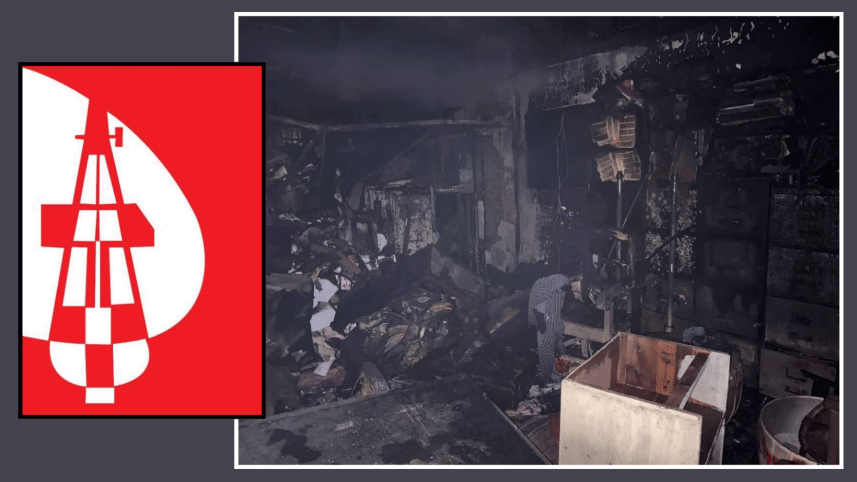
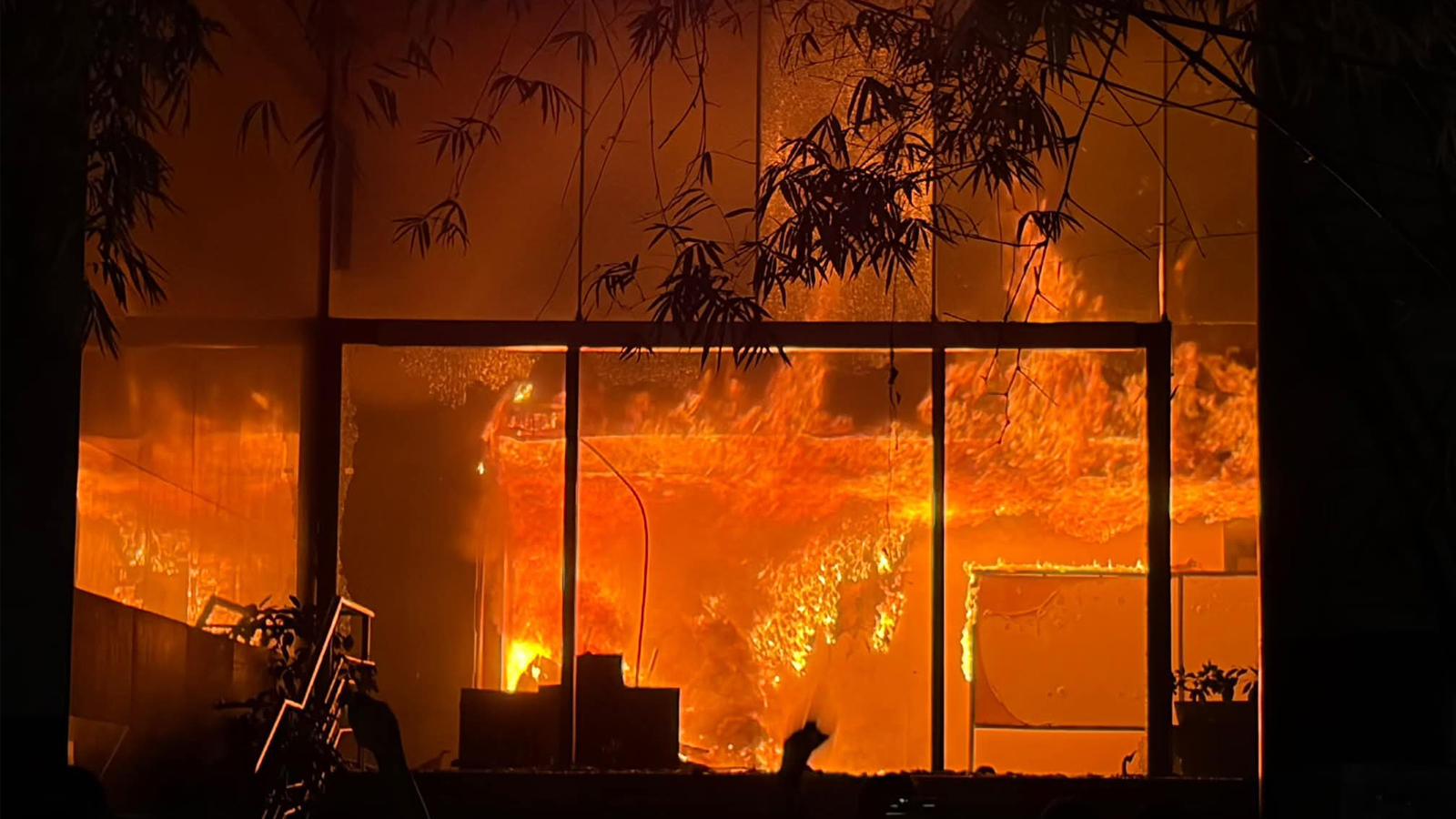
Bangladesh Udichi Shilpigoshthi took to the streets of the capital this morning, staging a protest march and rally to condemn the arson attack on its central office—an assault that, the organisation says, has wiped out 55 years of cultural archives and struck at the heart of the country's progressive movement.
 For all latest news, follow The Daily Star's Google News channel.
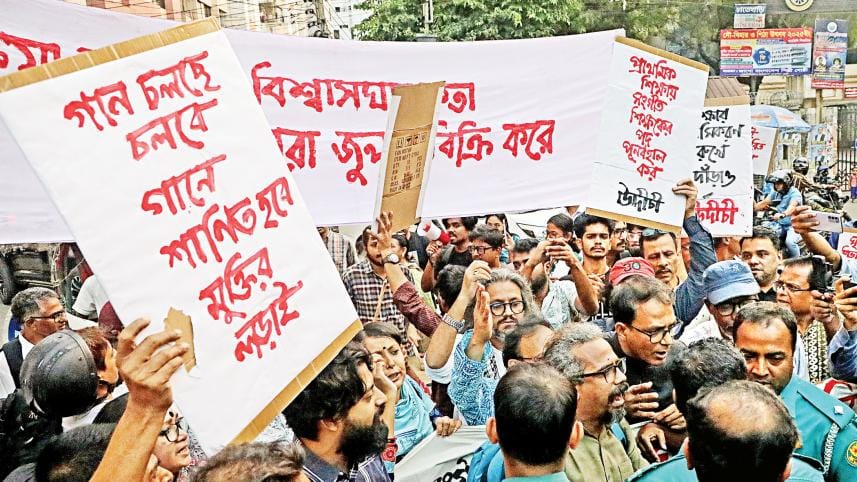
 The procession began at 11:00 am from Paltan intersection and moved steadily toward Satyen Sen Chattar, in front of Udichi's central office opposite the National Press Club. Artists, cultural workers, journalists, and supporters joined the march, holding placards and chanting slogans that linked the attack on Udichi to a broader threat against freedom of expression.
Slogans such as "Udichi Te Hamla Keno, Jobab Chai," "Muktijuddher Chetona Hariye Jete Dibo Na," and "Baul-er Upor Hamla Rukhte Hobe" echoed through the streets, framing the arson not as an isolated crime but as part of a sustained assault on the ideals of 1971 and the spirit of cultural resistance.
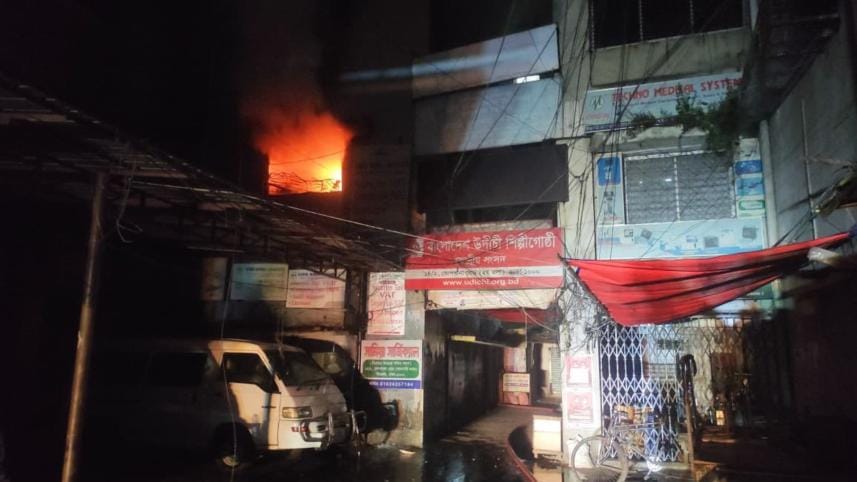
Amit Ranjan Dey, General Secretary of Udichi, led the procession and addressed the rally at Satyen Sen Chattar. He said the attack on Udichi followed a familiar and alarming pattern.
"Our office was vandalised, looted, and torched in the same manner as attacks on The Daily Star, Prothom Alo, and Chhayanaut," Dey said. "These are not random acts. They represent a deliberate threat to freedom of expression and democratic rights."
Dey alleged that extremist groups had openly declared their intention to attack Udichi after earlier assaults on media and cultural institutions, yet law enforcement failed to act despite having prior warning. "The attackers operated without fear of repercussions," he said, adding that no arrests had been made at the time of the protest.

Calling the destruction of Udichi's archives a cultural catastrophe, Dey said decades of documentation—songs, scripts, photographs, and records of resistance—had been erased overnight. "This is not just an attack on a building. It is an attempt to erase memory," he said.
Udichi leaders also linked the attack to a wider climate of intimidation, pointing to recent assaults on journalists and cultural figures. In a statement reiterated during the rally, the organisation described the arson as a direct attack on the progressive cultural movement and warned that continued inaction would embolden extremist forces further.
Founded in 1968 by Satyen Sen and Ranesh Dash Gupta, Udichi has long used music, theatre, and performance as tools of protest against communalism, authoritarianism, and exploitation. That history, speakers at the rally noted, has repeatedly placed the organisation in danger—from bomb attacks in Jashore in 1999 and Netrokona in 2005 to the latest act of arson in Dhaka.
At the rally, Udichi demanded the immediate identification, arrest, and prosecution of those responsible for the attack. Leaders also questioned the role of the interim government, arguing that a state unable to ensure the safety of cultural and media institutions risks undermining its own democratic foundations.
The programme ended with a renewed pledge from Udichi members to remain on the streets until accountability is ensured. "This procession is not the end, we will keep protesting until justice is served", Dey said.
Comments