


The rulers have changed, but exploitation remains: Serajul Islam Choudhury

At Chhayanaut's cultural complex on Sunday evening, remembrance took the form of music, spoken word, and unflinching critique as the organisation marked Martyred Intellectuals Day. The programme honoured Bangladesh's slain thinkers while confronting what Professor Emeritus Serajul Islam Choudhury called a dangerous drift away from their ideals.
Choudhury offered a stark diagnosis of the present. Bangladesh, he said, is moving away from the spirit of the martyred intellectuals for two reasons: a shrinking practice of history and its growing distortion; and a widening distance from the dreams and consciousness of the Liberation War.
 For all latest news, follow The Daily Star's Google News channel.
 He was speaking at Chhayanaut's auditorium during a cultural evening dedicated to the day. The programme blended song, recitation, and theatre—art forms that Chhayanaut has long used to keep public memory alive.
The evening opened with a solo by Chhayanaut teacher Suman Majumder, who sang "Mrityu Nai Nai Dukhho," setting a reflective tone. Chhayanaut president Dr Sarwar Ali followed with a brief address, anchoring the programme in the organisation's decades-long commitment to cultural resistance.
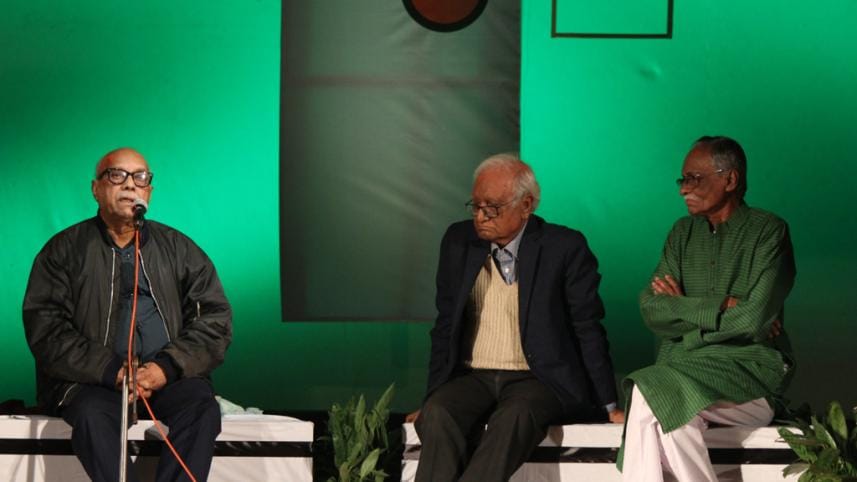
Next, Abhaya Datta performed "Kkhoto Joto Kkhoti Joto Miche Hote," before Choudhury took the stage.
Bangladesh, he argued, has turned into "a colony of the rich." Drawing a historical arc, he said: "Just as the Pakistanis, and before them the British, and before them the Mughals, siphoned our resources abroad to their capitals, today's wealthy do the same." Wealth created through people's struggle, labour, and sacrifice, he added, is being spirited away overseas—proof that rulers may change, but the exploitative character of rule has not.
Choudhury also addressed why repeated uprisings fail to bring lasting change. "What these uprisings actually require—social transformation, a social revolution, the replacement of private ownership with social ownership—we have failed to achieve that," he said.
Warning of reactionary forces gaining ground, he placed Bangladesh within a global pattern. "This isn't just happening here. It's happening worldwide. Reactionaries are growing stronger everywhere. Look at someone like Donald Trump—an utterly despicable man—wielding such enormous, concentrated power."
He went on to criticise a Rajshahi University teacher who labelled Begum Rokeya a "kafir-murtad." Recalling remarks made by the Chief Adviser on Rokeya Day—that even after 100 years the nation has failed to produce another Rokeya—Choudhury said the answer lay in the day's headlines themselves. "Rokeya is declared a kafir-murtad, and people with such mindsets teach at universities. This is the reality we live in."
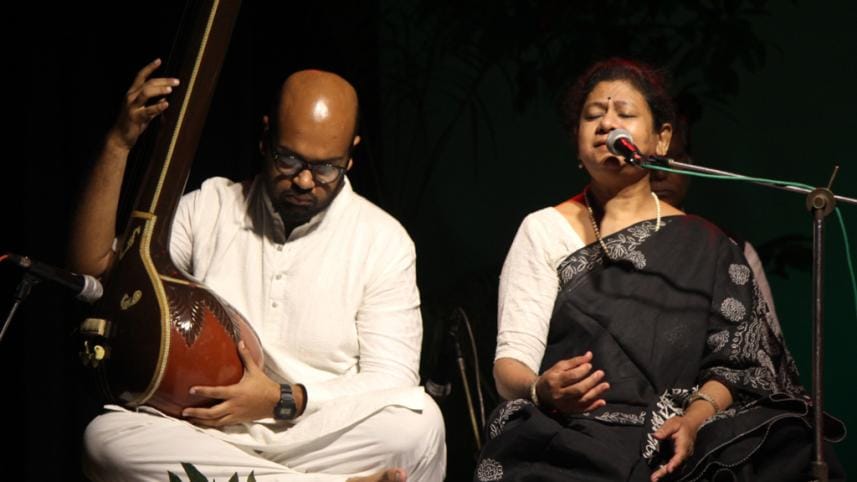
The programme continued with Tahmid Wasif Rivu performing "Tomar Kachhe E Bor Magi," followed by a spoken segment by Professor Mansur Musa.
In the musical segment, Laisa Ahmed Lisa rendered "Tomari Tore, Maa, Shopinu E Deho," her voice carrying grief and resolve in equal measure. The evening then turned theatrical with a staged excerpt of "Judhyo Ebong Judhyo," written by Syed Shamsul Haque and produced by theatre troupe Bongorang, directed by Asif Munier and Mithun Mostafa.
The programme closed with a chorus performance of "Ami Maarer Sagor Pari Debo," followed by the national anthem—an ending both solemn and defiant.
At Chhayanaut, the tribute was not confined to ritual mourning. It was a reminder—through song, speech, and stage—that the legacy of the martyred intellectuals demands vigilance, courage, and an unrelenting refusal to forget.
Comments