


People flock to Chhayanaut, pledge solidarity through music

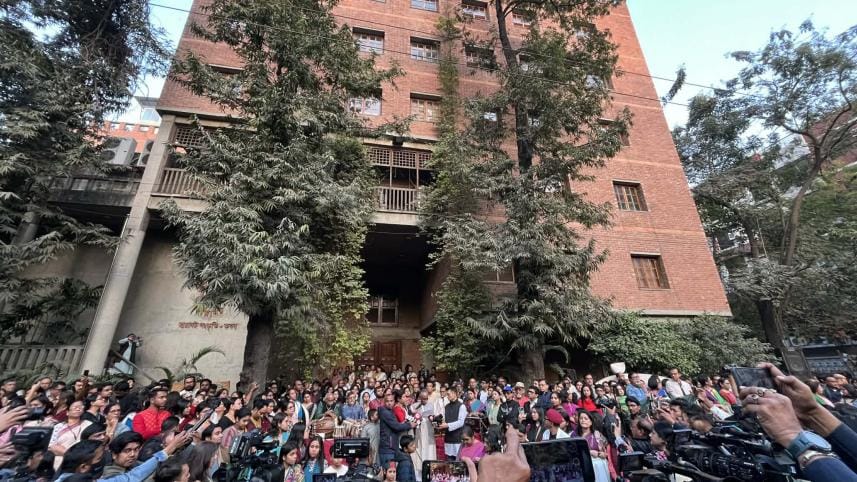
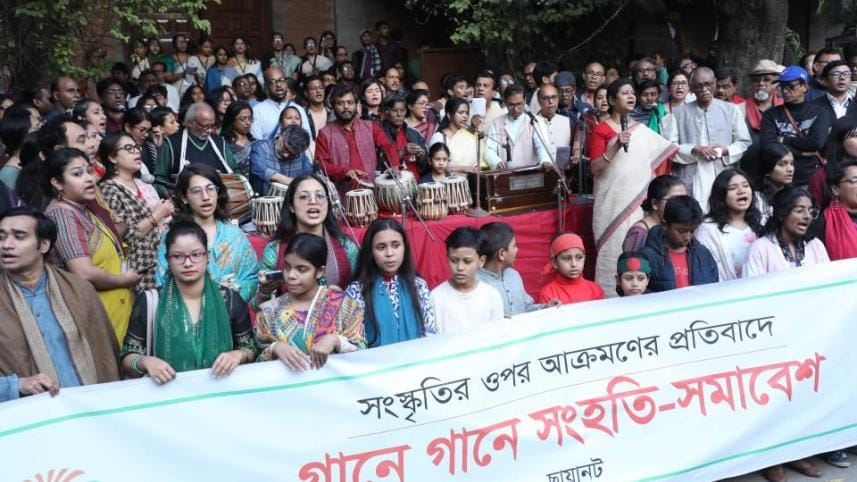
On Tuesday afternoon, December 23, when the gates of Chhayanaut opened, it was clear this would not be a routine cultural programme, rather a peaceful cultural protest titled "Gaane Gaane Songhoti Samabesh", as a large crowd gathered to show solidarity in response to recent attacks on cultural spaces and growing concerns over freedom of expression.
 For all latest news, follow The Daily Star's Google News channel.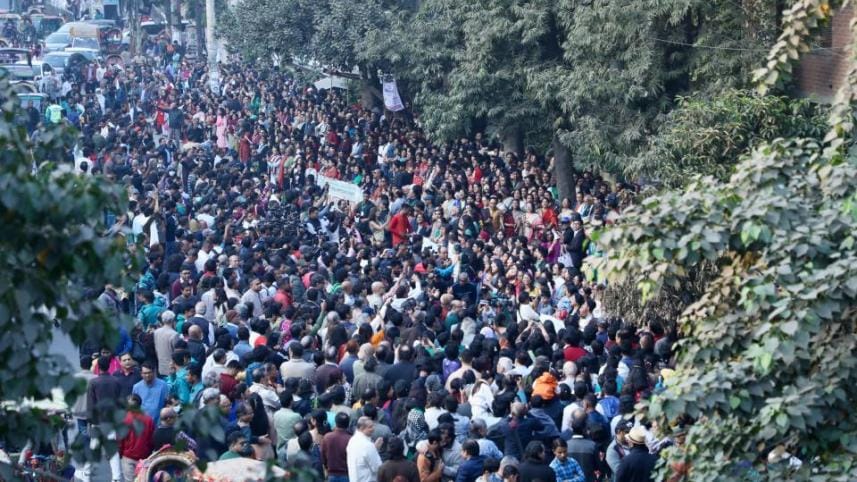
The significance of Chhayanaut cannot be separated from the story of the nation itself. Founded in 1961, at a time when the Bengali language and cultural practices were under threat, Chhayanaut became a site of resistance long before independence. At Chhayanaut, Rabindra and Nazrul Sangeet, along with classical Bengali forms, were preserved, practised and taught defiantly at a time when asserting cultural identity itself was an act of courage.
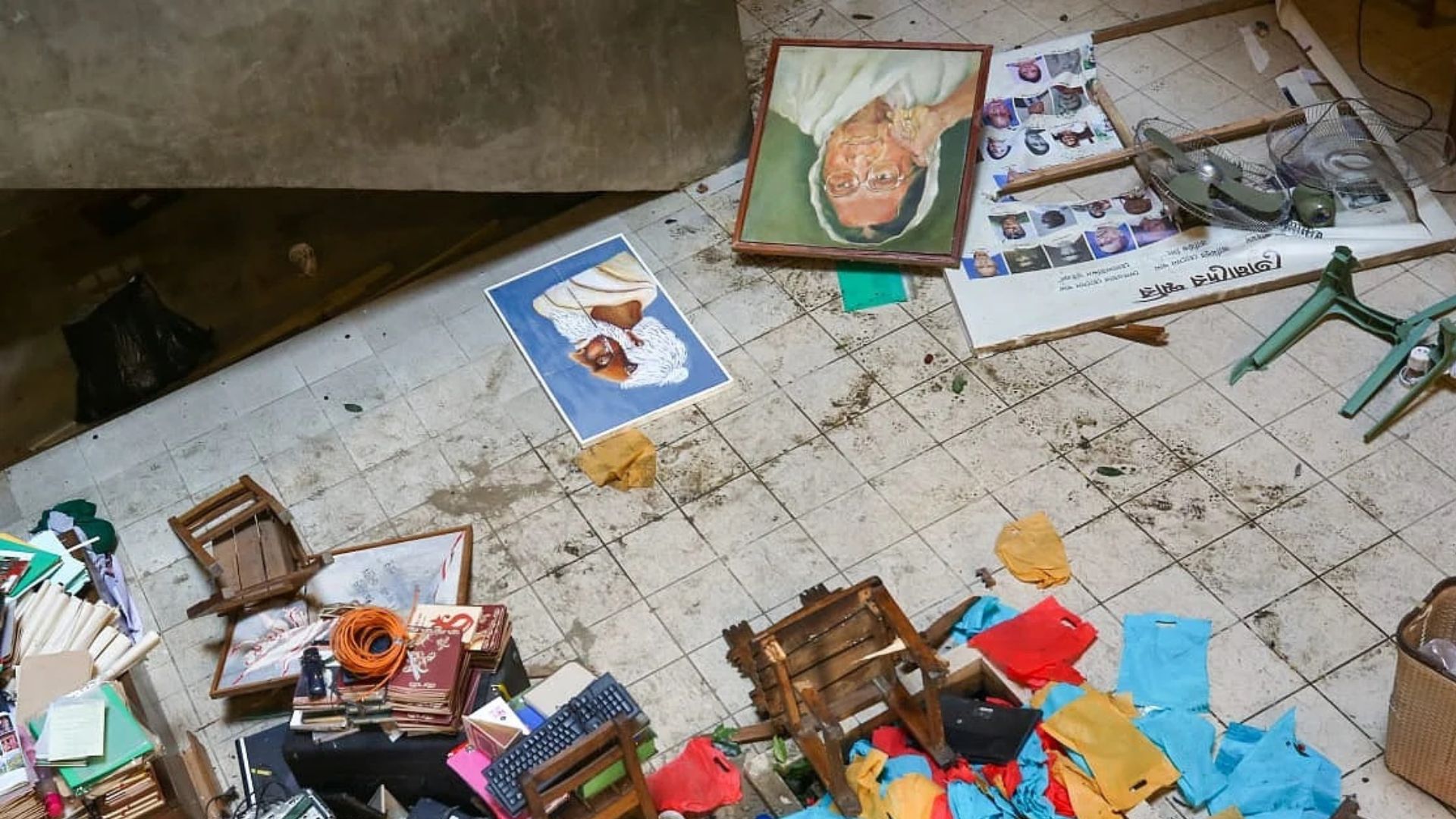
That is why recent acts of vandalism against the institution cut so deeply. An attack on Chhayanaut is not an isolated incident; it reflects a longer history of attempts to silence cultural expression in this land. From the censorship of Tagore during Pakistan's military rule to the curbing of progressive voices during later authoritarian periods, Bangladesh has repeatedly witnessed how fear enters society through the suppression of art. Each time, the cost has been social fracture, mistrust, and a narrowing of who is allowed to belong.
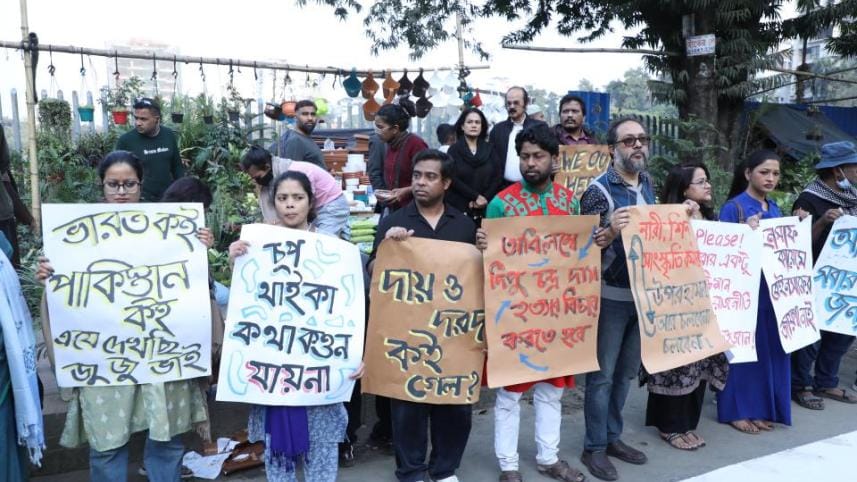
Earlier in the day, near Abahani Club Field, cultural figures including singer Farzana Wahid Shayan, actress Azmeri Haque Badhan, Aanon Siddique, and filmmaker Akram Khan gathered under the banner of Drishsho Madhyam Shilpi Shomaj (Visual Artistes Collective), condemning the systematic targeting of cultural spaces and voices. From there, the artists moved together to Chhayanaut. If one place in Bangladesh carries the weight of cultural defiance, it is this institution.
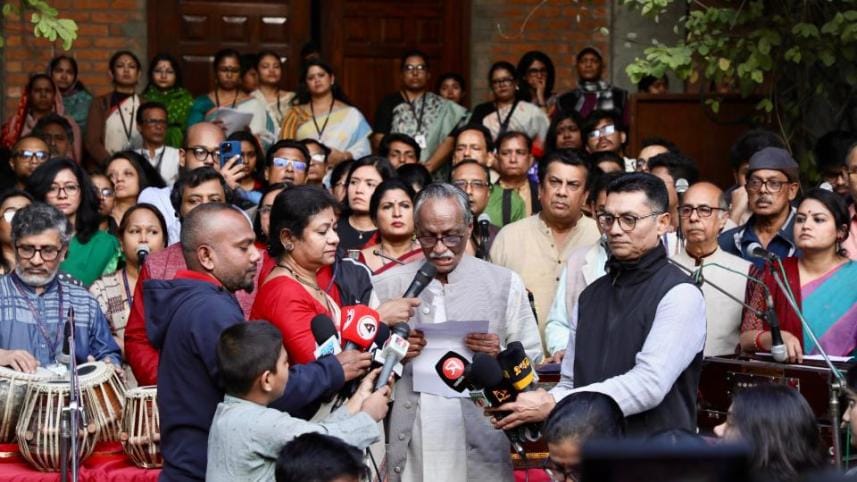
Artistes of Chhayanaut, along with those gathered for the peaceful protest, raised their voices together to sing "O Amar Desher Mati", "Gramer Nawjowan Hindu Musolman", and "Amar Mukti Aloy Aloy". These songs were sung by people who understood that music has carried this nation through moments far darker than the present.
The programme ended with the national anthem, "Amar Shonar Bangla, Ami Tomay Bhalobashi." The national flag was waved. Culture, after all, is a harmless narrative. It does not call for destruction. It does not demand blood. And yet, it is repeatedly treated as a threat. Perhaps because culture remembers. Perhaps because it resists erasure.
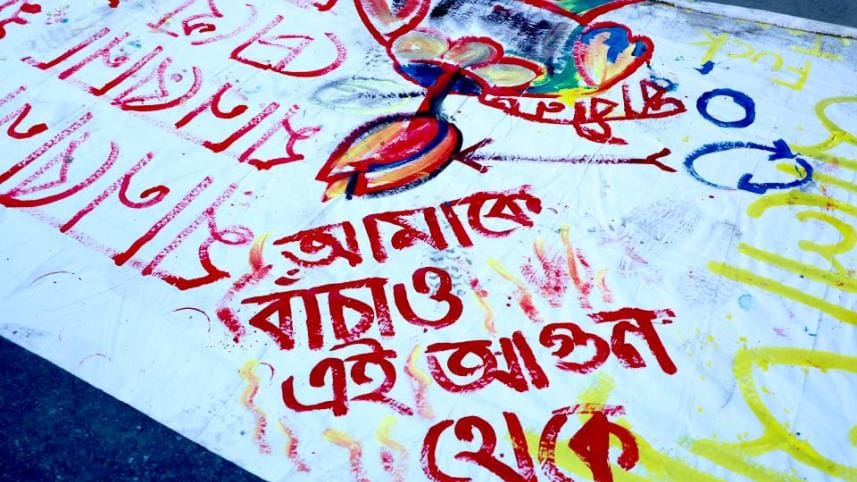
As artistes, they respond through songs. They protect their culture and Bengali heritage through music. It remains difficult to understand how something so humane can provoke such hostility, or why it invites destruction at all. But artistes have always chosen resistance without violence. They protest through songs, through a collective voice. At a time when aggression is loud and unrestrained, this remains one of the most radical yet harmless forms of response.
Comments