


Faruque Ahmed: An artiste of the people

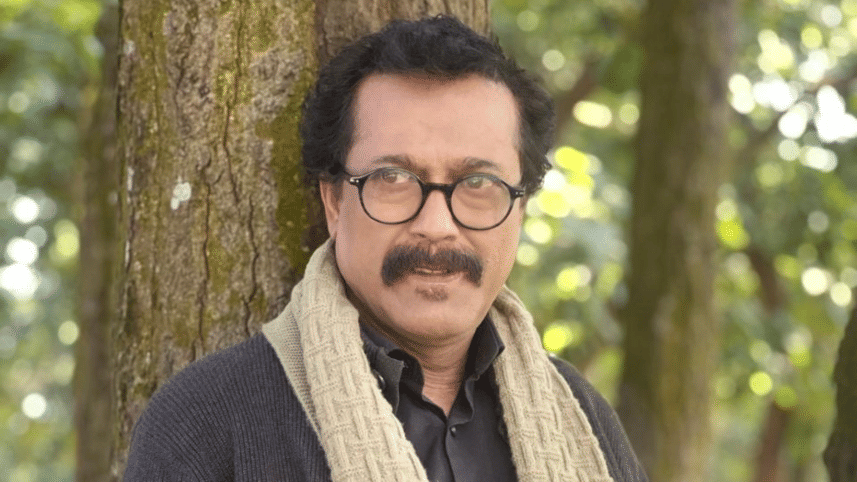
Veteran actor Faruque Ahmed has been associated with Dhaka Theatre for decades. Widely loved for his performances in Humayun Ahmed's television dramas, he has also appeared in numerous films. While studying at Jahangirnagar University, he directed stage plays, but this time he returned to direction with a new production for his own troupe, Dhaka Theatre.
The play, "Rangmahal", was staged recently and received an encouraging response. Speaking to The Daily Star, Faruque Ahmed reflects on his professional debut as a director, audience reception, memories of Selim Al Deen, and what lies ahead.
 For all latest news, follow The Daily Star's Google News channel.
 How has the response been to your first directorial work for Dhaka Theatre?
From my point of view, I'd say the response was ninety-nine per cent positive. "Rangmahal" had its first show on December 18, and the audience response was quite impressive. Initially, we couldn't secure a hall, and honestly, I was wondering whether people would even come. Theatre audiences have dwindled over time. Still, some people love stage plays and appreciate good work. In the end, we did receive a warm response. The show began at seven in the evening, and some people who arrived late couldn't enter and had to return. That, in itself, was a hopeful message.
How confident were you going into this production?
I have always trusted audiences, and I always will; they are the source of my confidence. I had that faith with "Rangmahal" too. I've acted in many major Dhaka Theatre productions, such as "Kittonkhola", "Bonopangshul", "Shakuntala", "Keramatmangal", among others. All those experiences shaped "Rangmahal". The play was written by Rubaiyat Ahmed, and many of the performers were newcomers, ten out of twenty actors, in fact.
Yet they performed gracefully, with full confidence. They tried their best, and that effort was visible on the stage.
Your wife performed in the play as well. How was that received?
My wife, Nasrin Nahar, delivered an outstanding performance in "Rangmahal". After the show, many people told me, "If she hadn't been there, the play wouldn't have worked. Hearing that kind of praise felt very special. The play is essentially the story of two beggars—a married couple—and my wife played one of those central characters.
As a director, how would you rate yourself out of a hundred?
First, I must acknowledge the support I received. Nasiruddin Yusuff Bachchu bhai guided me immensely. Shimul Yousuf supported me throughout. Afzal Hossain bhai came to rehearsals multiple times and offered valuable input. Shahiduzzaman Selim, Rosey Selim, and many others stood by me. Dhaka Theatre as a whole gave me complete encouragement and backing. Now, to answer your question, out of a hundred, I'd give myself 85 as a director. I made this play in a way that ordinary people could understand and connect with it. Ultimately, I want to be an actor-director of the people, for the people.

Could you share some memories of the late playwright Selim Al Deen?
I have countless memories of Selim Al Deen. When I was studying at Jahangirnagar University, I was the drama secretary of Mir Mosharraf Hossain Hall. A play I directed was staged at an inter-university hall drama competition, which is when my bond with Selim Al Deen grew. I directed plays like "Chor", "Bashon", and "Bornochor". He used to tell me, "You should direct". While directing "Rangmahal" for Dhaka Theatre, his words came back to me.
What kind of play is 'Rangmahal'?
I have always wanted to direct a clean, beautiful stage production, and "Rangmahal" is exactly that. It has dance, music, and a strong narrative. Watching the audience reaction on the first day confirmed that they embraced it warmly. I was also confident that I could bring out strong performances from the actors—after all, I come from an acting background myself.
With the book fair approaching, are you working on anything new?
Yes, I'm writing a new book, which is a memoir-based. I've titled it "Muchhe Jawa Dinguli". It's written in a narrative style, almost like storytelling. There will be a story from 1971, a piece about Humayun Ahmed—he had a hypnotic presence, a magnetic charm. That story will be there. I'll also mention my maternal and paternal grandfathers in the book.
What's keeping you busy in the theatre and cinema now?
I'll be shooting a new television drama on January 9. I'll also begin shooting for a new film this month titled "Bonolota Express". There's another new film lined up as well.
Comments