


The warmth and wonder that street food offers
Sometimes, my optimistic afternoons from the second grade return to me without warning. The memories arrive as the sting of spice, the warmth of a kind sun, and a light paper plate in hand. On those days, I would always linger outside my house, trying to catch my breath after sneaking away with my aunt to enjoy a notoriously spicy plate of fuchka. We would slip into the bustling street to the stall in front of my school, where the kind mama concentrated all the magic from Andromeda into every shell he cracked.
We asked for extra spice every time, fully aware that our runny noses would betray us once we returned home. Each bite carried the childish joy of keeping a tamarind-drenched secret. We laughed as we plotted ways to hide it from my mother, sharing smiles with strangers who, like us, had dared to ask for too much heat.
 For all latest news, follow The Daily Star's Google News channel.
 Among the throngs of people, each of us was united over the universal longing for a delicious pause from the monotony of a normal day. I didn't realise then that this taste would one day become a place I could no longer return to. When my aunt moved away, fuchka was a snack I could remember intimately.
As I grew older, I slowly felt camaraderie with every passerby when I realised that this sentiment was far from unusual. Everyone spoke of street food in their own careful, affectionate way, as if the word itself brought back cherished times. The fact that this love is shared so universally across the country — though it holds different sentiments for each of us — creates a deep sense of connection as everybody infuses these treats with stories from their youth.
For Sahrish Nazmul, an O level student, culture felt distant while growing up in an isolated area. However, she built a sacred bridge through the delicacy of street foods.
"I didn't get the chance of exploring my own culture in obvious ways," she says. "Yet one of the strongest connections I formed came through warm, syrupy jilapis. As a child, this was the best part of my day. When I used to get into silly arguments with my father, he would make it up to me with jilapis."
Sahrish further explained how life moved forward. She had to change schools and houses, which caused the jilapis to slowly disappear. But something else filled the gap in this new chapter of her life.
"One evening after class, my mother and I found smaller fuchkas being sold right in front of my new school," says Sahrish. "It was perfect and became a new tradition. Soon, my friends joined in too, and after every exam we would visit the same vendor for a quiet celebration."
Looking back, Sahrish reminisced about how these snacks were more than a simple bite: "These simple street foods: sweet jilapis and tangy fuchkas were my culinary map of Dhaka, marking my father's love, the resilience of my family during a move, and the forging of new friendships in every chapter of my life. They taught me culture isn't abstract. It's immediate and very appetising, waiting to be savoured on the very streets everyone walks."
This sense of immediacy repeats itself across experiences, with a hue of belonging and community. Street food often suspends hierarchy and flattens differences. It only asks that you stand close enough to wait your turn.
After sitting for the Dhaka University entrance exam last year, Akil Rafid remembers leaving with his nerves still buzzing. Not knowing many people or the place, he ordered a plate of naga fuchka from a nearby stall.
"Honestly, somehow the panic and awkwardness disappeared quickly enough," he says. "Everyone was united under the very simple love for a food that knows no divide."

For Nareena Sameh, a high school student who regularly participates in fundraising runs, street food holds a similar communal value.
"What makes street food so sacred to me is how easily it removes the barrier of being strangers," she reflects.
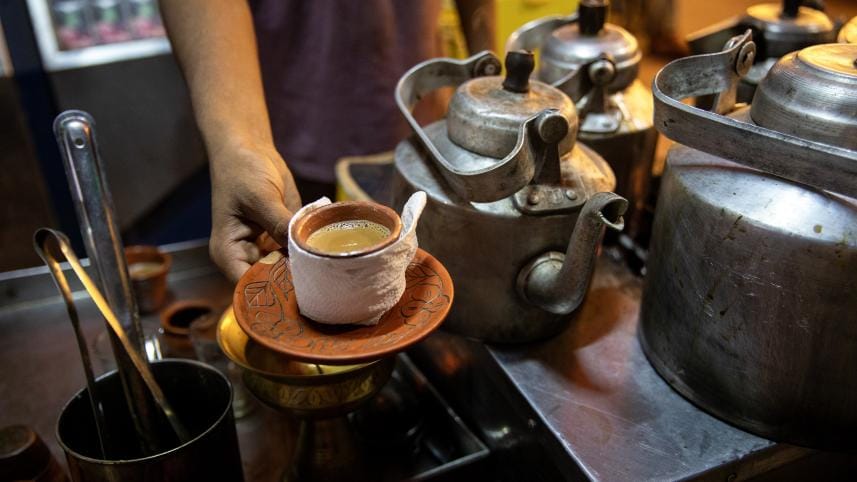
Sameh recalls a warm moment from a winter run in Old Dhaka: "After the run, my mother and I, as well as some of the people we ran with, had tea and butter buns from a small vendor. We sat together, still catching our breath, laughing and sharing something warm under the cold morning. It was a mellow moment of bonding as the city woke up."
For many, the power of street food is felt through nostalgia. Warisha Nawer, an O level student, claims that we tend to value entities that have the capability of holding memories. She recalls visiting food stalls with her parents and the enthusiasm that accompanied those visits. Although the visits are a little different, they remain just as wonderful.
Even in life's demanding seasons, street food offers something steady. As Adia Ahmed prepares to apply to universities, she remembers how she found comfort in routine during her HSC days.
"After Biology coaching, it was almost ritualistic to eat a small treat. I'd tell myself it was good motivation," she shares. "I used to have jhalmuri from this Sector-7 mama that made a special sour sauce. Looking back, during the relentless days of endless studying and coaching classes, those brief stops might've been the highlight of my day."
And sometimes, these memories endure for decades. Romana Afroz, now an academy teacher, traces her recollections from school to university and into adulthood.
"Fuchka captured the essence of my school life," she says.
Later, during her university days, the ritual continued.
"My friend and I would rush through the halls after class for these mini shingaras we could find in front of our university," she says. "It was a place called Mamur Dokan. I recall some of our best times in there, sharing a jhalmuri or tea after class."
"Life happened for both of us, and a lot has changed. We're both 40 with our own families, but now and then we come together to take a break from our lives and enjoy jhalmuri together as if we are in Mamur Dokan once again," she adds.
In Bangladesh, street food often works in magical ways. It feeds us but it also remembers us. It holds our arguments and reconciliations, our exam anxieties, and our friendships in formation. Street foods meet us wherever we are in life: stressed, joyful, young, older, and offer warmth in disposable cups, spice on shared plates, and sweetness wrapped in paper.
For me, it still tastes like fuchka eaten in secret, beside an aunt who now lives far away.
Aleena is a struggling 9th grader who loves robots and revolutions. Send her your esoteric online archives at aleenayusra33@gmail.com.
Comments