


Life as a Bangladeshi undergraduate student in South Korea

In recent years, South Korea has become the new destination for Bangladeshi students who want to attain both quality education and the possibility of mobility, due to the country's emerging global universities and technological advancement.
Studying in South Korea might sound like a dream come true. Everyone back home thinks you're living a glamorous K-drama life: cherry blossom petals falling in slow motion, sleek subways, the soft glow of convenience stores, and every cafe encounter inevitably turning into a meet-cute. The reality is often different.
 For all latest news, follow The Daily Star's Google News channel.
 Two undergraduate students, Nusrat Jahan Alve and Sahara Tabassum Toishi, currently studying Computer Science and Engineering (CSE) at Sejong University, Seoul, share their experiences to shed light on what life really looks like for Bangladeshi students pursuing their undergraduate studies in South Korea.
The application process
When applying to Korean universities, the two most common routes available for Bangladeshi students who are looking for scholarships or financial aid are the Korean government scholarship or the Global Korea Scholarship (GKS).
The GKS is highly competitive and requires you to complete a mandatory one-year Korean language programme before you can start the actual degree. According to Toishi, she had not applied for GKS, as she did not want to lose a full academic year. She was also a bit unsure whether she could master the language well enough within that time frame.
There are also many English-track universities in Korea that offer tuition waivers for the first semester based on the applicants' IELTS scores. According to Alve, "If you have an eight in your IELTS, you usually get around an 80 percent scholarship for the first semester. With a 7 or 7.5, it's around 50 percent. Even 6.0 or 6.5 can get you 30 to 50 percent, depending on the university."
"But, after the first semester, your scholarship depends entirely on your CGPA. The grading scale may vary slightly; some universities follow a 4.3 scale and others a 4.5 scale. Maintaining around 4.0 is generally enough to secure a 50 percent waiver, and if you are a top-ranking student, securing an 80 percent waiver is possible," adds Alve.
Surprisingly, for many universities, there is no need for a recommendation letter. If you are targeting top-tier universities like Korea Advanced Institute of Science & Technology (KAIST), Ulsan National Institute of Science & Technology (UNIST), or Korea University, strong profiles with olympiad achievements and extracurriculars are necessary.
Alve had prepared all her documents herself and consulted an agency only for the university application. "You don't really need an agency. The process is fairly simple. I only found the online portal a little confusing," she says.
Toishi, on the other hand, regrets using an agency. According to her, she paid BDT 1.1 lakh for paperwork she could've done herself.

Academic life
Academic years in South Korea consist of two semesters: Fall and Spring, with each semester lasting 16 weeks. Midterms are held during the eighth week, and finals are held around the 16th week. The grading structure at Sejong is as follows: finals carry 40 percent, midterms carry 30 percent, quizzes carry 20 percent, and 10 percent is reserved for attendance.
A few courses have no midterm, only assignments and finals. Attendance is taken very seriously, and missed classes greatly affect the overall grade.
Students may take 15 to 21 credits per semester. For CSE majors, the course load is heavier than in other disciplines. Most professors are strict but supportive, and research opportunities begin earlier than in Bangladesh, with many labs active in fields such as artificial intelligence, Internet of Things (IoT), big data, and quantum computing.
"The class environment is good. In the English-track majors, all the classes are conducted in English, so I haven't faced any problems," shares Toishi.
Interacting with fellow students is an integral part of academic life, which is often a source of anxiety for international students who find themselves in an entirely new environment.
"Local students tend to value personal space. If you need any help and ask them, they will surely help you. But they are not naturally sociable like Bangladeshis are," says Toishi.
"As I am in the English track, I don't get to interact a lot with Korean students. Student life is very busy: attending classes, going home, cooking, rushing to part-time jobs, and studying. The campus culture is very different from what I imagined," shares Alve.
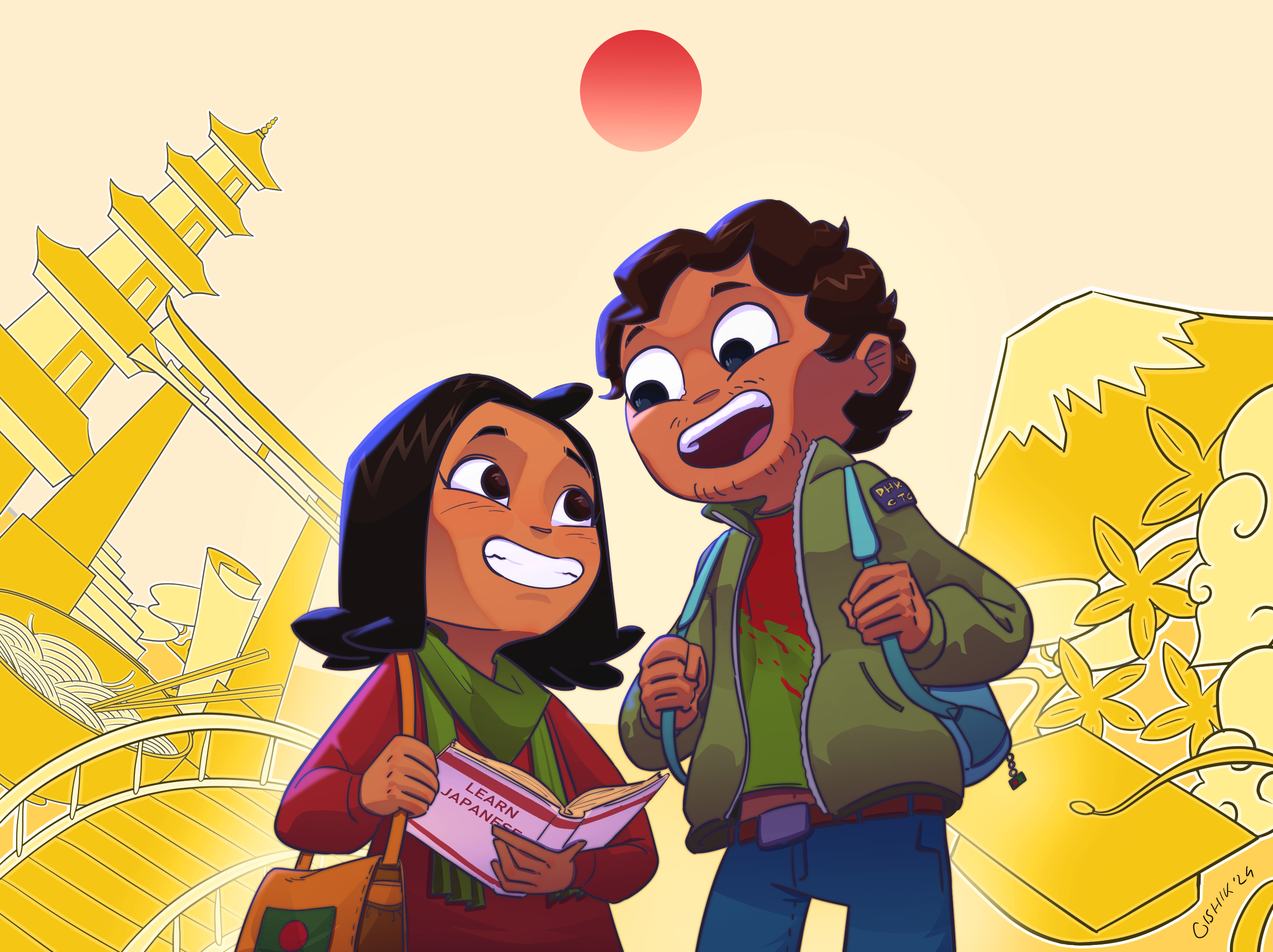
Fitting in with locals
International students often find themselves worrying about whether natives will be welcoming towards them or not, especially in countries where there's a language barrier. According to Toishi, Koreans generally do not discriminate towards international students.
"Koreans treat international students normally, just like other students. They don't behave differently towards us. Sometimes, they are curious and happy to see international students studying here," says Toishi.
Alve shares a slightly different perspective, "Koreans tend to behave more positively with Europeans or white students. Older people occasionally show subtle signs of racism, but most people are good."
However, the real barrier is language. They avoid speaking in English, not because they want to be unwelcoming, but because many Koreans are insecure or embarrassed about their own English.
Culture, society, and adaptation
Some culture shock is expected when you're moving to a whole new geographical location, but there are ways you can manage as an international student.
"For me, food was the biggest culture shock. They eat many things that are not acceptable for Muslims or Bangladeshis," says Alve.
"Halal food is easy to find. Muslim communities from Bangladesh, Uzbekistan, Kazakhstan, and Pakistan run halal marts where you can find nearly everything, and you can also order online. But most of the time you have to cook yourself," adds Alve.
The climate is also another shock. Winters often drop to -15 or even -20 degrees Celsius.
"Seoul is extremely cold. Three months of life below zero was the hardest part for me," Alve opines. "Working part-time in that weather is brutal."
Daily life in Korea is well-structured, private, and quiet. "People mind their own business. They don't randomly talk to you. People are also extremely hard-working as compared to Bangladesh," she adds.
The subway system is orderly, with no pushing or shouting. "In rush hour, the subways are overcrowded, even more than in Bangladesh, but people don't fight. Everyone somehow manages to get on and off," reveals Alve.
Some students tend to choose goshiwons or shared houses instead of on-campus housing to reduce costs. According to Alve, "Minimum goshiwon rent is 2.7 lakh South Korean won, but a decent one in Seoul costs around 3.5 lakh South Korean won. If you aim for a shared house, the rent would be lower, but you need to give a deposit of 3 to 4 million South Korean won beforehand."
Students spend all their time commuting, cooking, cleaning, attending classes, and working, leaving no time for leisure. "At the end of each day, you are completely exhausted and just have to lie down. There isn't much time for friends or outings," adds Toishi.
But the late nights, empty pockets, homesickness, and pressure have the potential to forge great qualities: independence, resilience, discipline, and control.
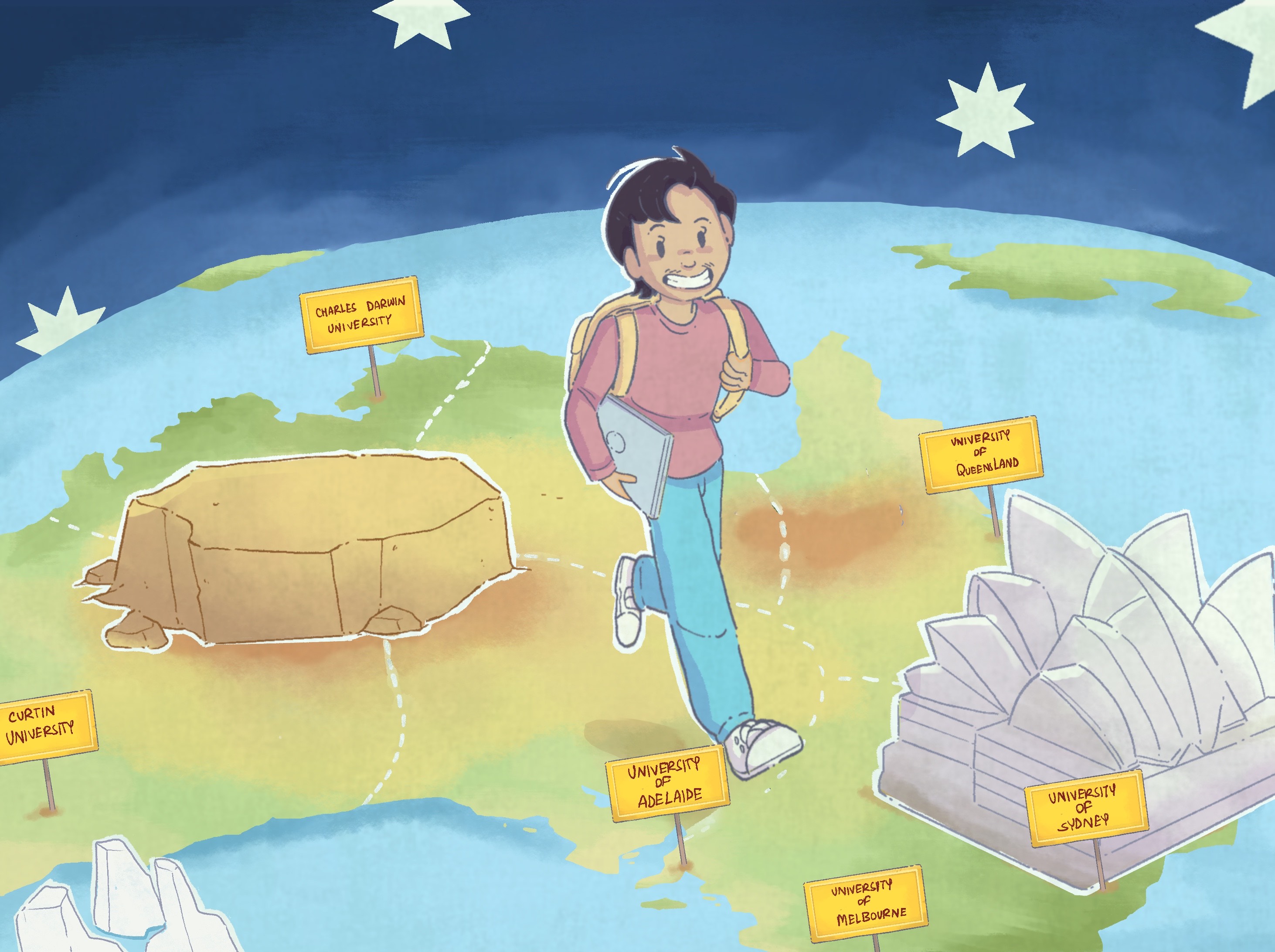
Part-time jobs
"Job hunting is quite difficult. I don't see how people say there are endless jobs here. I managed to get only one part-time job, and that too through a senior. When I was done with that one, I couldn't find another," says Toishi. "They may ask for work permits, which makes it harder."
According to Alve, "Hourly pay is usually 10,000 to 11,000 South Korean won (around 800 to 850 taka per hour). If you work 10 hours, you earn around 10,000 taka. Monthly expenses are at least 600,000 to 1,000,000 South Korean won, including tuition. Balancing studies and work is the main difficulty we face here."
For the students planning to stay in Korea long-term, whether it's for work or graduate studies, investing in Korean language study is a must. "If you know the language well enough, getting a job is relatively easy. Without Korean, you have to stick to harder work: dishwashing, cleaning, serving, and making cookies. I have done all of these jobs during my stay here," says Alve. "During semester break, I worked at a camping area about 100 kilometres away from Seoul. I stayed at the owner's house. Living with them has helped me learn a lot of Korean really fast."
For students with strong CGPAs, teaching assistant (TA) positions are also occasionally available.
If you are considering Korea as your undergraduate destination, the message from current Bangladeshi students is clear: the opportunities are there, the scholarships are real, and the path is open. But you can't show up expecting comfort. You have to have a plan and show up prepared, ready to work, and sacrifice.
An allergic-to-small-talk and addicted-to-heart-to-hearts engineering student. Contact her at: tasfiahliakat007@gmail.com.
Comments