


Employers less interested in hiring National University graduates

- NU graduates face highest unemployment rate
- Academic grades show little employment impact
- Work experience boosts job prospects significantly
- Under-resourced colleges worsen graduate disadvantage
Employers are less likely to hire National University graduates despite their academic records, as they are considered low-quality graduates, a study finds.
 For all latest news, follow The Daily Star's Google News channel.
 Students who do not gain admission to public universities usually enroll in the National University, according to the study.
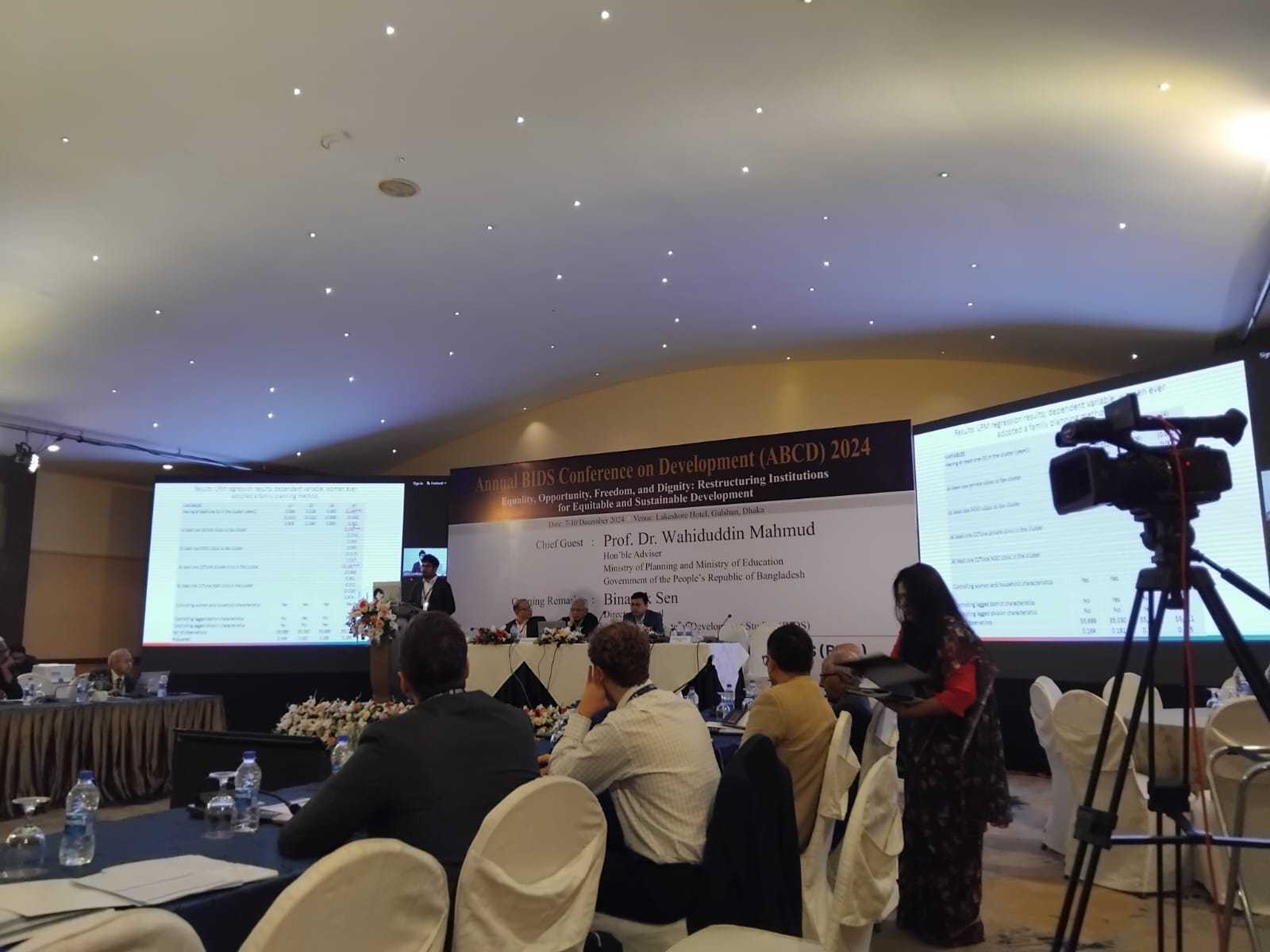
The findings, presented by Tahreen Tahrima Chowdhury, a research fellow at the Bangladesh Institute of Development Studies (BIDS), were revealed during the second day of the Annual BIDS Conference on Development 2025, held at Parjatan Bhaban in Dhaka's Agargaon today.
The study, titled "Employability of NU Graduates in Bangladesh: Academic Performance or Work Experience?", is based on a nationwide survey of 1,639 graduates from 515 NU-affiliated colleges.
She also mentioned a World Bank research report, which stated that a staggering 46 percent of graduates from National University (NU)-affiliated colleges remain unemployed even 3 to 4 years after graduation.
This rate is significantly higher than the overall 38 percent unemployment rate among university graduates, exposing deep cracks in the country's higher education and employment pipeline.
Chowdhury's research comes at a time when Bangladesh has nearly 9 lakh unemployed graduates, according to the Labour Force Survey (LFS) 2024 conducted by the Bangladesh Bureau of Statistics (BBS).
Despite overall unemployment falling over the past five years, the jobless rate among those with tertiary education continues to climb — reaching 13.5 percent in 2024, the highest across all education levels.
The most alarming statistic is the 46 percent unemployment rate among NU graduates, even years after completing their studies.
This suggests a systemic mismatch between the education they receive and the skills the job market demands.
In contrast, public university graduates face an unemployment rate of 38 percent, with the average job search period lasting 10 months.
NU graduates, however, often wait significantly longer, many without securing employment at all — pointing to a structural disadvantage that places them at the back of the line in an already strained job market.
The study noted that the NU, with over 2,000 affiliated colleges, produces the largest number of tertiary graduates in the country.
However, many of these institutions are under-resourced, lack strong industry connections, and do not provide sufficient career guidance — placing their students at a disadvantage compared to peers from public and private universities.

One of the core questions the study sought to answer was whether academic performance (CGPA) translates into better employment outcomes for NU graduates, Chowdhury said.
The answer was striking: CGPA had no significant effect on actual employment status.
"While good grades might help a graduate get shortlisted for interviews, they don't guarantee job offers," said Chowdhury.
"This raises questions about whether NU academic results truly reflect job market competencies."
In contrast, prior work experience — such as internships or part-time jobs during studies — significantly improved a graduate's chances of finding stable employment, she explained.
Graduates who had such experiences were far more likely to be employed, suggesting that practical exposure outweighs academic scores in the eyes of employers.
NU graduates not only face long unemployment spells, but many also fall into underemployment, taking on jobs that do not require their qualifications or offer no job security.
The study revealed a troubling employment scenario for National University graduates.
Only 23.7 percent had secured salaried jobs, while a mere 1.6 percent were self-employed.
A significant 33.2 percent were unemployed and actively searching for work, highlighting the depth of the crisis.
Additionally, 29.1 percent were engaged in irregular, short-term, or daily wage jobs — roles that are often unrelated to their academic qualifications and offer little long-term stability.
The study also highlighted that college quality and access to training play a critical role in shaping a graduate's job prospects.
Those from higher-ranked colleges fared better, and graduates who received off-campus ICT training had slightly better chances of employment.
Comments