


Bangladesh’s healthcare market projected to reach $23 billion by 2033
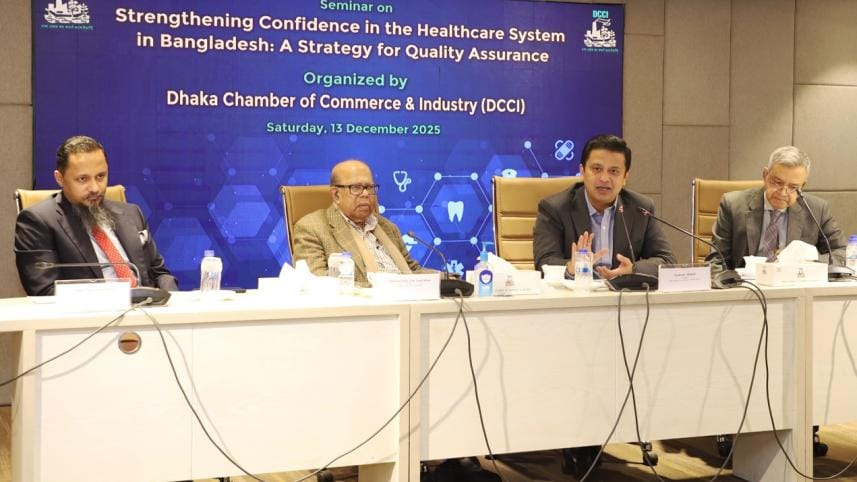
Bangladesh's healthcare market is projected to reach $23 billion by 2033, driven by rising demand for quality care and the increasing prevalence of non-communicable diseases such as diabetes and cancer, a top official of United Hospital Ltd said today.
The current market size, including hospitals, diagnostics, devices, and pharmaceuticals, is around $14 billion, said Malik Talha Ismail Bari, managing director and CEO of the leading hospital.
 For all latest news, follow The Daily Star's Google News channel.
 He shared the information citing studies at a seminar on Bangladesh's healthcare system, organised by the Dhaka Chamber of Commerce and Industry (DCCI) at its office in Dhaka.
"Private hospitals, clinics, and specialised care providers now serve a large portion of demand, significantly increasing the private sector's share," he said.
He added that the annual outflow of money for healthcare amounts to about $5 billion, mainly due to a deficit of trust and doubts over diagnostic accuracy.
"Patients often travel abroad not because treatment is unavailable at home, but due to a lack of confidence in diagnostic accuracy, bill shocks, hidden charges, and concerns over counterfeit drugs and low-quality surgical materials," he said while delivering the keynote address.
India remains the top destination for Bangladeshi patients, followed by Thailand, Singapore, and Malaysia.
Patients feel that Kolkata offers better value through cleaner facilities, clearer billing, and more attentive medical and nursing care than comparable private hospitals in Dhaka, he said.
He also noted that out-of-pocket healthcare expenditure in Bangladesh stands at 74 percent, which is higher than in neighbouring India, Sri Lanka, and Nepal.
At the event, National Prof AK Azad Khan, president of the Diabetic Association of Bangladesh, said that although Bangladesh has made notable progress in the healthcare sector, the desired quality standards have yet to be achieved.
He said healthcare quality in Bangladesh lags behind that of developed countries and even some neighbouring nations.
He stressed the importance of implementing primary healthcare and added that, along with overall management development, decentralisation is crucial for improving the health sector.
DCCI President Taskeen Ahmed said there are disparities in service quality between public and private hospitals.
Shortages of skilled manpower, the rise of unauthorised clinics and pharmacies, weak regulatory oversight, and limited use of modern technologies continue to erode public health security and trust, he said.
Due to the absence of an effective health insurance mechanism, individuals have to bear nearly 74 percent of total healthcare expenditure themselves, posing serious financial risks for low- and middle-income groups.
To ensure a sustainable healthcare system, he stressed the need for foreign investment, public-private partnerships, modern medical technologies, and skilled professionals.
Comments