


Leadership: Power over people

Once, leadership meant fixing problems. Today, it means fixing narratives. Roads can wait, facts are negotiable, and applause is a performance metric. The louder the speech, the stronger the leader. Listening is optional, empathy is overrated, and silence is sold as public support.
For decades, leadership literature taught a simple idea. Great leaders serve people, build trust, and strengthen institutions beyond themselves. Sustainable success is grounded in ethical leadership and a strong culture. Somewhere along the way, that lesson slipped out of fashion. The change is visible in politics and in corporate leadership.
 For all latest news, follow The Daily Star's Google News channel.
 Consider politics first. The United States and India, the world’s two largest democratic countries, face growing questions about democratic practice. Power is strengthened less through consensus and more through polarisation. Narratives are rewritten, history is selectively remembered, and divisions are amplified to consolidate authority. These countries have produced leaders such as Abraham Lincoln, Barack Obama, Mahatma Gandhi, Jawaharlal Nehru, and Sardar Patel.
In contrast, Russia, China, and North Korea make no claim to leadership over people. Authority there is centralised and unquestioned. The troubling reality is the mix. Democratic leaders borrow autocratic tactics, while autocrats grow bolder. Smaller countries such as Venezuela, Ukraine, Iran, Greenland, and Bangladesh often respond to power politics rather than shape their own destiny.
The boundary between government politics and corporate politics is now thin. Tactics once confined to elections appear in boardrooms. Narrative control replaces transparency. Loyalty is valued more than competence. Opposition is managed rather than debated.
In many places, this is packaged as efficiency or national interest, but it often functions as a loyalty test. When disagreement is treated as disloyalty, teams stop sharing bad news early, risk goes up, and mediocrity becomes safer than truth.
Perhaps the most uncomfortable metaphor for modern leadership is the Epstein file. It was not only a criminal scandal but a mirror showing how power protects itself. The shock was not that wrongdoing existed, but that so many influential names circulated around the story without consequence. Proximity to influence offers insulation. Image on the surface, silence underneath, accountability negotiated rather than enforced.
Yet leaders do not emerge in isolation. They are chosen, endorsed, tolerated, and often celebrated by their own people. If divisive leaders keep winning, it suggests that fear, certainty, and spectacle are currently more attractive than patience, compromise, and empathy.
This shift is equally evident in business, particularly among technology companies that now rival nations in influence. In earlier decades, classrooms celebrated figures like Jack Welch and Jamsetji Tata. They were demanding and performance-driven, yet focused on trust, institution building, and leadership continuity. Tough, but human.
Today, the spotlight rests on Elon Musk, Jeff Bezos, and Mark Zuckerberg. Their achievements in innovation, speed, and scale are undeniable. Market valuations have soared. Yet empathy, psychological safety, and long-term people development have slipped down the priority list.
Musk exercises extraordinary influence through ownership, valuation growth, and cultural dominance, while settling for a trillion-dollar perks. Bezos built an efficiency machine so refined that humans must justify their existence within it. Zuckerberg once celebrated breaking things faster than competitors, but later learned that trust, once broken, does not recover as quickly as code. Data reinforces the concern. Gallup reports low global employee engagement. Edelman’s Trust Barometer shows declining trust in political and business leaders, especially among younger generations. Performance indicators look healthy. Confidence does not.
For Bangladesh, this is not academic. Institutions are still forming, checks and balances remain fragile, and tolerance for strong personalities often exceeds patience for strong systems. Importing power-driven leadership without people-centred foundations risks long-term fragility disguised as strength.
The answer is not rejecting ambition or innovation. It is restoring balance. Leadership must treat trust, dignity, and empathy as strategic assets, not optional extras. Institutions must reward sustainability, not only dominance. And followers must stop mistaking power for leadership.
People’s leadership has not disappeared. It has been sidelined. History suggests it returns when the cost of ignoring it becomes too expensive to justify.
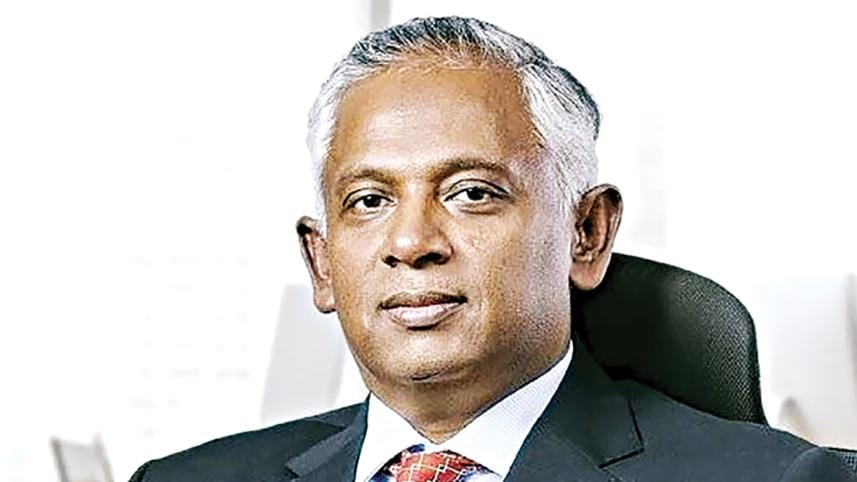
The writer is the president of the Institute of Cost and Management Accountants of Bangladesh and founder of BuildCon Consultancies Ltd
Comments