


Put domestic industry and business first

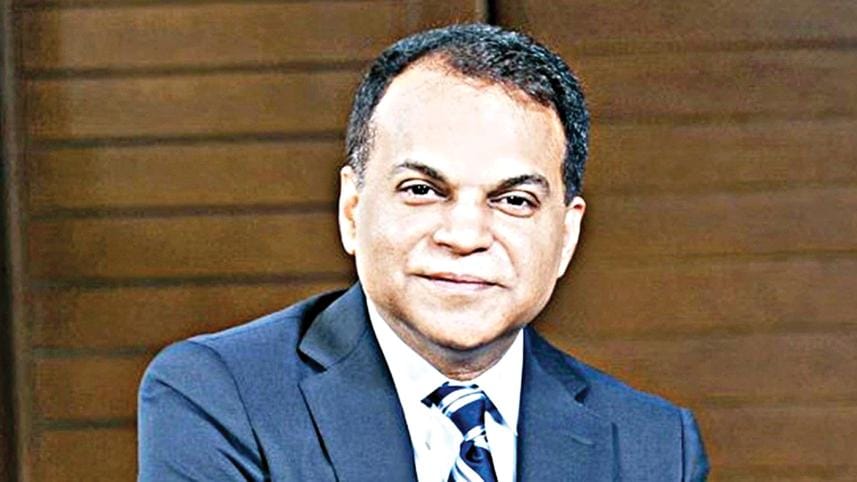
I write as a manufacturer, a Bangladeshi manufacturer at heart. I believe in protecting our ability to make products at home. I agree with the idea behind tariffs, but they must be used smartly, not as slogans. My concern is simple and existential: Bangladesh's real economy is seriously bruised, and unless we act immediately to start the healing process, many factories will not survive to see the upswing.
In real terms, since 2018, and particularly since 2020, domestic demand has never fully returned, yet input costs have soared and credit has turned prohibitively tight. Capacity kept being added. This was because misleading headline indicators like foreign-exchange reserves and gross domestic product growth masked the reality on the ground.
 For all latest news, follow The Daily Star's Google News channel.
 Today, many firms are deeply loss-making. Even a few of the biggest names are living on prayers. Businesses such as those in steel and cement are drowning in unutilised capacity and equity erosion.
We see this stress daily. Several financial institutions are unable to adjust letter of credit (LC) facilities to absorb the devaluation of the taka. Some are struggling to extend already-approved working capital, and some cannot clear cheques. Business owners can feel the systemic pressure building inside a fragile system. The government may look rich on paper, but if its industrial base collapses, the entire economy follows.
Also remember that in times like these, capital erosion, especially in heavy and capital-intensive industries, happens quickly and pushes industries towards monopoly: the big get bigger, and small and even medium firms grow weaker.
Some industries already see up to 70 percent of the market controlled by as few as two players — a situation that may not seem urgent to a politically busy government but will be paid for dearly by the people sooner than we think.
Historically, governments have used construction to fight stagflation and recession. But we have almost stopped all major infrastructure projects or chosen not to launch new ones. Construction — our primary economic flywheel — has lost half its public-sector buyers.
The slowdown in the private sector is equally tragic. It is caused not only by squeezed money markets but also by suffocating bureaucracy. Real estate approvals have become slow by default. Understandably, political representatives have been temporarily replaced by bureaucrats as heads of city corporations, upazilas, and municipalities. Many of them hold multiple positions on top of their regular duties. They are very cautious because this is not their area of expertise. I can't blame them. Files sit until an elected representative takes office. Projects wait while the economy suffers.
Several countries already practise e-approval for construction — and, yes, they're building faster, and getting money circulating earlier.
We are running out of time. Elections are scheduled for early 2026. The new government will need months to form a team, settle in, and prepare. The fiscal year 2026-27 budget will already be drafted by then. In all likelihood, a conservative approach like the current budget will follow. Practically, real policy room may not open until FY2027-28. Waiting that long is not an option.
Factories are not lines on a spreadsheet; they are homes and communities; they are workers' shrines. Construction sites are not just concrete-pouring sites but the epicentres for creating jobs in those 3,600 support industries.
I am not asking for favours, but I am crying out loud: with each day that passes, our capital erodes, businesses fail, and the very people you have taken responsibility for are weakened.
The writer is the chairman of Anwar Group of Industries
Comments