


WHAT WE’RE READING THIS WEEK
17 September 2025, 18:00 PM
Akhteruzzaman Elias needs no introduction. Khoari is an anthology of four short stories by the prolific writer of novels like Chilekothar Shepai (1987) and Khwabnama (1996). In this collection, the writer explores not only universally resonant and time transcendent themes like sexuality, old age, lust, and death but also postcolonial ones like race, occupation, displacement, and sense of belonging.
17 September 2025, 18:00 PM
CREATIVE NONFICTION / Ink, jasmine, and the ghost of Ma: Unlearning my father
15 June 2025, 08:01 AM
When it comes to our fathers, especially the ones who try to be good men, a rampant affliction known as patriarchy has left us with no language to imagine them outside of what they were to others. Strip away the roles, and what’s left?
15 June 2025, 08:01 AM

16 DAYS OF ACTIVISM / Of homes and the worlds: Women, violence, and the domestic space
27 November 2024, 18:00 PM
November 25, the International Day for the Elimination of Violence Against Women, marks the beginning of 16 Days of Activism against Gender-Based Violence which goes until December 10, Human Rights Day.
27 November 2024, 18:00 PM
A walk through free (?) Dhaka
5 August 2024, 14:30 PM
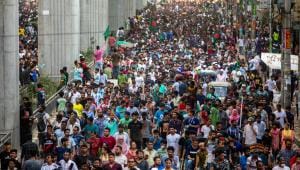
Bangladesh has gone through a day of historical proportions, and the people on the streets seem to know this.
5 August 2024, 14:30 PM

POETRY / All that I shouldn’t have known
28 June 2024, 18:00 PM
What I wish I didn’t know is that when your dear friends whisper the word “psycho” behind your back, you’ll grow up accepting it.
28 June 2024, 18:00 PM

POETRY / Shrines
29 March 2024, 18:00 PM
Words have crashed onto your shores
29 March 2024, 18:00 PM

REFLECTIONS / TRIGGER WARNING: Agency, autonomy, and female smoking
6 March 2024, 18:00 PM
A month ago, as I waited for a friend in Banani, I decided to grab a packet of cigarettes. I’m not good at calculations for loose change and the vendor, old and seemingly disoriented, was having a hard time too.
6 March 2024, 18:00 PM
MUSINGS / The sound of Dhaka city
6 October 2023, 18:00 PM
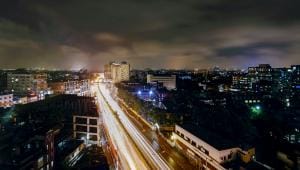
Once on a particularly smothering hot day, on a CNG ride to work, I was stuck in the most heinous traffic for over two hours. Over the yelling drivers, honking cars, and incessant cursing over why the CNGs were trying to overtake the expensive cars, I was listening to my usual cycle of songs. As coincidence would have it, David Gilmour in his seraphic voice posed the question: “So, so you think you can tell/ Heaven from hell?”
6 October 2023, 18:00 PM

In the sand dunes
His face was growing warmer, it seemed as though the intangible entity that was stinging his closed eyes was growing stronger.
1 September 2023, 18:00 PM

Of ‘BONOBIBI’ and music as a form of storytelling
The verses remind us that a withering, war-torn Earth can still birth new life and hopes of freedom.
18 March 2023, 06:31 AM
On Coke Studio Bangla x Meghdol’s ‘BONOBIBI’ and music as a form of storytelling
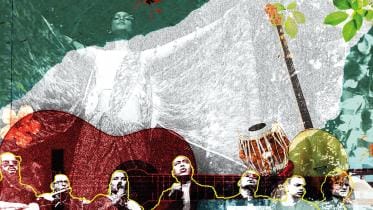
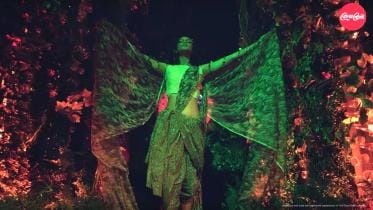
When Coke Studio Bangla released Meghdol’s Bonobibi, their second song of season 2, listeners found themselves torn between loving the song and questioning it. Questioning as to why the song was done under the banner of Coke Studio, a project funded by an American-based multinational corporation; questioning what qualifies Meghdol, a band known for singing about urban life in Dhaka city, to sing about tales originating in the Sundarbans; and why the song didn’t delve deeper into the history and background of the stories they were trying to tell. It has raised a wider question about how music plays a role in storytelling.
17 March 2023, 18:00 PM
Afternoons at the Bijoy Sarani signal
“I wonder what she’ll wear tomorrow,” he mumbled as his eyes drooped shut.
16 March 2023, 09:41 AM
‘Bonbibi’: When music has a soul
I’m no musician; my knowledge of good and bad music goes much beyond the superficial but, what do I know of the technicalities that goes into creating something that emerges as an enchanting composition?
2 March 2023, 22:53 PM
AI generated Bangladeshi comic ‘Manobjatir Grohon’: An initiative with potential
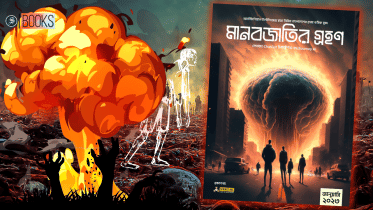
We find out that civilisation underwent the threat of extinction, where only a few survived. About 100 years later, Anika, a 19-year-old girl, comes across an orb-like glowing “machine” that is meant to “change the fate of the current humanity forevermore.”
6 February 2023, 13:29 PM
Surviving in a stagnant industry: What are emerging publishers doing differently?
Preexisting publishers are struggling to sustain in the market since the Covid-19 and the recent rise in paper prices. How are smaller and emerging publishers faring?
2 February 2023, 07:56 AM
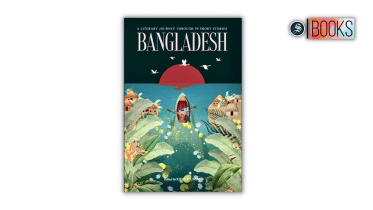
Rifat Munim releases anthology, ‘Bangladesh: A Literary Journey through 50 Short Stories’
The book will be launched at the Dhaka Lit Fest starting Thursday, January 5, where Rifat Munim is also hosting a session.
3 January 2023, 12:57 PM

Six of my favourite winter reads
Be it for their nostalgic pull or the promise of escaping into a rich, evocative world, these tales have been consistent go-to’s for me over the years.
18 December 2022, 11:48 AM

An ordinary day, with monsters in our jungles
Even the Bangladeshi protagonist—merely referred to as Agontok (a stranger)—is established as an anti-hero, in contrast with the traditionally heroic Hercules, which I thought was an exciting change.
15 December 2022, 13:55 PM
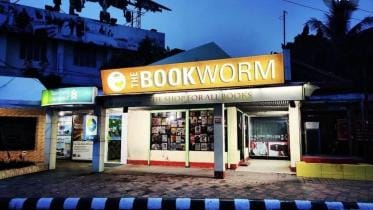
Bookworm Bangladesh to vacate shop after 30 years of serving readers
“We tried our best to keep the shop but the tides of change are upon us”, Bookworm announced on their social media today.
26 October 2022, 09:51 AM
Can a city hold a home? - Shagufta Sharmeen Tania’s short story, “What Men Live By”
“What Men Live By” opens like a children’s story—the way Matilda or most Roald Dahl books would start out—with simple, everyday events and straightforward descriptions. Eventually, though, one line caught my attention and I couldn’t help but smile:
19 October 2022, 18:00 PM

Your favourite fictional blackout companions
“Free light source plus [a] dude I can sit and ruminate with, it’s perfect.”
6 October 2022, 10:12 AM
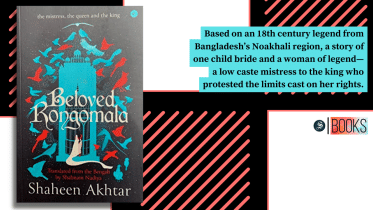
Shaheen Akhtar’s ‘Beloved Rongomala’ (trans. Shabnam Nadiya) in a new edition from Westland Books
Based on an 18th century legend from Bangladesh’s Noakhali region, Beloved Ronglomala tells the story of one Queen Phuleswari, a child bride, and of Rongomala, a woman of legend.
28 September 2022, 09:39 AM
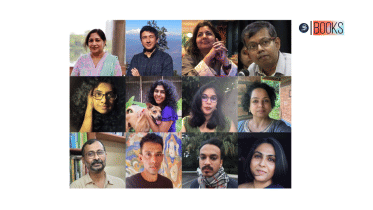
Shabnam Nadiya, Wasi Ahmed only Bangladeshis among English PEN Presents shortlist
Shabnam Nadiya was selected for The Ice Machine, her translation from the Bangla of Bangladeshi short story writer and novelist Wasi Ahmed’s Borofkol.
28 September 2022, 07:50 AM

All that matters
The office started to clear out once the overhead clock struck five.
15 September 2022, 00:00 AM

2023 International Booker Prize judges announced
Chairing next year’s judges’ panel will be Leïla Slimani, the French Moroccan novelist known for books like Lullaby (2016) and Adèle (2019).
17 August 2022, 14:40 PM
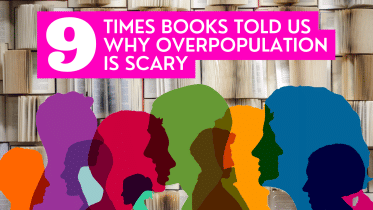
Nine times that books told us why overpopulation is scary
Despite the decelerating growth rate and with the country's population currently standing at 16.51 crore as opposed to just 14 crore in 2011—merely 10 years ago—overcrowding is still a massive cause of headache for most of us.
30 July 2022, 09:59 AM
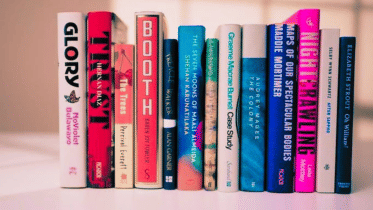
Unconventional narrators dominate the 2022 Booker Prize longlist
Glory is narrated by a vivid chorus of animal voices, while Maps of Our Spectacular Bodies is partly told by the malevolent cancer travelling through the body of protagonist Lia.
27 July 2022, 12:10 PM

Yet another musical marvel from Meghdol
When I noticed that Meghdol had released a song for the film “Hawa”, while scrolling through my YouTube homepage, I somehow knew that I would not be disappointed. Of course, this was a hunch owing to my eternal love for Meghdol.
However, what I did not expect was to be moved by it to the extent that I was. It has been years since a piece of music managed to sincerely and deeply pull at my heartstrings to the level “E Hawa” has been able to.
21 July 2022, 10:52 AM