


Star Literature
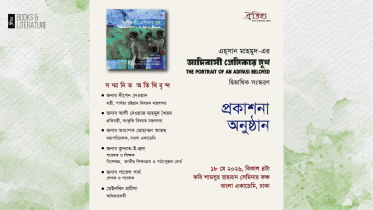
A bilingual ode to the hills: On the launch of Adivasi Premikar Mukh: The Portrait of an Adivasi Beloved
Adivasi Premikar Mukh: The Portrait of an Adivasi Beloved (Oitijjhya, 2026), a bilingual poetry collection by journalist, poet, and fiction writer Ehasan Mahamud, is set to be launched today, Monday, May 18, at the Kabi Shamsur Rahman Seminar Room of Bangla Academy, Dhaka. The event is organised by Oitijjhya Publications and begins at 4:00 PM.
18 May 2026, 15:11 PM
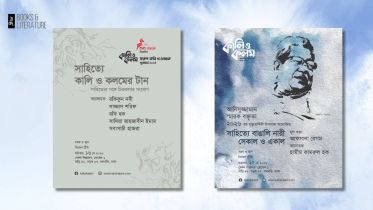
Two-day literary memorial and discussion event held at Bengal Shilpalay
Bengal Shilpalay in Dhanmondi, Dhaka hosted a two-day literary event on May 15 and 16, consisting of a memorial lecture and a discussion session organised by Bengal Foundation and Kali O Kalam. The event, organised with the participation of prominent researchers, writers, and artists of the country—brought up literature, culture, social thought, and various contemporary issues.
17 May 2026, 17:16 PM

Faded blue suitcase
We once lived in Jackson Heights, Queens, New York City. Those days still return to me, especially when my grandmother’s death anniversary comes around.
28 March 2026, 03:44 AM

The Cosmere is getting adapted: Here is where to start reading
Earlier this year, Brandon Sanderson finalised what has been described as an “unprecedented deal” with Apple TV+ to adapt his Cosmere universe for film and television, specifically his Mistborn and The Stormlight Archive series. For years, Hollywood had shown interest in acquiring the rights to his massive fantasy catalogue. But they could not guarantee him creative control. This is the biggest reason Sanderson had not sold the rights until now. With this Apple TV+ deal, Sanderson gets full creative power and will oversee each project personally.
14 March 2026, 21:02 PM

A meaningless world: Sartre, Camus, Waliullah, and Badal Sircar
Existentialism is a philosophical theory and a literary perspective. Its central proposition is that the world has no a priori meaning or purpose.
14 March 2026, 01:48 AM
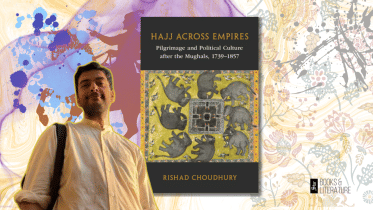
Rishad Choudhury wins Association for Asian Studies’ 2026 Bernard S. Cohn Prize
Rishad Choudhury, a historian and Assistant Professor of History at Oberlin College, has been awarded the 2026 Bernard S. Cohn Prize by the Association for Asian Studies for his book Hajj Across Empires: Pilgrimage and Political Cultures After the Mughals, 1739-1857 (Cambridge, University Press, 2004).
13 March 2026, 19:30 PM

An unintentional gatecrasher
Although The Wedding People deals with sensitive issues such as depression and suicide, it is done in a light-hearted and an endearingly humorous way.
25 February 2026, 16:24 PM
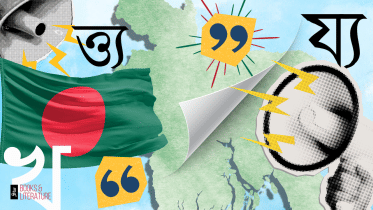
The ekushey filter
The Filter erases dialects, swaps backdrops, whitens skin, lifts pitch—an algorithm that functions as both beautician and censor.
21 February 2026, 19:54 PM

From autumn to winter in the northeast England
There are a few old trees with wide trunks—I do not know their names—just beside my library. I never forget to have a quick look at the leaves during coming and going to the library.
7 February 2026, 01:54 AM
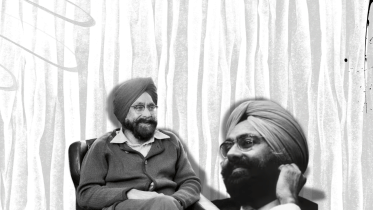
Khushwant Singh remembered: Legacy, language and Indian writing
As the calendar turned to February 2, 2026, marking what would have been the 111th birthday of Khushwant Singh, the silence from his iconic Sujan Singh Park residence feels particularly loud. Singh was more than a writer; he was a cultural weather vane who pointed toward honesty even when the winds of political correctness blew the hardest.
5 February 2026, 16:16 PM
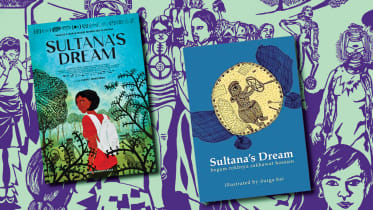
A dream rewritten: Rokeya’s radical vision and its cinematic afterlife
“There is no place on earth where women are safe,” declares Inés, the protagonist of Isabel Herguera’s animated film Sultana’s Dream (2023).
5 February 2026, 00:00 AM

Little Grey
It is a winter day in a small town at the far eastern edge of the Himalaya, in the Chinese province of Yunnan. The province is known for its mild climate.
31 January 2026, 08:31 AM
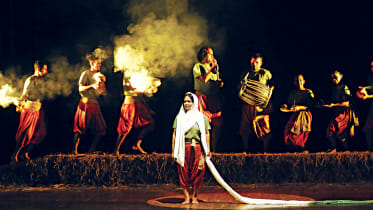
Bangladesh Theater Archives: Transforming history into a 40-year legacy
In a small room in 50 Purana Paltan line, shelves groan under the weight of posters, photographs, tickets, flyers, souvenirs, folders, books, and fading documents.
31 January 2026, 08:28 AM
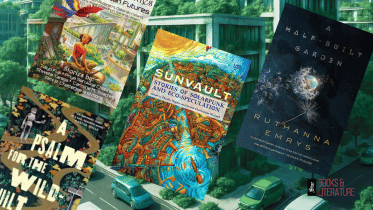
The anti-dystopia: Why solarpunk is the future of science fiction
For years, speculative dystopian fiction has trained readers to expect the worst: scorched planets, collapsing governments, ruthless technologies, and futures where survival is the only victory left. Solarpunk pushes back against that narrative. Instead of asking how the world ends, it asks a far more radical question: what if we fix it? What if cities worked with nature instead of against it? What if technology served communities, not corporations? And what if hope wasn’t naive, but necessary?
29 January 2026, 16:00 PM

A trim reckoning
So, Ma and I had our eyes glued to our screen while Reaz smeared toothpaste over his face and chanted slogans in front of his school.
17 January 2026, 00:00 AM

Unveiling ‘The July Resolve': Stories of resilience & resistance
On the chilly afternoon of January 10, Bookworm Bangladesh, in collaboration with Voices Shaping Society, hosted the book launch of The July Resolve, a collection of 36 narratives that depicts the strength and struggles of people from all walks of life during the Monsoon Revolution of 2024.
14 January 2026, 16:01 PM

Hibari’s Morning: Shedding light on an uncomfortable reality
This story spans for two volumes, separated in 14 chapters. Yet the author deliberately gives the reader the insight into other characters, or rather the abettors before Hibari, the victim herself. It is only in the later chapters do we catch a glimpse of Hibari’s inner world, and it is heartbreaking.
8 January 2026, 12:49 PM
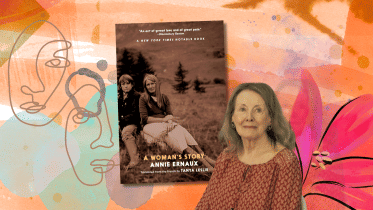
Grief, guilt, and memories in the pages of Annie Ernaux’s ‘A Woman’s Story’
There are two things that struck me the most in the book: firstly, Eranux's thoughts during the funeral, and secondly, her statement about her mother’s appearance after Alzheimer's Disease had gripped her.
4 January 2026, 13:34 PM
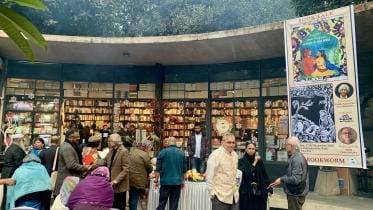
Singing a 900-year-old song: Exploring Rubaiyat of Omar Khayyam with Zeba Rasheed Chowdhury
A book talk on Zeba Rasheed Chowdhury’s latest work, the translation of the Rubaiyat of Omar Khayyam into Bengali, published by Matribhasha Prokashwas held on 27th December 2025, at Bookworm Bangladesh.The event was hosted by scientist and writer Dr. Abed Chaudhury.
3 January 2026, 10:26 AM

The manifesto of laughter
The afternoon sun presses down on Dhaka like a heavy hand. Heat rises from the asphalt in shimmers; buses wheeze as though gasping for breath. Rickshaw bells jangle against each other in the thick, damp air.
31 December 2025, 18:00 PM