


chatgpt

OpenAI releases GPT-5.5 in move towards AI superapp
OpenAI has released GPT-5.5, its newest artificial intelligence model, describing it as the company's most capable and intuitive model to date.
24 April 2026, 14:01 PM

Users are mass-uninstalling ChatGPT after Pentagon deal, data shows
Users are uninstalling ChatGPT in large numbers, with removals surging 295% following OpenAI's agreement to put its technology on the US Department of War's classified network.
4 March 2026, 16:03 PM

ChatGPT to predict age, restrict content for minors
OpenAI has begun rolling out an age prediction system for ChatGPT to identify accounts likely belonging to users under 18 and apply additional safety features.
21 January 2026, 11:06 AM
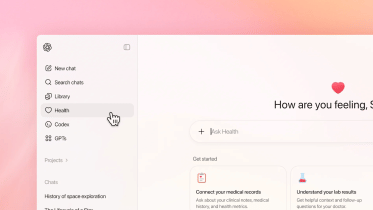
OpenAI launches ChatGPT Health
OpenAI has launched a dedicated health tool within its ChatGPT platform called 'ChatGPT Health', which allows users to connect their medical records and fitness app data to inform the AI's responses.
8 January 2026, 05:35 AM

How to customise ChatGPT's personality
OpenAI has rolled out a new feature allowing users to customise the personality, or communication style, of ChatGPT. Here's how you can access it.
21 December 2025, 06:38 AM
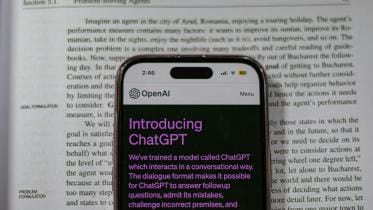
ChatGPT surpasses 800 million weekly users
OpenAI has reported that ChatGPT now has over 800 million weekly users, attributing the chatbot's popularity to its rapid adoption in workplaces.
9 December 2025, 04:23 AM

ChatGPT is now 3 years old
On November 30, 2022, a chat window changed the world. This week, as OpenAI’s ChatGPT celebrates its third birthday, it does so not as a novelty, but as a daily companion to a staggering 800 million people every week.
1 December 2025, 08:15 AM
ChatGPT Enterprise adds new 'company knowledge' feature
OpenAI has introduced a new 'Company Knowledge' feature for its ChatGPT Business, Enterprise, and Education subscription plans. The function allows the AI system to search through an organisation's connected applications to provide answers using internal company information.
27 October 2025, 07:10 AM

OpenAI launches Atlas, new AI web browser
OpenAI has introduced ChatGPT Atlas, a new web browser that integrates its AI features directly into the browsing experience. As per OpenAI, the browser is designed to allow ChatGPT to assist users across the web without requiring them to switch between tabs or copy and paste information.
22 October 2025, 07:15 AM

Will Bangladesh surf the AI wave or be pulled under?
If you imagine ChatGPT as a coder’s best friend, the numbers will surprise you.
7 October 2025, 09:30 AM

Oxford University students and staff will get free ChatGPT Edu
The University of Oxford has announced it will provide free access to ChatGPT Edu, an education-focused version of OpenAI’s AI tool, to all students and staff, starting this academic year. This makes Oxford the first UK university to widely deploy the platform following a year-long pilot involving around 750 users.
21 September 2025, 10:02 AM
OpenAI to launch office in India this year
OpenAI, the Microsoft-backed company behind ChatGPT, will open its first office in India later this year, establishing a base in New Delhi, according to a recent report by Reuters.
23 August 2025, 08:01 AM

Google Gemini adds 'Guided Learning' following ChatGPT's 'Study Mode'
Google has introduced a 'Guided Learning' feature for its Gemini AI platform, arriving just over a week after OpenAI's July 29 launch of a similar 'Study Mode' for ChatGPT. Both tools provide structured learning assistance rather than direct answers, marking a shift in how AI platforms approach educational support.
7 August 2025, 07:59 AM
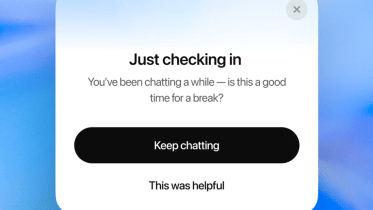
ChatGPT will now nudge you if you chat too long
If you’ve ever gone down a rabbit hole with ChatGPT, you might soon get a gentle nudge to take a break. OpenAI is rolling out a new feature that reminds users when their chat sessions start running too long, as a part of a broader effort to help people stay in control of their time.
6 August 2025, 09:51 AM

Wikipedia dominates ChatGPT’s sources, study shows
A new study has found that ChatGPT, Google’s AI Overviews, and Perplexity AI cite wildly different sources of information, raising important questions for brands and content creators trying to stay visible in the age of AI.
6 August 2025, 09:18 AM

ChatGPT adds new 'study mode'
OpenAI has launched a new 'study mode' for ChatGPT, intended to guide students through learning rather than directly providing answers. The feature, now available to all users, including free accounts, will soon be extended to ChatGPT Edu, a specialised version of the AI tool for educational institutions.
30 July 2025, 09:42 AM

ChatGPT chats lack legal protection, warns Sam Altman
OpenAI CEO Sam Altman has recently raised concerns about privacy protections for sensitive ChatGPT conversations, comparing today's AI privacy standards to "having therapy sessions in public". Speaking on an interview on the 'This Past Weekend' podcast, Altman acknowledged growing user hesitation about sharing personal information with AI tools.
28 July 2025, 08:13 AM

ChatGPT's new feature has "high biological and chemical capabilities"
OpenAI has announced a new upgrade to ChatGPT, introducing "agentic capabilities" that enable the AI model to perform complex tasks autonomously while possessing what the company describes as "high biological and chemical capabilities".
22 July 2025, 09:03 AM

Are we learning vocabulary from ChatGPT?
Whether in school assignments, office work, professional writing, video production, or casual conversations, AI tools like ChatGPT have noticeably changed people’s vocabulary and stylistic choices by subtly enriching users’ linguistic capacities.
22 July 2025, 05:44 AM

ChatGPT is making us forget how to think
Lately, I have found myself in conversations where people talk about ChatGPT and the productivity boost it has brought to their lives. I have used these models. And I have felt the shift; not in the speed of my sentences, but in the weight of them. They come faster, cleaner, and somehow emptier.
14 July 2025, 07:00 AM