


Bangla literature

Barisal, beyond, and the making of Bengali literary modernity
In conversation with Clinton B Seely, emeritus professor of South Asian Languages and Civilisations at the University of Chicago.
2 March 2026, 00:00 AM
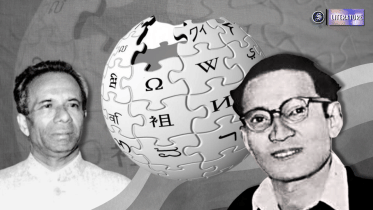
Bangladesh’s writers on Wikipedia: Abbasuddin Ahmed and Humayun Kabir
If such writers lived in, and contributed to the literary legacy of, other countries, I will offer a compromise and propose a hyphenated identity.
3 October 2024, 14:17 PM
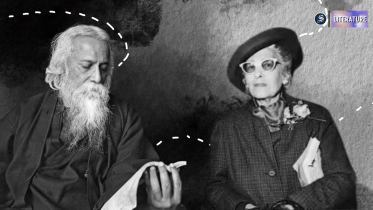
Tagore and the Hispanic world
Reception of Tagore in the Hispanic world is a significant literary event in itself because they acknowledged Tagore during such a time when the occidental enthusiasm for him was declining
31 August 2024, 15:00 PM
The English-Bangla conundrum continues
When my literature professor heard I had been delving into Bangla literature and cultural media in pursuit of a self-undertaken project to finally learn Bangla, she suggested I see the 1970 film Jibon Thekey Neya.
22 March 2024, 18:00 PM
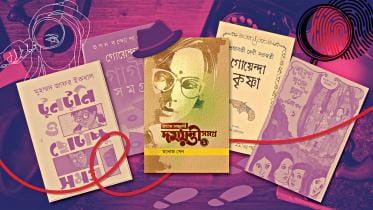
Where are Bangla literature’s female detectives?
During the mid 20th century, when female wordsmiths somewhat flourished with their newly published works, they were still suppressed under the dominance of male authors.
10 January 2024, 18:00 PM
The Writer
The lad appeared to be very humble and slowly took a seat. But I noticed that he did not take his eyes off my face even once. He kept on staring at me through his glasses.
15 September 2023, 18:00 PM
How my admiration for Kazi Nazrul Islam evolved over the years
Kazi Nazrul Islam’s work remains just as relevant and beautiful 123 years after his birth.
25 May 2023, 12:42 PM
Lit Fest and Boi Mela: A linguistic, cultural apartheid?
Both the Dhaka Lit Fest and Ekushey Boi Mela offer sobering insights into the underlying socioeconomic challenges that have hamstrung Bangla publishing.
6 March 2023, 14:00 PM
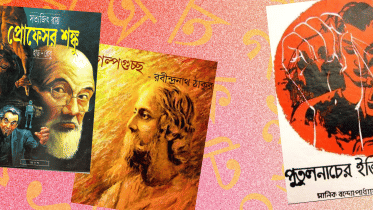
Five books to help you delve into the world of Bangla literature
Sometimes we find it difficult to get past some of our renowned literary works.
23 February 2023, 00:00 AM
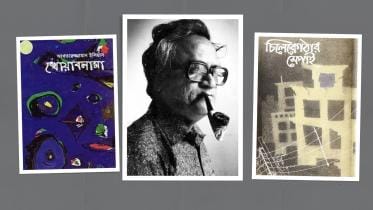
A tribute to Akhtaruzzaman Elias on his 80th birthday
Born on 12 February 1943 Akhtaruzzaman Elias was much like a firework.Khoabnama and Chilekothar Sepai, the literateur's two novels, are often mentioned with admiration amongst ardent readers.
12 February 2023, 08:58 AM

Tagore, the climate crisis, and compassionate development
Rabindranath Tagore saw World War I as the West literally turning its guns on itself, using its very worst traits to cannibalise itself
24 December 2022, 14:00 PM
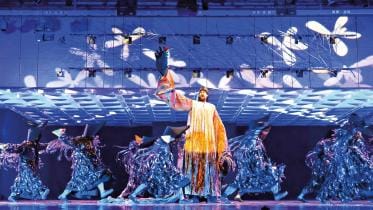
The Making of Theatre: There are no secrets
What makes theatre good, bad or even deadly? I thought I knew the answer to this tricky question. I had a valid ground for this belief because more than thirty years ago, the pre-eminent playwright of Bangladesh,
12 June 2022, 18:00 PM
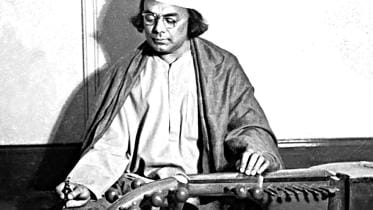
Kazi Nazrul Islam and “World Literature”: Some Questions and Concerns
Kazi Nazrul Islam (1899-1976) has been customarily characterized as a rebel poet, particularly, if not exclusively, because of his 1922 poem called “Bidrohi” (the Rebel)—a poem that fiercely stages his political, linguistic, even metrical rebellion all at once.
27 May 2022, 18:00 PM
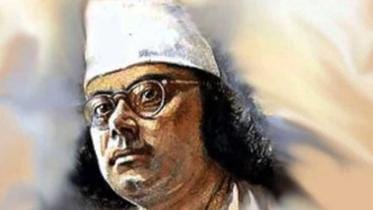
The poet’s last abode
It has been 50 years today since an independent Bangladesh got its national poet.
24 May 2022, 18:00 PM
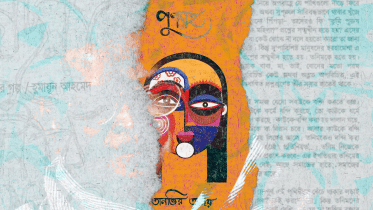
How I found my voice as a debut author
Being accused of copying Humayun made me want to create something of my own, something that wouldn’t be considered mainstream, but nor would it be too out of the box. I wanted to reflect on realism.
28 August 2021, 11:50 AM
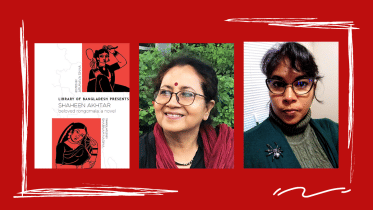
Shaheen Akhtar and Shabnam Nadiya’s ‘Beloved Rongomala’ to be published by Eka, Westland Publications
Shaheen Akhtar’s 'Beloved Rongomala', translated from the Bangla novel, 'Shokhi Rongomala' (Bengal Publications, 2015), by Shabnam Nadiya, will now be published by India’s Eka imprint of Westland Publications. The novel tells the story of Queen Phuleswari, a child bride, and of Rongomala, a woman of legend—a low caste mistress to the king who protested the limits to which her rights were confined by the class and caste prejudices of 18th century southern Bengal.
31 July 2021, 08:30 AM
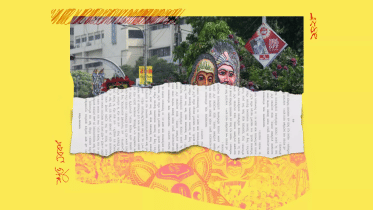
The essence of Pohela Baishakh in Bangla literature
All things colourful make up the Bangla New Year—boisterous celebrations of nature, art work, music, food, the quintessential Bangali warmth, and the Mongol Shobhajatra as its crowning jewel
14 April 2021, 14:22 PM
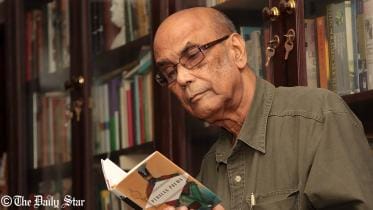
Syed Haq to be buried in Kurigram
Eminent litterateur Syed Shamsul Haq is to be buried at his ancestral village home in Kurigram.
27 September 2016, 15:11 PM

Nazrul study in neglect at DU centre
Although many seminars and discussions are going to be held to mark the 117th birth anniversary of National Poet Kazi Nazrul Islam today, only a handful of research has been done on the poet in the last few decades.
24 May 2016, 18:00 PM
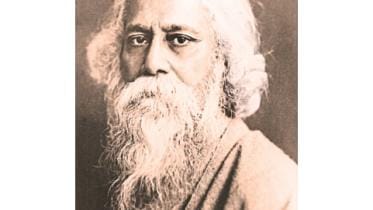
Tagore's birth anniversary today
Today is 25th Baishakh.
7 May 2016, 18:00 PM