


Is your building seismically safe?

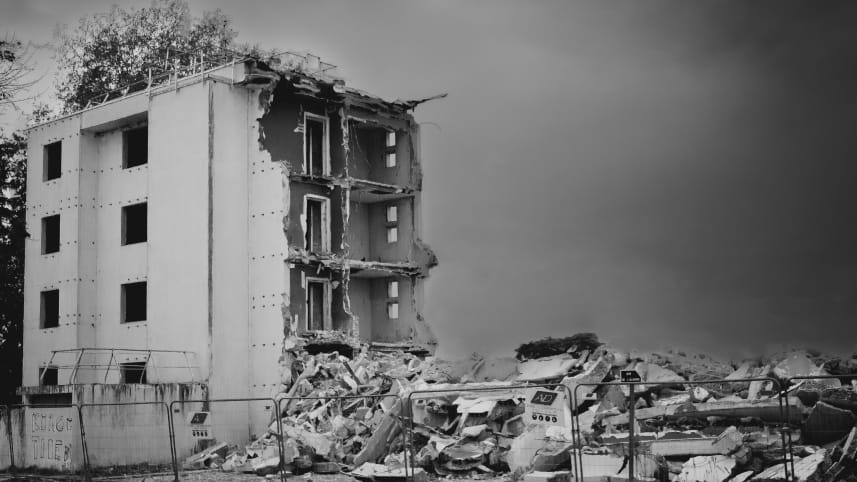
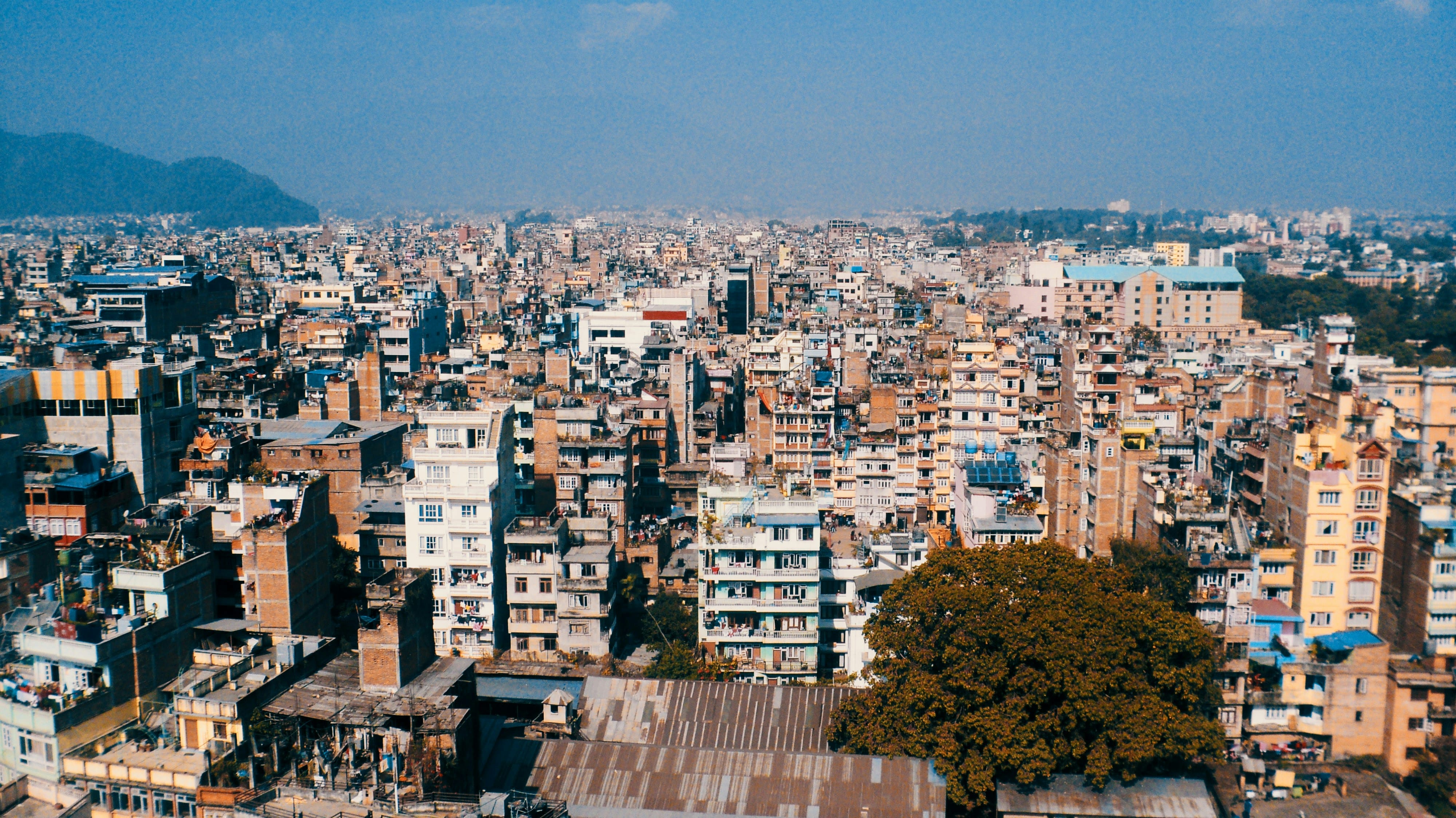
Frequent tremors that have rattled the capital and surrounding districts reveal a worrying truth: many existing buildings were not designed or built to modern seismic standards. Local assessments warn that a major earthquake could cause catastrophic loss of life and widespread structural collapse, and several thousand buildings have already been identified for demolition or strengthening. Rapid urban growth on soft, riverine soils amplifies shaking and increases vulnerability in dense neighbourhoods.
 For all latest news, follow The Daily Star's Google News channel.
 Shamsul Alam, principal structural engineer of The Designers & Managers (TDM) warns that poor supervision and low material quality defeat even sound designs: developers and contractors must be accountable, and public projects need strict quality control
What is retrofitting?
Seismic retrofitting refers to targeted engineering upgrades that improve a building’s capacity to resist earthquake shaking. Common measures include jacketing columns with additional reinforced concrete or fibre-reinforced polymers, inserting reinforced shear walls or steel bracing, strengthening beam-column joints, tying slabs to walls, and fixing weak soft stories at ground level. National technical manuals and recent World Bank–GFDRR guidance outline stepwise evaluation flows that begin with simplified screening, progress to detailed analysis, and end in verified retrofit plans.
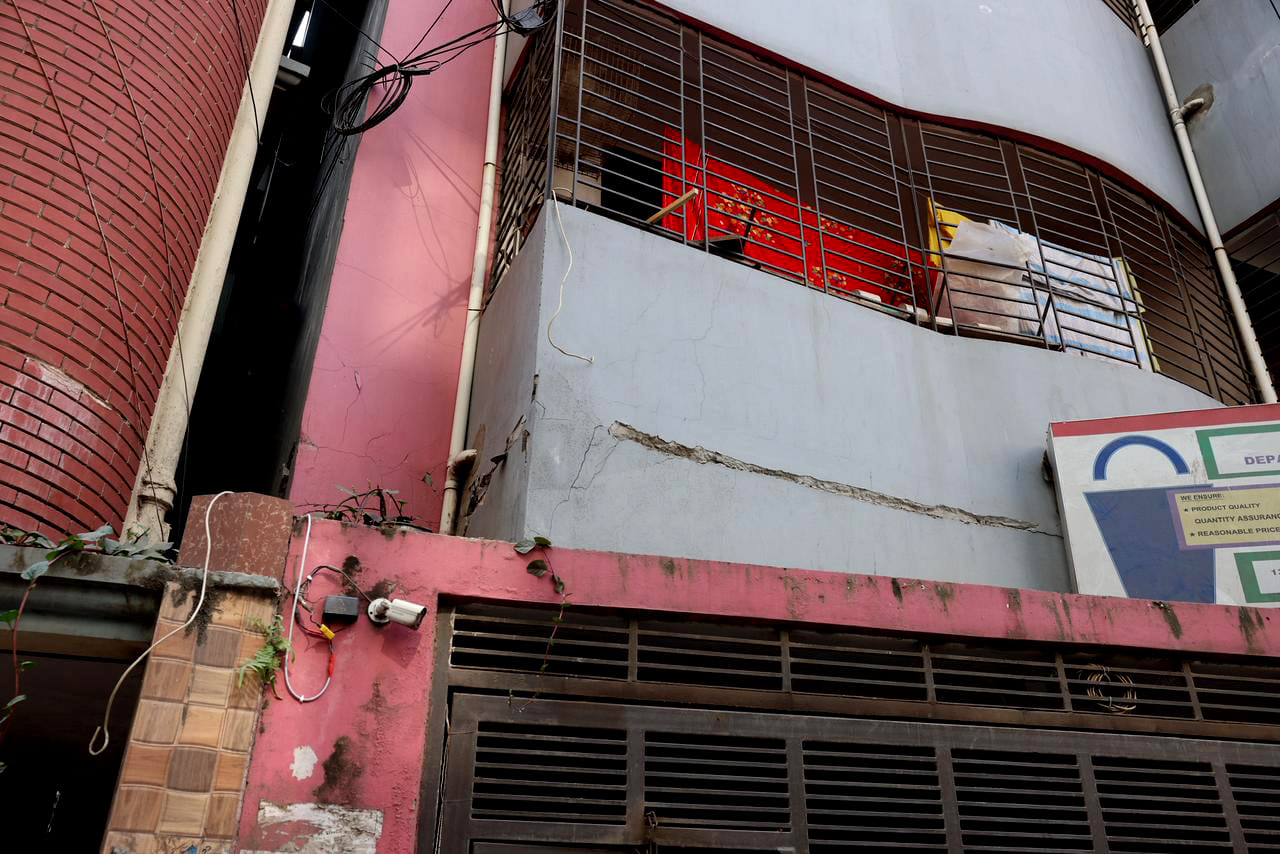
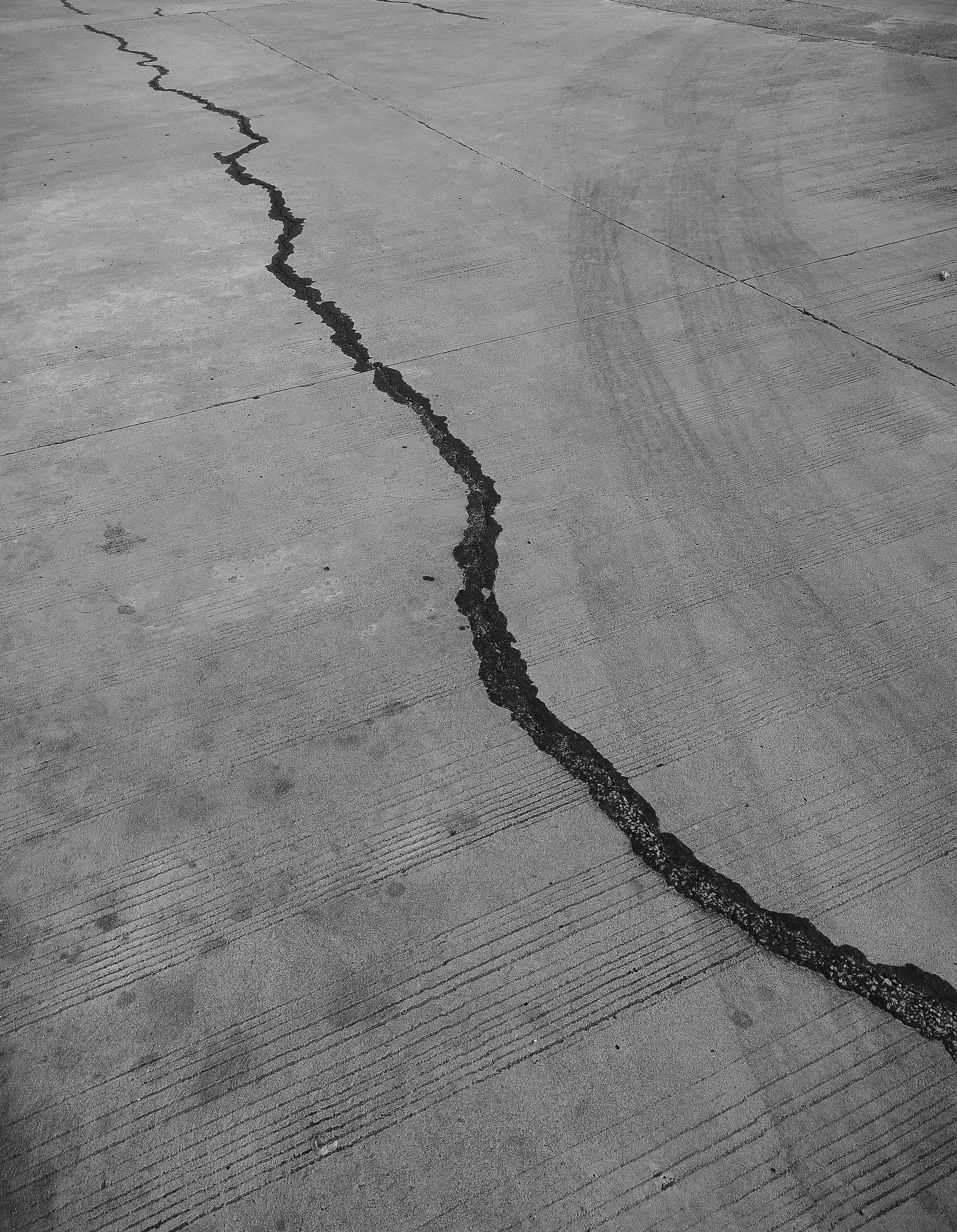
Structural engineers regularly find recurring faults in local frames. “If cracks appear in columns and at beam–column joints, that is a red flag—visible cracking at these nodes usually indicates serious vulnerability,” says Md. Shamsul Alam, Principal Structural Engineer at The Designers & Managers. He recommends producing accurate as-built drawings, running an engineering gap assessment, and then designing interventions specific to the building. “Retrofit is not a routine patch. Here, one must know where the gaps are and then design interventions that are detailed and monitored,” he adds.
Scale of exposure
City-level analyses highlight the magnitude of exposure. One municipal study estimated that, among the millions of buildings in metropolitan areas, hundreds of thousands are potentially at risk; screening in recent years recommended demolition for dozens and retrofitting for hundreds of high-priority public buildings, but many projects remain stalled for lack of funding and administrative capacity. Assessment costs for a mid-rise building and retrofit estimates at the building level are substantial, yet remain far cheaper than the cost of mass rescue, reconstruction, and lives lost.
A practical national programme must act fast and focus on three urgent tasks. First, launch a rapid, nationwide assessment to be completed within six to nine months as urged by Mehedi Ahmed Ansary, a professor at BUET’s Department of Civil Engineering, categorising every building as green, yellow, or red so that those in the red band receive immediate retrofit work; this triage is essential because a six-storey assessment costs about Tk 2 lakh and a retrofit roughly Tk 50 lakh, which is a fraction of the human and financial cost of collapse. Second, mandate independent, third-party structural verification at key design and construction stages and publish assessment results to ensure transparency and public accountability. “This kind of model is used in Japan and India, and municipal bodies alone cannot realistically inspect some 21 lakh buildings in the capital,” urged Mehedi. Earlier municipal screening (3,252 buildings) recommended demolition of 42 and retrofitting of 200, yet many projects remain stalled. Third, create blended finance instruments and pilot municipal retrofit funds, targeted grants for hospitals and schools, concessional loans, and tax incentives for certified private retrofits—to lower upfront costs and build contractor capacity. The urgency is stark: expert estimates suggest Abdul Latif Helaly, former chief engineer of RAJUK, said, “Hundreds of thousands of buildings are at risk, with modelling projecting up to 8.4 lakh potential collapses and a possible death toll in the hundreds of thousands, alongside direct losses of about $25 billion and reconstruction costs near $62 billion.” If a major quake strikes, acting now will save lives and shrink economic devastation.
Technical and governance gaps
Retrofitting depends on accurate as-built drawings, reliable material testing, a larger pool of certified structural engineers and trained contractors, and strong supervisory systems to ensure workmanship. Shamsul Alam warns that poor supervision and low material quality defeat even sound designs: developers and contractors must be accountable, and public projects need strict quality control. In some cases, acquisition or replacement of dangerously defective buildings may be the only safe option. Pilot retrofits in selected wards, with public reporting of outcomes, will build local capacity and reduce unit costs over time.
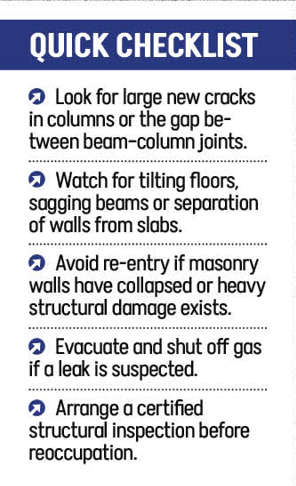
Owners and occupants can lower risk now by requesting certified structural assessments before buying or renting, securing heavy furniture, preparing clear evacuation plans, and keeping emergency kits accessible. Municipalities can accelerate safety gains by mandating rapid screening for hospitals, schools, and other critical facilities and publishing progress so citizens can track upgrades.
Seismic retrofitting is a proven technical response, but converting methods into safer neighbourhoods requires governance, funding, and public insistence. Prioritising hospitals, schools, and high-occupancy buildings for assessment and retrofit, enforcing quality through independent verification, and seeding finance for early projects will save lives and reduce reconstruction costs. Recent local figures show that municipal screening recommended immediate action for hundreds of public buildings, while tens of thousands of private frames remain uncertified; prioritising public funds for hospitals and schools achieves the highest life-safety returns. So, it is inherent to implement transparency and monitored pilots that will scale capacity fast to save the nation from a turmoil.
Comments