


Climate-smart Entrepreneurship Pathways for Youth-led Change
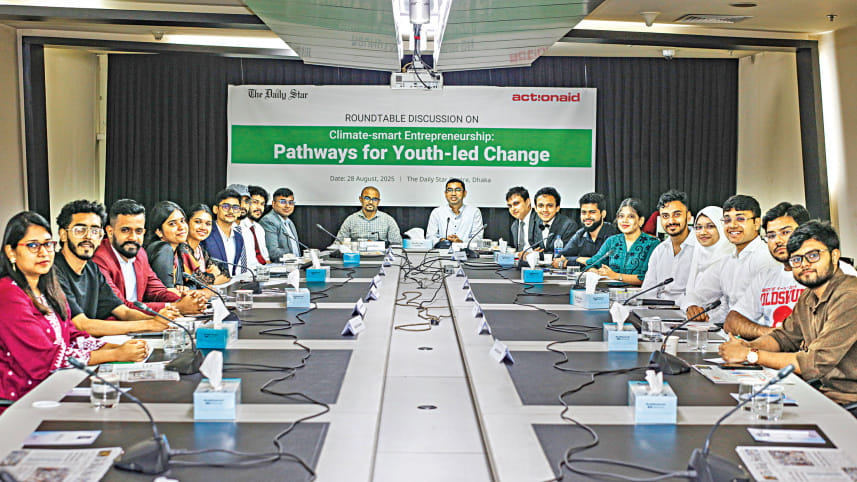
Young entrepreneurs at the forefront of Bangladesh's response to the climate crisis are urging fundamental reforms to overcome significant bureaucratic, academic, and financial barriers that are preventing their innovative solutions from achieving national scale. The call for a more "enabling ecosystem" was the central theme of a round table discussion titled "Climate-smart Entrepreneurship: Pathways for Youth-led Change." The event, jointly organised by The Daily Star and ActionAid Bangladesh, moved beyond competition awards to create a platform for meaningful dialogue between youth innovators and sector experts, aiming to bridge the gap between innovation and policy.
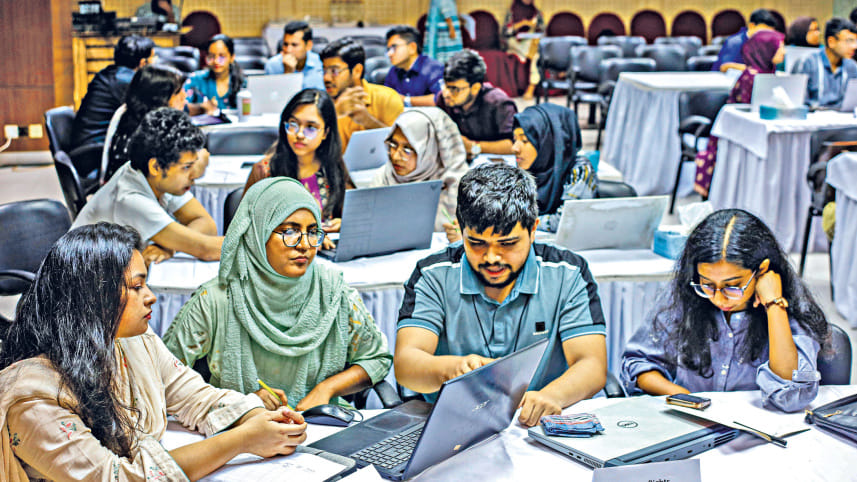
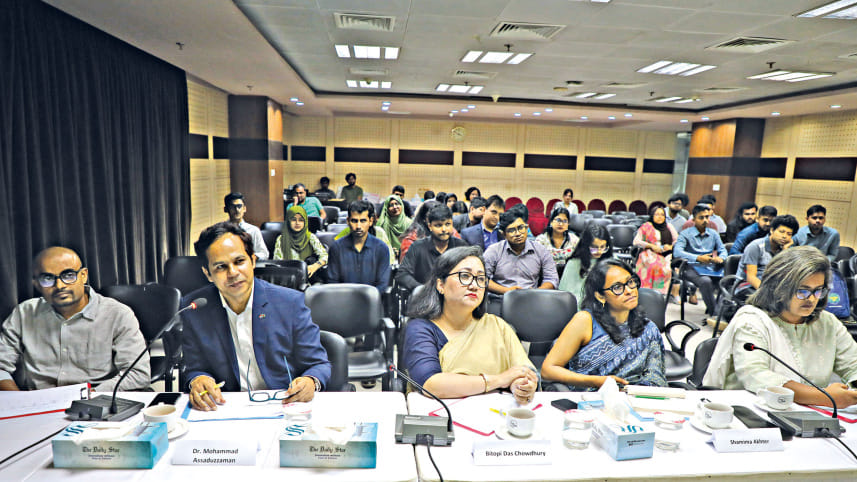
The discussion convened twelve youth innovators, winners from the past four seasons of the "Our Planet, Our Responsibility" national competition, alongside three experts, including a start-up venture specialist and an INGO representative. The dialogue was structured to capture first-hand insights and steer discussion toward practical pathways for scaling green and socially responsible ventures.
 For all latest news, follow The Daily Star's Google News channel.
 Participants in the roundtable discussed their experience, innovative practices, and success stories alongside the challenges they faced with their idea, mentorship and implementation of their project. Legal frameworks were also highlighted as being out of sync with the reality of young innovators. Mahmudul Hasan, participant of Climate Justice Idea Competition of Season 3, developed a biodegradable toothbrush, shared his direct experience, "I went to Mongolia to represent Bangladesh and won an award. But ultimately, when I go to open a bank account for my business in my own country, I face problems because I cannot open one without an NID because I am under 18."
The academic system was cited as another significant barrier. Multiple student entrepreneurs reported a lack of institutional support and flexibility. Sumit Anthony Gomes, a student and innovator, recounted advice from his professors, "When we show our interest in idea generation or entrepreneurship, we expect some flexibility from the teachers about exam and submission deadlines. However, they tell us to prioritise our studies first. This limits our ability to pursue passion and education together."
Young people come up with extraordinary ideas to solve community problems or to address the climate change issue. But to nurture these ideas, adequate mentorship is needed. The critical need for specialised, long-term mentorship was also a recurring point that the entrepreneurs pointed out during the discussion. Rozatul Rummana Farabi, of Team Neo kagoj, participant of Climate Justice Idea Competition Season 4, mentioned how her team's promising project on an algae bioreactor stalled. "We couldn't find a mentor specific to our idea. Because of this, our idea was not progressing at all," she explained. For their product, Farabi and her teammates had to go on in-person field visits to source their materials and machinery. But due to social norms regarding young women travelling alone for business, they had to face hurdles there as well.

Oftentimes, innovators face challenges sourcing equipment for their projects. This can lead to a delay of submission for the project; as a result, investors can lose interest in the project. Golam Rubayed Ratul, participant of Youth-led Action Research on Green and Digital Transformation, owns a startup called Firefly. It deploys drones to revolutionise fire response in Bangladesh. The drones provide live feeds and deploy fireballs, capable of extinguishing 20 square meters of various fire classes. Ratul faced challenges sourcing high-tech components and collaborating with authorities. This underscores the need for government support to foster local technological innovation in emergency response.
Social awareness plays a key role in the adoption of any innovation. Oftentimes, innovators come up with their idea, but they see a slow acceptance rate due to a lack of awareness regarding climate change. Kasshaf Ahmed Mugdho and Jahra Nanziba Purna, co-founders of AlgaeLime paints, participants of Youth-led Action Research on Green and Digital Transformation, faced the same issue with their eco-friendly paint that absorbs carbon dioxide from the air. They shared, " When we go to the customer segment with our climate-smart product, their initial reaction is to compare our product with established brands, evaluating the similarities and dissimilarities between our product and theirs. We are still developing our product to compete with the brands, but people don't seem to consider the fact that ours is an eco-friendly option, whereas brands often use elements like Lead that harm the environment directly."
While innovators shared their unique challenges regarding their production and market feasibility, a primary challenge remains when implementing their projects in the national climate strategy. Fahim Shahriar, CEO of the venture studio SustainLaunch Labs, stated that competition success does not guarantee policy-level adoption. Shahriar said. He further clarified the government's expectations, "The Government wants the ideas to be sustainable, with long-term feasibility. They expect a product to serve the community for more than five years before adopting it in the national policy strategy."
Even though there is a gap between the government expectations and the entrepreneurs' performance, entrepreneurs keep facing systemic obstacles. Shafayet Rahman, founder of GreenVista, which develops flood resilience systems, described administrative delays as a major bottleneck. "Due to the bureaucratic red tape, it takes more time to legalise and formalise a start-up." This type of bureaucratic delay discourages the entrepreneurs from carrying on with their core jobs, which is finding solutions to the problems.
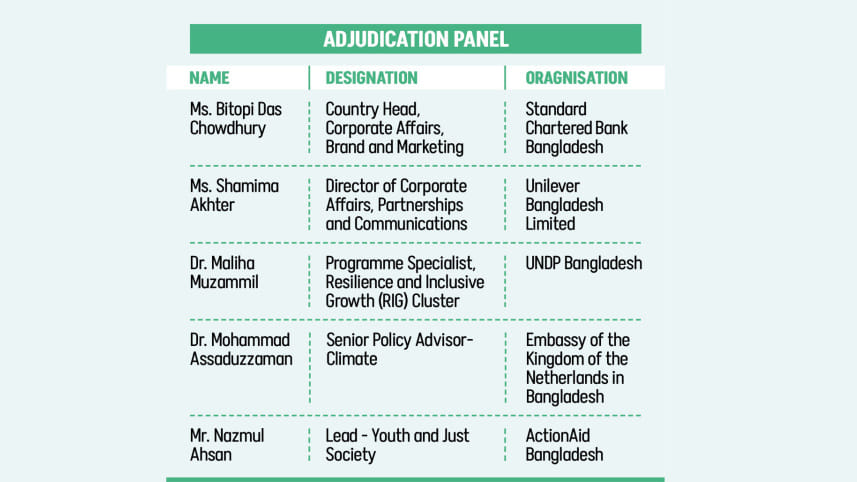
Nazmul Ahsan, Lead-Youth and Just Society of ActionAid Bangladesh synthesised the discussion, noting that Bangladesh's innovation ecosystem remains underdeveloped. "We are trapped in this early stage of this ecosystem, and for the last 15 years, we have been in this early stage." He proposed that a collaborative effort between the government and the private sector is needed for an uplift. He also addressed the innovators to play the role of advocates now. "It is time for you to take on that role," Ahsan urged.
While Bangladesh possesses immense innovative potential, it remains largely untapped due to a complex web of systemic barriers. Overcoming administrative bottlenecks, modernising legal frameworks to support youth, fostering flexible academic environments, and providing specialised long-term mentorship are not merely desirable improvements but urgent necessities.
The discussion session was moderated by Tanjim Ferdous, In-Charge NGOs and Foreign Missions of The Daily Star.
Comments