


Safety, Emissions and the Cost of Staying Cheap

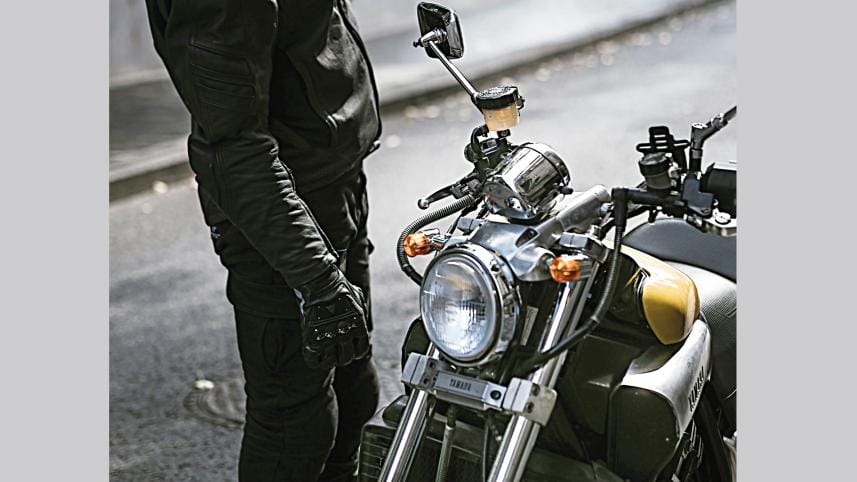
Globally, motorcycle regulation has moved decisively in one direction: safer machines and cleaner engines. Anti-lock Braking Systems (ABS) became mandatory in the EU for motorcycles over 125cc in November 2016. Since then, cornering ABS, traction control, and Motorcycle Stability Control (MSC) have proliferated across mid-range segments. The global motorcycle ABS market, valued at $2.14 billion in 2024, is projected to reach $11.38 billion by 2033, growing at a 20.2% compound annual rate.
India followed a similar path. From April 1, 2019, all new motorcycles above 125cc were required to be equipped with ABS, while bikes up to 125cc had to offer at least a Combined Braking System (CBS). The objective was simple: reduce skidding, loss of control, and fatal crashes during sudden braking. Bangladesh remains largely untouched by this shift.
 For all latest news, follow The Daily Star's Google News channel.
 In the premium segment with motorcycles priced above Tk 3 lacs, ABS and basic traction control are increasingly common as manufacturers like Honda, Yamaha, and Suzuki introduce global models. But the mass market tells a different story. Nearly 80% of motorcycle sales occur between Tk 80,000 and Tk 2.5 lacs, and in this price band, electronic safety systems are virtually absent.
The reason is economic, not technical. Adding ABS raises manufacturing costs by Tk 25,000–50,000 per unit, translating into a 15–25% price increase on entry-level motorcycles where margins are thin and buyers are highly price-sensitive. In a market where a 2% price difference can shift brand preference, safety features quickly become optional extras few can afford.
Regulatory pressure elsewhere continues to mount. The U.S. National Transportation Safety Board has recommended mandatory ABS and traction control. European regulations keep tightening. Bangladesh, by contrast, has no such requirements, no timeline for adoption, and little public debate beyond helmet laws that remain weakly enforced.
The consequences are visible on the roads. In 2024, reports from The Daily Star and Dhaka Times show that around 366 out of every 1,000 road accidents involved motorcycles, resulting in approximately 2,570 deaths.
A similar regulatory gap exists on emissions. Europe implemented Euro 5 standards for motorcycles in January 2020, sharply limiting carbon monoxide, hydrocarbons, and nitrogen oxides. Euro 5+ followed in 2024, introducing durability requirements such as 35,000 km of real-world testing for high-speed motorcycles. India leapfrogged from Bharat Stage IV to Bharat Stage VI in 2020, aligning with European norms. China, Japan, and Southeast Asia have followed suit. Bangladesh is yet to follow.
Domestic environmental standards remain minimal, enforcement sporadic, and there is no public timeline for adopting even Euro 4, let alone Euro 5. Most motorcycles sold locally are manufactured or assembled using Chinese, Indian, or Japanese components, meaning they often inherit cleaner engine technologies by default. But this informal compliance has limits.
The problem becomes unavoidable when exports enter the conversation. Without certified compliance to Euro 5 or equivalent standards, Bangladeshi motorcycles cannot access regulated markets. The EU, the US, India, and ASEAN countries all enforce minimum emissions thresholds. Maintaining low domestic standards may keep prices down today, but it effectively closes the door on export competitiveness.
The government has shown little appetite for regulations that could raise consumer costs. Transport accounts for roughly 15% of Bangladesh's carbon emissions, with motorcycles forming a significant share. Yet without sustained international pressure or domestic political will, meaningful change is unlikely before 2030. More realistically, gradual adoption of Euro 4-equivalent standards may emerge by 2035–2040 as global suppliers phase out non-compliant components.
The uncomfortable truth is this: Bangladesh's motorcycle market is cheap because it avoids standards. That choice carries hidden costs, in lives lost, emissions unchecked, and export opportunities foregone. Safety and sustainability will eventually arrive, but not through ambition or announcements. They will come only when global economics make non-compliance impossible.
Comments