


How Bangladesh Became a Motorcycle Nation

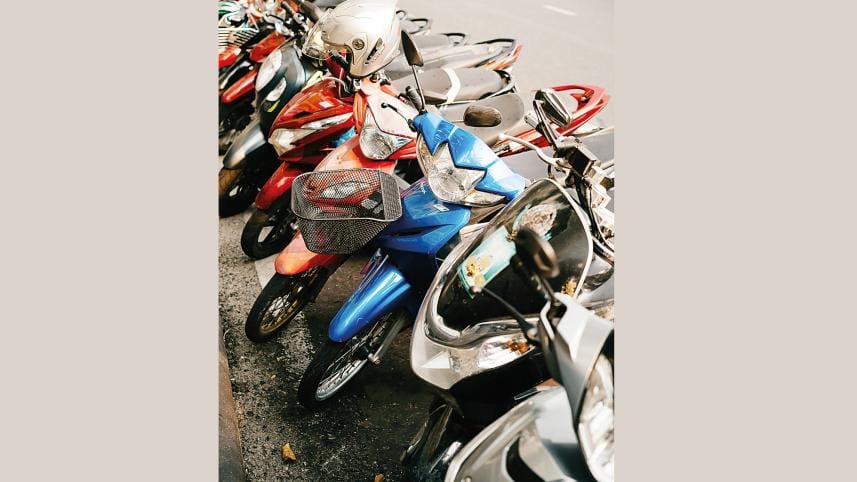
Twenty-five years ago, the idea that Bangladesh would become one of South Asia's most active motorcycle markets would have sounded optimistic. Motorcycles were expensive imports, ownership was limited, and two wheels were more aspiration than infrastructure. Today, motorcycles are everywhere—built locally, sold in large numbers, and embedded in the country's economy and daily life. What was once a niche has become a full-fledged industry.
The scale of this transformation is clear in the numbers. According to the Bangladesh Road Transport Authority, there were 43 lakh registered motorcycle riders as of January 2024. An October 2019 report by The Daily Star noted that around 1,600 motorcycles were being sold every day, nearly double the 900 daily units recorded in 2016. Annual sales climbed from roughly 270,000 units in 2016 to 387,000 in 2017, before reaching about 480,000 in 2018. That growth has continued. A July 2025 Daily Star report stated that local motorcycle companies recorded a 27 percent sales increase during the January–June period. In the first half of 2025 alone, total sales reached 257,632 units, up from 202,330 during the same period a year earlier.
 For all latest news, follow The Daily Star's Google News channel.
 As of January 2024, Bangladesh had over 43 lakh registered motorcycle riders, according to BRTA data.
This shift was driven by policy as much as demand. The groundwork was laid around 2016–17, but the turning point came with the Motorcycle Industry Development Policy 2018. Under this framework, import duties on completely knocked down (CKD) motorcycle units were reduced by 25 percentage points to 20 percent. The objective was clear: reduce reliance on finished imports and encourage local manufacturing.
Manufacturers responded quickly. A market once dominated by imported Japanese bikes opened up to large-scale local assembly and production. Seven companies now operate full manufacturing plants in Bangladesh: Japanese brands Honda, Suzuki, and Yamaha; Indian manufacturers Bajaj, TVS, and Hero; and local pioneer Runner Automobiles. Industry estimates cited by The Daily Star suggest that about 99 percent of motorcycles currently on Bangladeshi roads are now assembled or manufactured locally.
As production expanded, consumer preferences began to change. The dominance of basic 100cc commuter bikes is gradually giving way to higher-capacity machines. Motorcycles in the 125cc to 160cc range and above are seeing stronger demand, despite higher prices typically ranging from Tk 2.2 lakh to Tk 4.5 lakh. Subrata Ranjan Das, executive director of ACI Motors, noted that "the mindset of the customers is changing and they are moving to high-end motorcycles." Road conditions also play a role. Outside Dhaka, rougher roads often make larger-capacity bikes more practical than smaller commuters. At the lower end of the market, models priced between Tk 1.2 lakh and Tk 2 lakh have seen slower sales, reflecting ongoing financial pressure on low- and middle-income buyers.
The social impact of this growth is visible on a daily basis. Motorcycles have become central to the gig economy, supporting ride-sharing and delivery services across cities. According to a 2018 study by the Policy Research Institute of Bangladesh (PRI). The ride-sharing industry in Bangladesh is worth an estimated 22 billion taka ($260 million) and accounts for about 23% of the transport sector in the country. Another notable shift is the gradual rise in female ridership. Subrata Ranjan Das estimates there are now around 30,000 female motorcycle users nationwide. Yamaha has established 10 training centres across the country and has trained more than 2,000 women so far. In an interview with The Daily Star, Sadia Afrin, a textile engineer and administrator of the Yamaha Riders Club-Girls, said, "It seems like more and more people are accepting of women who ride bikes."
Bangladesh is also moving beyond assembly toward deeper manufacturing and exports. Hero entered the market in 2015 through a joint venture with the Nitol-Niloy Group and upgraded its facility to a full manufacturing plant in 2018. The factory now produces 125,000 motorcycles annually and manufactures 22 key components locally, including chassis, rims, and drive chains. Honda followed with its own investment in November 2018, and its subsidiary Bangladesh Honda Private Ltd has already begun exporting. The company shipped its X-Blade model to Guatemala, first by air and later by sea, with plans to expand into South America, Central America, and Africa.
With nearly 45 lakh registered motorcycles on the road and a growing local parts ecosystem, Bangladesh has completed a major transition. It is no longer only a consumer of imported two-wheelers, but a manufacturing hub with ambitions beyond its borders.
Comments