


Kenya’s cashless culture can stimulate potential for Bangladesh: A Traveler’s Take

When I finally embarked on my long-awaited East African adventure, my expectation to be captivated by the breathtaking landscapes, vibrant culture, and warm hospitality were duly delivered in Kenya. Hence, one unexpected aspect completely transformed my perception of modern living- the country's deep-rooted embrace of mobile money.
 For all latest news, follow The Daily Star's Google News channel.
From the bustling streets of Nairobi to the serene Maasai villages and even the sun-kissed shores of Diani Beach, one thing was clear: everyone uses mobile money. And not just occasionally - this is their default way of paying for everything. Everywhere I went, people preferred digital transactions and name the mobile money platform that dominated conversations was M-PESA.
Here's a moment that really hit me: as I was exchanging foreign currency, the guy from exchange house casually asked, "Should I just send the money to your M-PESA instead of giving cash?" I laughed because, well, I didn't even have an account! But that question made me realize how ingrained this system is in everyday life– not just in Kenya, I found similar scenario in some other parts of East Africa too.
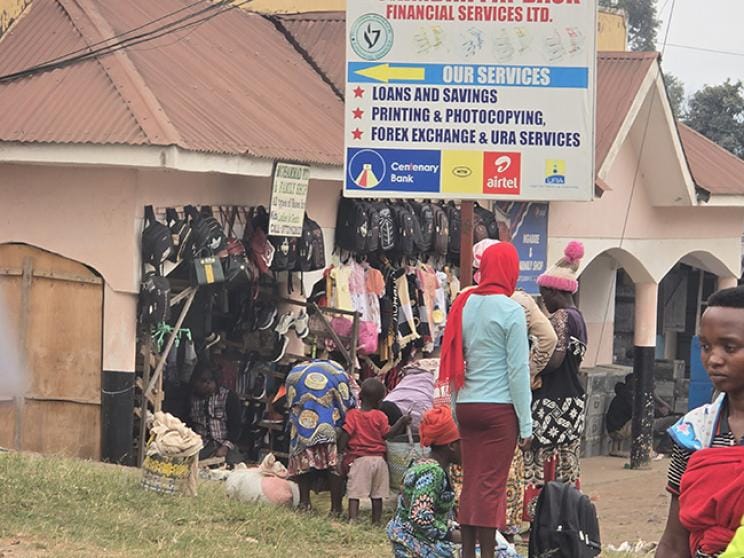
With a population of about 57 million, Kenya boasts over 47.7 million mobile money users by mid-2025, an astonishing 83% penetration rate. M-PESA, launched in 2007 by Safaricom and Vodafone, leads the market with90%share. What started as a simple money transfer service has evolved into a full-fledged financial ecosystem offering merchant payments (Lipa Na M-PESA), savings and loans (M-Shwari, KCB M-PESA), and even overdraft facilities (Fuliza). Today, nearly 59% of Kenya's GDP flows through M-PESA, amounting to 20 billion transactions in 2023. This revolution has empowered small businesses, boosted financial inclusion, and created a secure, low-cost, and ubiquitous payment system.

Later on my trip, as I explored Rwanda and Uganda, I saw the same trend- cash taking a backseat to mobile money. And I couldn't help but compare it to my home country Bangladesh. Kenya's example shows that with time-befitting policies, appropriate infrastructure, interoperability, and consumer trust, mobile money can become the backbone of a digital economy. So, why not us? We share similar economic fundamentals - GDP per capita, growth rates, and aspirations are pretty similar. As per Bangladesh Bank data, the country already has 89 million active mobile financial service (MFS) accounts against total population of about 176 million, showing penetration hovering little over 50%. While we have made strides with MFS platforms like bKash, the MFS industry in Bangladesh just ventured into specialized financial products, like loans, savings, remittance, etc.; at the same time, regulatory frameworks are also evolving, while digital banks and credit bureaus are on the horizon.

Bangladesh already processes about 8.6% of the world's daily mobile money transactions, yet over half of our population remains outside the formal financial system. With a $450 billion economy, Bangladesh could be a mobile money powerhouse- if we can enable unbanked and underbanked populations into enter the formal financial system. Kenya taught me that going cashless isn't just about tech - it's about mindset, policy, and making digital payments part of everyday life.If we embrace innovation and build robust policies, Bangladesh can turn its mobile financial services into a true engine of inclusive growth.If we can learn from East Africa's playbook, the sky is the limit for Bangladesh.

The Writer is a FinTech Professional
Comments