


Yamal says the best is yet to come
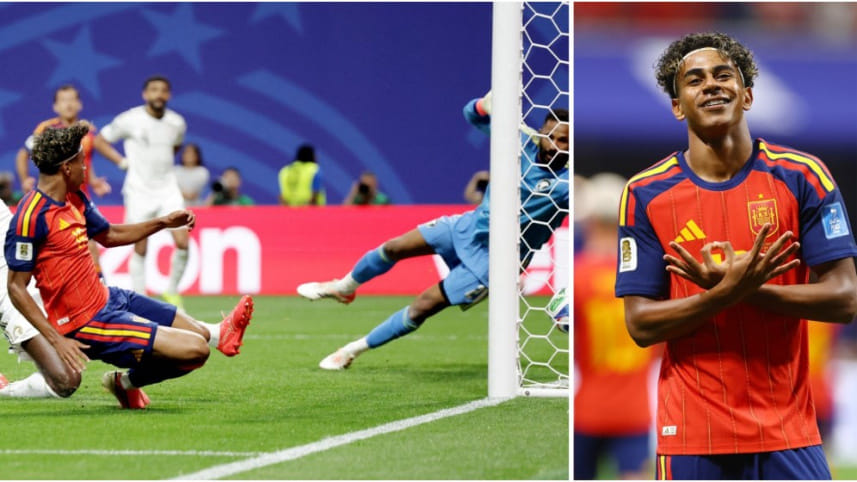
Spain's teenage winger Lamine Yamal says he has plenty of improvement left in his fledgling career with fans not yet having seen the best.
"I see myself as much better than people see me. I know the road ahead is very long and that I have many things to improve," he said in an interview with El Pais newspaper published on Sunday.
 For all latest news, follow The Daily Star's Google News channel.
 The 18-year-old has struggled with injuries before the World Cup, but his return sparked Spain's World Cup into life as the European champions ran riot to beat Saudi Arabia 4-0 in Atlanta after a late substitution in their disappointing opening 0-0 draw with Cape Verde.
Making his first start in two months after a hamstring injury, Yamal ended La Roja's long wait for a World Cup goal just 10 minutes in.
Mikel Oyarzabal then struck twice to put Luis de la Fuente's men 3-0 up inside 24 minutes.
De la Fuente's careful management of Yamal's minutes continued as the Barcelona superstar was replaced at half-time before Hassan al-Tambakti's own goal rounded off the scoring.
"I know people see me as if this is my level and that's it. But I can use all that confidence I have for many things. I insist: I have a long way to go, a lot to improve. And a lot, a lot, a lot of football," he added in the interview.

Yamal, who plays club football for Barcelona, said he doubted he would be playing at the elite level at 40 like Argentina's captain Lionel Messi.
"Impossible. For me, Messi's the best and he keeps proving it. He has an advantage over everyone and he's 40 years old," he said.
Yamal said he started playing street football whereas others often start with local clubs being told what to do instead of enjoying the game.
"The problem I see with the players coming up now is that they join a football team at four years old, and on the team, they tell you: 'Okay, the full-back has to control the ball and pass it to the winger; the winger has to control it and pass it to the midfielder'," he said.
Being famous from 13 had its cost, he said, stopping him from doing normal things like shopping or going to the cinema because he was always recognised.


Comments