


A licence to foul?
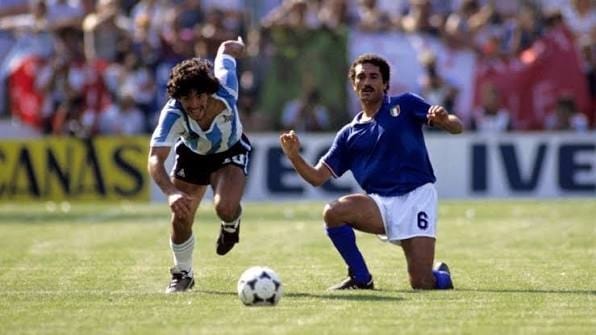
During the 1982 World Cup, a 22-year-old Diego Maradona was beginning to reveal the extraordinary talent that would eventually make him one of football's greatest players. Standing in his way was Italy centre-back Claudio Gentile -- ironically anything but gentle.
Tasked with stopping the young Argentine at any cost, Gentile employed every trick available. Referees offered attackers far less protection in those days and the Italian defender took full advantage, fouling Maradona a remarkable 23 times. He received just one booking as Italy won 2-1 before marching on to lift the World Cup.

Afterwards, Gentile famously shrugged off the criticism.
"Football is not for ballerinas."
The 1982 tournament belonged to a different era, when cynical fouls, gamesmanship and intimidation were often considered legitimate weapons. Since then, football has steadily moved in the opposite direction. Referees have become quicker to produce yellow cards, dangerous tackles are punished more consistently and protecting players has become a central objective. Which is why one of the trends emerging at this World Cup is really concerning.
According to a recent Reuters report, FIFA instructed referees to allow more physical contact in an effort to improve the flow of matches by reducing unnecessary whistles. FIFA's chief refereeing officer, Pierluigi Collina, has spoken openly about wanting fewer interruptions.
The numbers suggest officials have followed that directive. Data compiled by NetSI Sport, the research hub at Northeastern University, shows the average number of fouls per group-stage match has fallen to 24.3, compared with 27.7 in Qatar in 2022 and 29.3 in Russia four years earlier. Yellow cards have also declined for the corresponding period.
A more free-flowing game is something everyone wants. The concern, though, is that in trying to achieve it, the standard of refereeing has become less consistent.
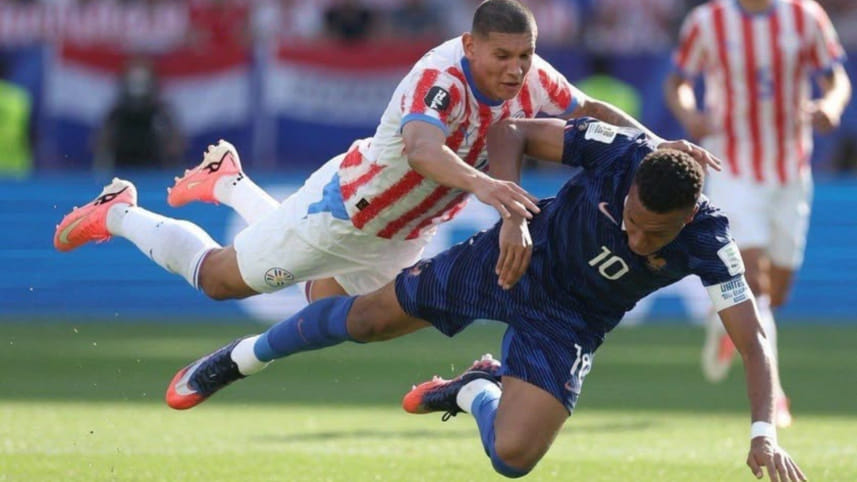
France’s quarterfinal victory over Paraguay on Saturday provided a good example. Gustavo Alfaro's side deserve credit for frustrating one of the tournament favourites and keeping the margin of defeat to the smallest through a dogged defensive display. Defensive football has every right to exist, and history offers plenty of examples of organised, disciplined teams achieving remarkable success, Greece's triumph at Euro 2004 perhaps being the finest.
But defending stubbornly is one thing. Repeated cynical fouls, provocation and simulation are another.
On Saturday, Paraguay repeatedly disrupted France's rhythm through physical challenges and off-the-ball incidents while somehow escaping without a single booking -- the first time they had done so in a World Cup match since 1998.
Andres Cubas clattered into Adrien Rabiot without punishment. Juan Jose Caceres appeared to kick out at Kylian Mbappe. Matias Galarza caught Mbappe off the ball during another French attack. Referee Ilgiz Tantashev waved play on each time.
Their physical approach has been a feature of the tournament. Paraguay average 26.4 tackles per game, the highest by any World Cup side since Argentina recorded the same figure in 2006.
None of this is to take anything away from Paraguay. They defended with discipline and stuck to a game plan that worked. The issue is when repeated fouls and the dark arts become an accepted part of defending because they go largely unpunished.
That is the risk of asking referees to intervene less. The fewer the whistles, the more teams are likely to push the limits. And the consequences of less whistles or cards can often be grave.
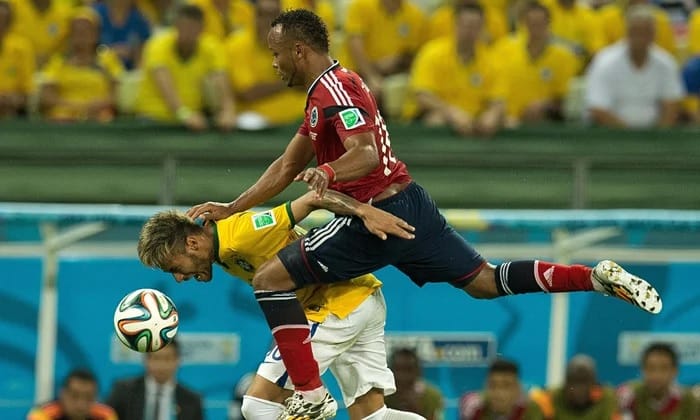
In the 2014 World Cup quarterfinal, Brazil superstar Neymar suffered a fractured vertebra after a knee into his back from Colombia's Camilo Zuniga. The challenge ended Neymar's tournament, yet Zuniga escaped without even a yellow card. Brazil never recovered, suffering the infamous 7-1 defeat to Germany in the semifinal.
 For all latest news, follow The Daily Star's Google News channel.
 Most fouls are not dangerous, but repeated infringements alter the rhythm of matches and can influence results just as much as moments of attacking quality. Football should flow, but not at the expense of fairness or player safety. Referees exist not only to keep the game moving, but also to protect those playing it.


Comments