Is Bangladesh ready for the future of work?


Bangladesh built its economic rise on labour-intensive manufacturing. But the employment model that powered this growth is coming under increasing strain. Automation, artificial intelligence (AI), and evolving production systems are reshaping the future of work in manufacturing and transforming emerging high-value and digital service sectors. These shifts are unfolding at a time when large segments of Bangladesh’s workforce already remain excluded from secure and productive employment. Young people, women, and persons with disabilities are especially vulnerable because they are disproportionately concentrated in insecure, informal, or automation-exposed segments of the labour market, with limited access to reskilling and adaptation mechanisms. An estimated 40 per cent of Bangladesh’s workforce could be exposed to AI- and automation-related disruption.
The pressures are likely to intensify as Bangladesh approaches LDC graduation. The withdrawal of preferential trade access will sharpen competitive pressures in export sectors, particularly RMG, accelerating the shift towards automation and higher-productivity production systems.
Bangladesh’s labour market is already under pressure. The most recent official labour market data indicate a decline of approximately 1.3 million jobs in 2024, with around 90 per cent of those losses affecting women. The new government has taken office and promised to create 10 million jobs over the next five years. However, the pressing question remains: what types of jobs will be on offer?
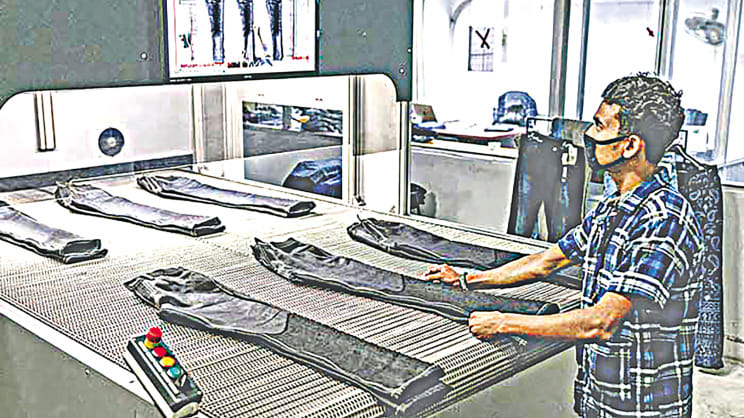
The challenge is not only that Bangladesh’s labour market already struggles to generate inclusive employment, but also that these weaknesses are becoming more consequential as the nature of work itself changes. This piece argues that Bangladesh is on the verge of the ‘future of work’ era with significant structural vulnerabilities and that existing policy frameworks remain inadequately prepared for the transition ahead.
Why Bangladesh is vulnerable to the future of work
Bangladesh’s labour market is entering this transition from a position of structural weakness. Manufacturing employment has stagnated despite rising output, while much of the expansion in high-value digital services has taken place through insecure and uneven forms of employment with limited social protection. Growth continues without creating enough productive employment.
The adaptation capacity needed for what lies ahead is weak. The skills produced by the education system remain poorly aligned with changing labour market demand. TVET continues to be stigmatised, outdated, and weakly linked to industry. Incentives are also poorly aligned with productive private-sector employment and workforce mobility, while information systems remain underdeveloped. This limits the economy’s ability to anticipate changing skill needs and workforce transitions.
These vulnerabilities are likely to intensify. Automation and digital transformation are already reshaping both manufacturing and high-value services, with estimates suggesting that up to 60 per cent of female RMG jobs could disappear by 2041. Bangladesh’s demographic window is also narrowing, increasing the urgency of generating productive employment before labour market pressures intensify further. Worker expectations are also changing. Younger cohorts increasingly seek income security, flexibility, and career progression, yet a labour market still dominated by informality offers limited pathways to meet these expectations.
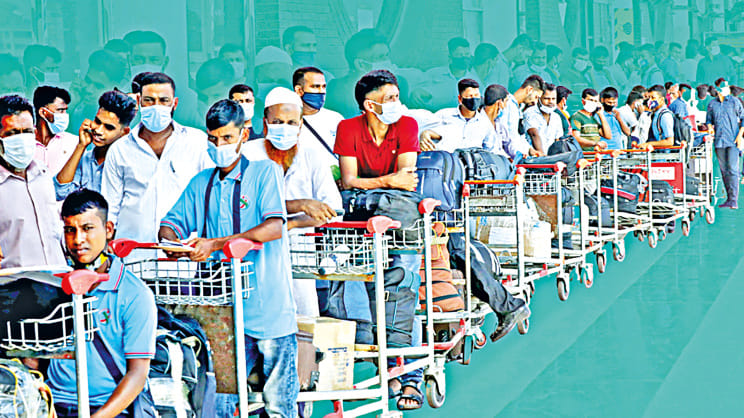
These impacts will not be evenly distributed. Workers concentrated in routine-intensive, insecure, and low-productivity employment are likely to face the greatest adjustment pressures as the nature of work changes. Women employed in routine-intensive RMG, young graduates struggling to transition into productive employment, and persons with disabilities concentrated in informal work face particular vulnerabilities, especially where access to reskilling, accessible work environments, and social protection remains limited. Platform-based and digital work may create new opportunities, but without inclusive access and portable protections, they also risk deepening existing inequalities.
Why policy still falls short
Bangladesh is approaching a transformed world of work without a coherent framework to manage the transition. The gap is not in recognising the problem, but in designing and implementing an effective response.
Current policy instruments sporadically highlight various structural weaknesses, but they remain rooted in existing sectoral structures without considering how these will evolve. The newly elected government has recognised challenges related to AI, the Fourth Industrial Revolution (4IR), and TVET reform in its election manifesto and subsequent public statements. However, these issues have yet to be effectively integrated into sector-specific transition strategies and workforce adaptation mechanisms.
Still, several significant gaps remain. Currently, the education system, ranging from primary to higher education, including mainstream education and TVET, does not adequately address critical issues such as AI, automation, and digitalisation. Although there has been rapid growth in this area over the past decade, there is no formal framework to govern platform work, and progress towards providing portable social protection for gig workers remains limited. Additionally, there is little planning for cross-sector labour transitions, especially as displacement becomes more common.
This gap is not solely a so-called ‘government’ issue. Despite growing awareness of technological transformation, employers lack a collective and coordinated strategy for workforce transitions. More than a million gig workers lack access to formal protection systems, and many freelance jobs are likely to be affected by automation. While there is a general consensus on the need for differentiated reskilling pathways, translating this understanding into actionable policy has been insufficient.
The challenge is institutional. Past efforts have established policies, strategies, plans, and coordination mechanisms, but accountability at the system level remains weak. Monitoring and evaluation frameworks are often included but seldom implemented. As a result, while the framework for reform exists, its implementation is inconsistent. Regrettably, institutional accountability has always been the missing piece of the puzzle.
What must change
The policy response must move from scattered recognition to coordinated action. Based on our study, several priorities require urgent attention.
Reform the education and skills sector. Skills systems are failing to meet labour market demands. TVET lacks strong connections with industry and emerging sectors. TVET should be reformed to be industry-led and outcome-focused by collaborating with employers on curricula, expanding apprenticeships, and aligning training with new sectors and international labour markets. The National Education Policy should be revised to integrate regular labour market-based curriculum updates. The National Skills Development Policy (NSDP) should also be revised to focus on job-aligned, digital, and globally relevant skills development that produces measurable employment outcomes, rather than simply expanding training initiatives. The recently approved Bangladesh National Qualifications Framework establishes a standardised basis for recognising and transferring skills across general education, technical and vocational education and training (TVET), and higher education. Now, it is crucial to operationalise this framework on a large scale, especially at the skills and TVET levels. Effective implementation of this framework should be prioritised, rather than allowing it to remain merely a policy document.
Promote reskilling as a lifelong learning opportunity. Different career stages require tailored support, yet current systems offer a one-size-fits-all approach. Distinct pathways should be created for entry-level training, mid-career upskilling, and support for displaced workers. A new TVET Implementation Plan should be developed to introduce lifelong learning and reskilling pathways for those already employed. The National Employment Policy 2022 should be revised to include structured retention and upskilling support for workers in industries undergoing technological change, backed by a national implementation master plan.
Link industrial support measures with employment. Manufacturing output is increasing, but employment is not keeping pace. Industrial incentives, credit, EDF financing, and export support should be directly aligned with job creation and workforce development. A clear CSR policy should be developed to encourage private-sector investment and public-private partnerships to meet the evolving demands of the employment ecosystem. Export policies should be monitored to ensure that export growth leads to net job creation, particularly for women and young people. Employment-linked conditions should be incorporated into key incentive programmes, and coordination under the Industrial Policy 2022 should be strengthened to align industrial upgrading efforts with labour market transitions.
Invest in skills. Public spending on education and skills has dropped to just 1.3 per cent of GDP. The private sector has shown less interest in addressing skills supply than in securing fiscal incentives, subsidies, and infrastructure. The budget for school education and technical and vocational education and training (TVET) should be gradually increased. Public resources within the sector should also be redirected towards in-demand and future-demand skills.
Improve labour market information for effective workforce planning. Weak labour market information leads to persistent skills mismatches and ineffective workforce planning. A national Labour Market Information System (LMIS) should be established to monitor skills demand, job openings, and employment trends. Investment decisions and future skills demand should be aligned with education and TVET reforms. LMIS data should also be integrated into industrial policy, export strategy, and education and TVET planning, including EDF-related employment and skills reporting, to provide better real-time visibility of the labour market.
Transform the social protection strategy to adapt to changing social norms and the labour market. Young people and new entrants have distinct social attitudes and expectations. While platform and gig work are on the rise, workers lack regulatory protection. A governance framework for platform and gig work should be introduced to clarify worker status, employer responsibilities, and dispute resolution mechanisms. Social protection systems, including health, injury, pension, and income-loss coverage, should be made portable and adaptable across all forms of employment. The upcoming National Social Security Strategy (NSSS) should be aligned with this objective, including through the integration of digital and platform-based work.
Embrace the principle of ‘leave no one behind’. Women, young people, and persons with disabilities are at greater risk because of automation and exclusion from emerging sectors. Gender-sensitive and disability-inclusive transition strategies should be implemented, combining reskilling with targeted employment support. CSR and skills funding should be be used to prioritise reskilling for women in export-oriented and emerging sectors. Investment is also needed in accessible infrastructure, assistive technologies, and targeted employment incentives to enable persons with disabilities to participate in upgraded industrial and service sectors.
Coordinate efforts among multiple stakeholders. AI, automation, and digitalisation are changing the world of work, but policy responses remain fragmented. Bangladesh needs stronger coordination across industrial, education, employment, export, and social protection policies within a coherent future-of-work framework. EDF, CSR, export policy, TVET, and employment strategies should be better aligned with employment outcomes and skills transitions.
Coordination mechanisms currently in place should be maintained and expanded, rather than being limited to specific projects or timeframes. A notable example is the Gender and Skills Taskforce under the Technical and Madrasha Education Division (TMED), which brings together various line ministries, employer federations, and workers’ organisations. Similar mechanisms could facilitate broader coordination on future-of-work initiatives. Additionally, civil society, research institutions, and development partners can play a crucial role in holding these mechanisms accountable for their outcomes. Finally, it is essential to establish a monitoring mechanism for the future of work to ensure policy coherence and enable proactive responses to technological change.
Bangladesh’s labour market is at an inflection point. Structural weaknesses are deep, the forces reshaping work are accelerating, and the policy response remains fragmented. To achieve meaningful change, sustained political will, supported by a national consensus, is needed. Bangladesh has previously shown that when there is consistent commitment across political cycles, transformative outcomes are possible, as seen in efforts to achieve near-universal enrolment in primary education and comprehensive vaccination programmes. Preparing the workforce for the future of work demands the same level of commitment and dedication.
The opportunity is still there, but the window is closing. Bangladesh must move from fragmented policy recognition to coordinated implementation, stronger labour market intelligence, and sustained investment in skills and workforce transitions. As technological, demographic, economic, and climatic forces reshape work, the central policy challenge is clear: future growth must translate into decent, resilient, and inclusive employment for all.
Dr Debapriya Bhattacharya is a Distinguished Fellow at the Centre for Policy Dialogue (CPD), where Towfiqul Islam Khan is Additional Director (Research), Mamtajul Jannat is Senior Research Associate, and Maliha Rahman is Programme Associate.
Send your articles for Slow Reads to slowreads@thedailystar.net. Check out our submission guidelines for details.

Solar power should not become Bangladesh’s next expensive mistake

Building Islamic banking on Islamic values: The case for a Qard Hasan Bank

Why Bangladesh must start rehearsing for the next earthquake

Why fixing Dhaka's transport system is key to cooling the city

Why C-section births are on the rise in Bangladesh
How Dhaka can restore its natural cooling system

Why technological progress isn't making us freer

Will Bangladesh's social security budget help the poor?

Should political parties be publicly funded?