Earthquakes, overthinking, and the Hamlet within us

I first read Hamlet when I was still in my teen years. Naturally, I took it at its face value—the prince discovers his father has been murdered, spirals into grief, plots revenge, and everything ends in carnage, like Shakespear's most tragedies, chaos unfolding beyond the protagonists' control. I remember thinking Hamlet was dramatic, confused, and maybe even unnecessarily complicated. I didn't yet learn to read between the lines.
Re-reading Hamlet as an adult suddenly revealed many side-quests that I barely noticed before. The pauses, the hesitations, the rambling soliloquies that felt indulgent before, now feel painfully familiar. Hamlet, I realised, wasn't just a tragic hero, but also a mirror. And like many of us, he was caught in the exhausting space between knowing what to do and actually doing it.
Hamlet is, in many ways, the classic over thinker. Even after learning who murdered his father, he falters. He plans, he rethinks the plan, he tests the waters, he ponders morality, he questions his own sanity, he doubts the ghost, he doubts people around him, and he doubts himself and the consequences of actions he never even takes. And while he stands paralysed at the crossroads of 'to be, or not to be', nearly every major character including himself, is dead— not because Hamlet acted too quickly, but because he didn't act at all.
It is easy to judge him from the outside, but if we slip ourselves into Hamlet's shoes for a second, we realise that we are not so different, after all.
Most of us, at some point or another, have been paralysed by thought. We label it caution, strategy, "I just need time to think," but often it is simply fear wrapped in the language of rationality. We ignore uncomfortable truths, delay meaningful decisions—jobs we don't apply to, relationships we don't confront, dreams we keep pushing "for later."
Hamlet, I realised, wasn't just a tragic hero, but also a mirror. And like many of us, he was caught in the exhausting space between knowing what to do and actually doing it.
Hamlet shows us that these delays more often than not come from the deep, anxious human desire to get things right. To control outcomes. To avoid the consequences of choosing wrong. His famous question "To be, or not to be?" is not as much about suicide as it is about the unbearable weight of choosing at all.
As an adult, this resonates far more sharply now that I understand the burden of responsibility, of consequences, of the irrevocability of one decision. We understand why Hamlet trembles before the unknown—because so do we.
The recent incidents of earthquakes brought these reflections into sharper focus. Those short, sharp and unsettling jolts made me ponder on the fragile thread that holds our days together. The tremors didn't only sway entire buildings, but also our illusion of permanence or those distant problems that we think will not solve itself unless we torture our brain to numbness.
Death, which usually lingers at the edge of our imagination, stepped closer. Not as a dramatic Shakespearean tragedy, but as a simple, terrifying possibility. It's the same vulnerability that haunts Hamlet when he speaks of "the slings and arrows of outrageous fortune." Life can shift without warning, and that unpredictability can either paralyse us or push us into clarity.
This return to Hamlet and recent quakes have made me reflect on how we understand life and death themselves. Growing up, I once saw a fish twitching in a hot pan, the body still dancing long after it had been declared lifeless. It unsettled me: if motion continued, if sensation lingered, where did life end and death begin? I later learned that some creatures carry independent nerve centers in their limbs—tiny autonomous systems that can move, react, even attempt to feed themselves even after being detached from the body.
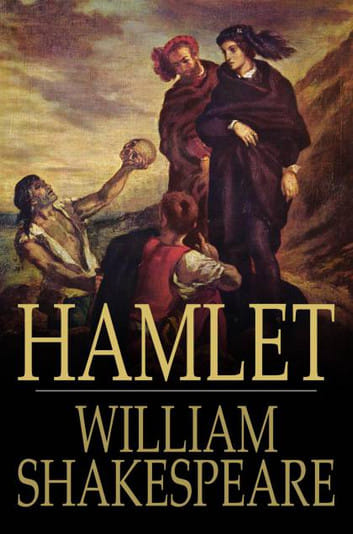
It made me wonder whether death is as absolute as we imagine, or whether there are thresholds, echoes, and afterlives of movement that blur the boundary we take for granted. Hamlet's reflections on mortality suddenly felt less abstract: perhaps the line between being and not being is far more porous than we allow ourselves to believe.
Moments like these usually reorder our priorities. They shake loose the trivialities we cling to and remind us that life is delicate. That we are delicate. And that the time we lose to indecision is time we never get back. Standing under a swaying ceiling, it became painfully clear to me how often we postpone things, because we think we have time. But time is never guaranteed. The earthquakes reminded us of that. Just as Hamlet's spiralling indecisions did.
Modern life rewards analysis, planning, precision. We're taught to think before we act, to weigh every option, to avoid mistakes at all costs. Yet somewhere along the way, thinking becomes overthinking. Reflection becomes paralysis. And caution becomes the quiet tragedy of a life un-lived.
Hamlet's procrastination isn't just a plot device; it is Shakespeare's invitation to examine our own minds. Why do we delay what matters? What are we really afraid of? Failure? Judgment? Loss? Ourselves? Sometimes we imagine the worst possible outcomes, just as Hamlet imagines the spiritual, political, and moral chaos his revenge might ignite. But ironically, the consequences of not acting often turn out to be far worse.
Hamlet is, in many ways, the classic over thinker. Even after learning who murdered his father, he falters. He plans, he rethinks the plan, he tests the waters, he ponders morality, he questions his own sanity, he doubts the ghost, he doubts people around him, and he doubts himself and the consequences of actions he never even takes.
Perhaps the most honest takeaway from reading Hamlet is to realise that life is not a symmetrical equation we can solve through logic. When Hamlet realises that "the readiness is all," he finally acts -- not out of certainty, but out of acceptance that life will never offer certainty. Life is, after all, messy, unpredictable, and deeply vulnerable. We cannot think our way out of every fear. We cannot plan our way into the perfect future. We cannot postpone living until everything feels safe.
Hamlet's tragedy lies not in his flaws, but in his waiting. And perhaps the quiet message of the play, and of moments like earthquakes, is that life demands some courage. Not reckless courage, but the courage to move, to speak, to choose, even when we tremble.
Reading Hamlet today feels less like analysing a Shakespearean character and more like holding a mirror to our own hesitation. His inner conflicts echo our own: Should I leave this job? Should I confront this pain? Should I choose this path? Should I take this risk?
While overthinking is a part of being human, letting fear halt our lives is not inevitable. The earth may shake beneath us, literally or metaphorically, but perhaps the lesson is that we cannot keep waiting for a perfect moment. There is no perfect moment. And readiness, as Hamlet says, is all.
Miftahul Jannat is a feature writer at The Daily Star. Sometimes she writes to make sense of the questions that refuse easy answers. Reach her at: miftahul@thedailystar.net
Send your articles for Slow Reads to slowreads@thedailystar.net. Check out our submission guidelines for details.

The puppets we become: Reading Manik Bandopadhyay in 2026

Kaarina Kaisar’s death and the politics of cruelty

Sword fighting in my head
The lost art of coffeehouse conversations
How not to use AI in children’s education
Are your thoughts, feelings and actions really your own?

When work and leisure fail, does protest fill the void?

How Asha Bhosle became the voice that refused every box
Learning to love the hyphen: Bangladeshi-American