


What we miss when we talk about migrant labour

Migration is as ancient as evolution of human society. In times immemorial, people chose to move for sustenance or for natural disasters or for war. People travelled vast stretches by foot, by sea or over mountains. In the twentieth century, the two World Wars, the breakup of empires that caused the birth of numerous nation-states have intensified migration. A classic example is the partition of the Indian subcontinent in 1947. This monumental event displaced millions, killed countless people irrespective of religion, families migrated from Bengal and Punjab across the newly drawn borders, altered their lives forever by uprooting them from their ancestral homes.
With the growth and advancement of capitalism, migration has been further accelerated due to the demands for various kinds of labour ranging from skilled labour to all sorts of caregivers to low-skilled labour to manual labour. Migration today is no longer just a story of survival, but a testament to the power of labour, identity, and resilience. Of the Asian countries, the Philippines and Bangladesh are the two topmost labour sending countries and Pakistan is the third labour sending country in 2023, according to a 2024 joint report by the Asian Development Bank (ADB), International Labor Organization (ILO), and Organisation for Economic Co-operation and Development (OECD).
It is argued that three major elements of globalisation such as structural adjustment policies (SAP), trade liberalisation, and technological transformation have intensified global migration. One of the classic examples of SAP is devaluation of national currency, together with drastic reduction in public expenditures on essential services such as, health, education, and social sectors.
The report finds labour migration from Nepal, Indonesia and the People’s Republic of China is on the rise. It further points out increased labour migration from India, Sri Lanka, Viet Nam, and Thailand. Even during the Covid-19 pandemic, which temporarily halted labour migration globally for couple of years, could not stop the tide. As the borders reopened in post-Covid period, migration surged anew.
The link between migration and globalisation has fascinated academics and policy makers for years. Migration is thus frequently linked with globalisation in academic writings although both are complex processes. It is argued that three major elements of globalisation such as structural adjustment policies (SAP), trade liberalisation, and technological transformation have intensified global migration. One of the classic examples of SAP is devaluation of national currency, together with drastic reduction in public expenditures on essential services such as, health, education, and social sectors. These steps further followed by repressive measures such as intensified police and military powers in some countries in Asia. As a result, people were pushed or forced to leave their countries of origin either for economic or political reasons. This trend of migration goes beyond the popular notion of ‘individual rational choice’ and household’s ‘cost-benefit analysis.’
My definition of trans-migrants is comprehensive and thus include migrants who migrate as permanent residents commonly labelled as “immigrants” in Australia and Canada, naturalised citizens, temporary workers, short-term contract labour, students, work-permit holders, refugees, asylum seekers, “illegal” or undocumented migrants, and so on. Australia and Canada are two major immigrant-receiving countries since their birth from British colonial power. Both Australia and Canada not only have annually targeted immigrants, but they also receive immigrants albeit migrants every year from all over the world. Asian countries are on the top for sending migrants to Australia and Canada. This flow of migration has dawn from the beginning of 21st Century due to Asia’s vast number of youth population, skilled workers, and technocrats.
Many countries in Asia have labour export policies and well-established labour-export programs, such as Philippines, Bangladesh, Vietnam, Sri Lanka, Cambodia, Nepal, Pakistan, and so on. The governments in those countries have promoted the export of labour, making it a crucial economic pillar, which continues to grow further. Until the 1997 Asian economic crisis, the “tiger economies,” namely Japan, Hong Kong, China, the Republic of Korea, Singapore, and Taiwan in conjunction with Indonesia, Malaysia and Thailand, were major short-term migrant-receiving countries from countries within Asia.
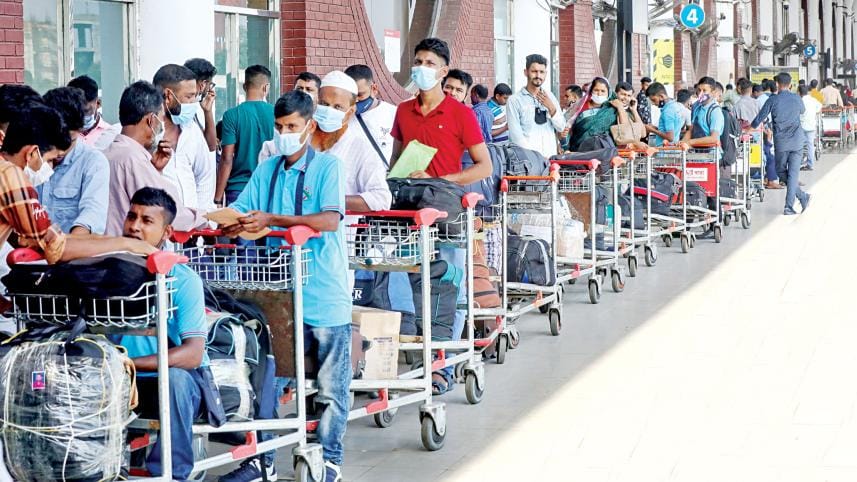
Consider my own story as a young international student - like so many others – from Bangladesh who migrated to Canada. Carrying study and work permits in 1981, the passage from international student to permanent resident, i.e., immigrant to Canadian citizen was a twisting, often distressed road, echoing the experience of countless migrants since the independence of Bangladesh in 1971. These journeys are not only individual tales; they are also collective transformations. Today, Bangladeshi graduates, professionals, entrepreneurs are thriving across continents. The trend of migration continues, as undergraduate students and contract workers—men and women alike—depart for Saudi Arabia, the United Arab Emirates, the Persian Gulf, Italy, Singapore, Malaysia, Thailand and countries in the West. Indeed, we live in an “Age of Migration.” In my own research, I identify all categories of transnational migrants as “migrants” and hardly make any distinctions between immigrants and asylum seekers. My thoughts have been deeply influenced by liberal welfare ideology and practices that must provide basic security to all residents without any discrimination based on citizenship status.
Migration is not simply about finding a job. It is deeply connected to systems of power, identity, and belonging. The terms—transnational migration, international migration, economic migration, global migration, political migration, environmental migration, and regional migration are now used interchangeably. These lexicons are recurrently exercised without an investigation of their underlying assumptions and far-reaching meanings. I find effective to use the term transnational migration and its multi-layered processes that highlight existing power relationships between receiving and sending countries as well as social identities of migrants. A classic example is the Philippines. Since 1974, the country is aggressively promoting labour-export policy primarily to reduce high unemployment rate, and to recover from a sluggish economy and national debt. Today, thousands of migrant workers leave the Philippines daily.
The Filipino story – for example, is also tied to Canada’s significant labour shortage of caregivers, because of inadequate support by the Canadian government for all sorts of caregiving services including childcare, eldercare, care for the disabled, and so on. Neither Canadian citizens nor permanent residents/immigrants are available to fill the shortages for childcare, more specifically, live-in-caregiving work. To meet the shortages of the caregivers, Canadian immigration policy has overtly focused on the need for a cheap labour pool. Thus, the combination of the Canadian Live-in-Caregiver Program or LCP (1992-2014) and the Philippine’s Labour Export Policy (since 1974) resulted in an influx of Filipino migrant workers to Canada as live-in-caregivers. Live-in-caregiver workers must live in their employer’s home and provide services for children, elders, severely disabled persons and so on. Within four years of their live-in migrant status, the Filipino caregivers are entitled to apply for permanent residency/immigrant status. Almost all Filipino caregivers under the LCP receive immigrant status, and then, citizenship in Canada. This convergence of national policies created a gendered pattern of employment, as most live-in caregivers are women. My own research with Filipino migrant workers in Canada underscore how labour migration intersects with gender, policy, and national needs.
In 1999, Bangladeshi immigrants in Canada played a crucial role, with support from Government of Bangladesh, Canada, and several other countries, in convincing UNESCO to recognise 21st February as the International Mother Language Day. These actions demonstrate the organisational strength and agency of transmigrants, who are not passive subjects but active contributors to their host and home countries. This also proves the strength of social identities of transmigrants and their grassroots actions.
Transnational migrants are popularly viewed as uprooted and transient people. On the contrary, transnational migrants maintain ties to their countries of origin in numerous ways and their migratory patterns are intersected with local, regional, and national identities. The identities are often layered—neither completely surrendered nor entirely defined by their new homes. Many transmigrants ultimately become immigrants and then citizens in the host countries. These people, however, do not forgo one national identity for another. National identity across borders also plays a pivotal role in organising transmigrants on a single issue. For example, Filipino transmigrants were a significant force in toppling down the US backed military dictator Ferdinand Marcos (1965-1986) and were instrumental in changing political scenario in the Philippines. In 1999, Bangladeshi immigrants in Canada played a crucial role, with support from Government of Bangladesh, Canada, and several other countries, in convincing UNESCO to recognise 21st February as the International Mother Language Day. These actions demonstrate the organisational strength and agency of transmigrants, who are not passive subjects but active contributors to their host and home countries. This also proves the strength of social identities of transmigrants and their grassroots actions.
In recent years, many countries – for instance, the United States, have taken hardline on the rights of transnational migrants, resulting in economic, social, and political uncertainties as well as physical, mental, and sexual threats and tortures. We find more emphasis on security and border control over transmigrants’ rights or well-being, including deportation of asylum seekers and ‘overstayers’, to countries such as Bangladesh, India, Iran, and other countries. Thousand have been deported in recent months in shackles. In Bangladesh, such forced returnees are receiving emergency support, shelter and transport from NGOs such as the BRAC. The right-wing populism and xenophobia still loom large in the US, threatening to force more migrants back to uncertain futures.
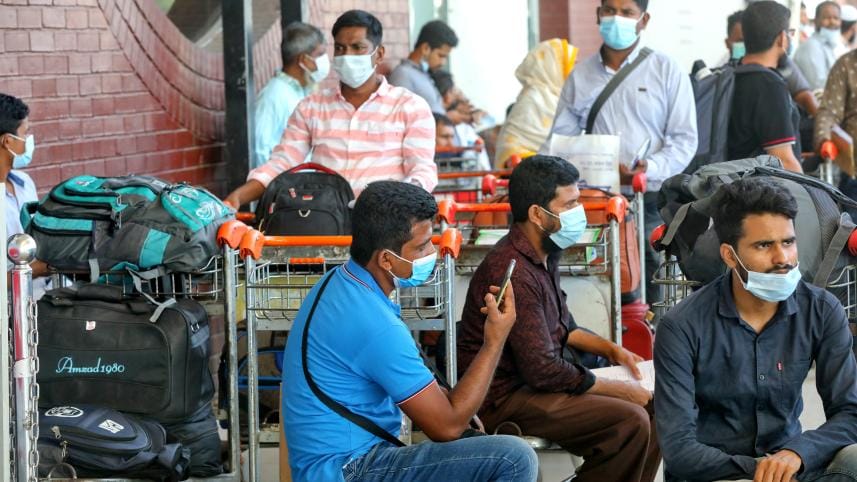
The importance of labour migration is perhaps most vividly seen in economic terms. Bangladesh ranks among the top ten remittance-receiving countries in the world. The money sent home by migrants—alongside the earnings from domestic garment workers—fuels the nation’s Gross Domestic Product and keeps its economy vibrant. Filipino migrant workers have established grassroots migrant workers’ organisation around the world. The Migrante International, an umbrella organisation, has been established to protect the rights, dignity, and welfare of Filipinos and their families. Bangladeshi migrant workers lack such structures, leaving less-skilled and manual labourers particularly vulnerable to abuse and exploitation. Existing informal networks offer some support regarding accommodation, food, and so on, but these are no substitute for grassroots organisations that can advocate for rights, dignity, and well-being. Recognising local and global vulnerabilities, Bangladesh enacted the 2013 Overseas Employment and Migrants Act to regulate agencies and protect migrant rights. However, the effectiveness of measures like this depends on implementation and innovation, especially as the number of returning migrants grow.
We should not forget that the movement of labour across borders is not merely an economic phenomenon; it is a force that shapes identities, countries, and the very fabric of our shared global existence. As we consider the realities faced by migrants, their power to organise, and the significance of their contributions, it becomes clear that migration is not a problem to be solved but a dynamic process to be understood and respected. Bangladesh needs to set examples in this regard due to its large numbers of migrant workers globally. It is high time for communities, governments, employers and corporations to recognise migrant workers as integral, valued members of society, deserving both rights and dignity.
Habiba Zaman is a Professor Emerita in the Department of Gender, Sexuality, and Women’s Studies at Simon Fraser University, British Columbia, Canada. Her most recent book is titled Reframing My Worth: Memoir of a Bangladeshi-Canadian Woman (Friesen Press, 2024).
Send your articles for Slow Reads to slowreads@thedailystar.net. Check out our submission guidelines for details.