


Beyond kaanta- taar: Rethinking life at the Bangladesh–India border

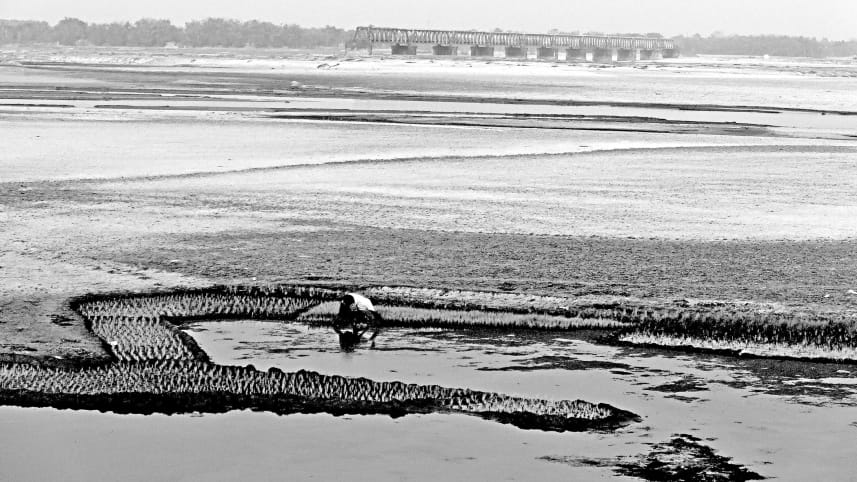
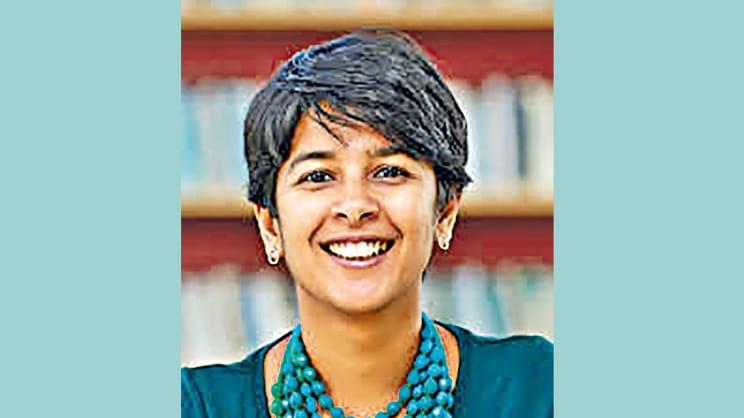
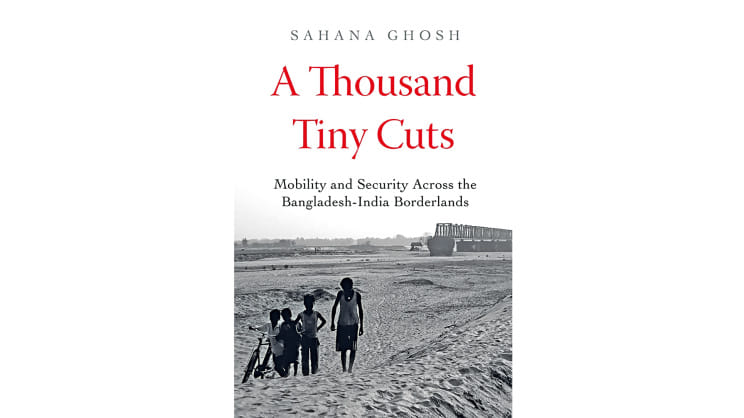
In conversation with Sahana Ghosh, author of A Thousand Tiny Cuts: Mobility and Security Across the India-Bangladesh Borderlands and assistant professor of Anthropology at the National University of Singapore.
The Daily Star (TDS): What drew you to studying the India–Bangladesh border, and how did that research shape the theoretical framework of A Thousand Tiny Cuts?
 For all latest news, follow The Daily Star's Google News channel.
 Sahana Ghosh (SG): I came to this research not as a scholar, but as a human rights practitioner with the South Asia Forum for Human Rights, where I documented extrajudicial violence by border security forces in collaboration with organisations in India and Bangladesh. That experience led me to pursue full-time research on the subject. When I began my PhD fieldwork in these agrarian borderlands, I expected to continue focusing on law and violence. Instead, I discovered that bordering was reshaping and devaluing social and economic life in ways that extended far beyond the forms of physical violence that had initially occupied my attention.
Precious agricultural land left fallow by unlawful BSF directives, young people considered unmarriageable because of their borderland address, and kinship ties worn down by the unequal costs and risks of clandestine crossings — these experiences shaped the metaphor of A Thousand Tiny Cuts. Bordering, as an accumulative and ongoing process scattered across ordinary life rather than a single event, emerged from listening to borderland residents over a decade of fieldwork in Cooch Behar, India, and in Lalmonirhat and Kurigram, Bangladesh.
Theoretically, the book draws on anthropological thinking about value: bordering does not simply separate ‘India’ from ‘Bangladesh’. Rather, it holds them together through relations of unequal value, producing gains and losses simultaneously. Border and migration regimes are not gender-neutral bureaucratic systems; gender is central to bordering as relations of value in my theorisation. Who is considered a threat, who is granted discretionary sympathy, which crossings are treated as security violations and which as domestic necessities — all of these judgments are shaped by gendered and classed assumptions about bodies and their proper place. These are the core ideas underpinning the theoretical argument.
A further methodological commitment informs this theoretical framework: I was determined to conduct fieldwork on both sides rather than treating one country as the locus and the other as a backdrop. That transnational feminist approach — refusing to let the national boundary become the boundary of my analysis — is what allowed the relational story to emerge.
TDS: In your book, you challenge the idea of Partition as a single defining rupture. How was the India–Bangladesh border continuously remade after 1947?
SG: One of the central arguments of the book — developed, for example, through Chapter 1’s spatial history along Rangpur Road and Chapter 3’s account of cross-border marriages — is that 1947 is not the definitive historical moment from the perspective of these agrarian borderlands. The border was made and remade through several key moments: the severing of rail connections during the 1965 India-Pakistan War; the celebrated rebirth of the eastern border as a so-called ‘friendly’ border after the Liberation War of 1971; the gradual construction of the fence from the late 1980s; and the withdrawal of the bilateral passport scheme in subsequent decades. Residents of Uttarbanga invoke these histories not as nostalgia, but as accounts of the deliberate impoverishment of the region as it became a national borderland of two states.
In memories of rail junctions and well-connected journeys by river and road, of warehouses full of jute and tobacco, and of thriving musical, theatrical, and religious life, ruptures such as those of 1965 — when the rail bridge was bombed and the trains stopped — remain vivid. What made 1971 so significant was that it restructured the entire political geography: the boundary became a ‘friendly’ border between two sovereign states with deeply asymmetric power, reshaping mobility and belonging in ways that went beyond the rupture of 1947.

These layered histories are preserved in personal archives and family accounts of mobility and settlement, carrying profound consequences for political belonging and identity in the post-1971 period, as I trace particularly in Chapter 6. Attachments to, and estrangements from, village, nation, and family could not be reduced to stable binaries. For example, a retired school principal in Lalmonirhat kept a tin trunk under his bed containing Pakistani refugee certificates, Indian school records, and badli papers documenting his family’s migration from West Bengal to East Pakistan in the 1960s. His refugee certificate stated that the family had been ‘forcibly driven out of India’; he chuckled at that stock phrase, since the tortured and prolonged process of decision-making within the family had been quite the opposite.
What is striking about these histories is how sharply they depart from the nostalgic Bengali Hindu refugee narrative dominant in West Bengal’s cultural imagination. For Muslim exchangees, the border remained physically adjacent, relatives stayed nearby, and estrangement unfolded gradually over decades. These memories remain politically active, shaping who counts as a legitimate citizen and who is labelled an infiltrator or an outsider today.
TDS: In what ways does your work rethink the violence of the India–Bangladesh border beyond barbed wire and physical force?
SG: I wanted to challenge the ‘watershed’ narrative that Partition was a single catastrophic event after which the border became a fixed line separating two peoples and determining their destinies. This is vital if we are to imagine and build a more just future.
From these riverine and agrarian borderlands, the border — and its biography — appears very differently from the dominant political and nationalist histories we are told. The political ecology of the river border makes this point most clearly: farmers possess deeds to land that may disappear into the river, only to reappear seasons or even generations later on the other side. Residents are simultaneously forced apart and pulled together through the everyday life of the borderlands — it is within these daily decisions and relational practices that bordering unfolds.
No doubt this is a violent border. However, perhaps more importantly, as I show through ethnographic and historical detail, the violence of bordering has come loose from India’s kaanta- taar fence and become distributed across an entire social and economic geography: checkpoints, the risk of detention, the cost of an international phone call, estranged kin, stigmatised addresses, and fields left uncultivated. The same border that once felt like proximity — making cross-border marriages, businesses, and connections desirable — slowly became a form of entrapment. Nothing about these securitised border and migration regimes is inevitable; they continue to be shaped in contemporary times.
It is no coincidence that the borderlands of northern Bengal — Cooch Behar on the Indian side, and Lalmonirhat and Kurigram in Bangladesh — are among the most economically marginal regions in their respective countries. The colonial rail and road infrastructure that once connected these districts into a single regional economy was severed by the border and never restored. I trace the impact of the border on the agrarian economy, for example, through the tobacco trade: border enforcement has not stopped tobacco from crossing. It has simply rendered it contraband, shifting surplus towards well-connected Marwari traders in Dinhata, India, while criminalising the Muslim and Rajbongshi farmers and petty stockists on both sides who perform the actual labour.
Security prohibitions aggravate agrarian distress for small farmers, pushing them towards risky economic choices within border smuggling economies. This becomes particularly visible among young men coming of age in the agrarian borderlands on both sides as they navigate livelihood options and imagine their futures, while facing stereotyped criminalisation as working-class migrants in both Dhaka and Delhi.
Border villages on both sides experience lower levels of education, healthcare, and infrastructure than their respective national averages. The governing logic of both states treats the borderland as a security perimeter to be managed rather than a community to be served. What makes this so difficult to challenge is that even when residents on both sides share similar structural disadvantages, they rarely make common cause. The halogen floodlights that illuminate India’s fence throughout the night — facing only one direction and damaging Bangladeshi farmers’ banana gardens — offer a stark image of a broader asymmetry: the way regional geopolitics undermines everyday friendship and solidarity.
As a young man in Kurigram put it to me wryly, the mouth of the gun faces in only one direction. National frameworks intervene constantly, fracturing the transnational solidarities that the shared predicament of borderland residents might otherwise generate. That is the deepest cut of all.
TDS: What role do gender and religion play in the securitisation of the India–Bangladesh border?
SG: Gender is not a separate topic layered onto the border — bordering is constitutively gendered. While it is important to recognise that this is a shared condition across the borderlands, it can play out differently on both sides, especially for different groups of people.
The book opens with the story that makes this gendered logic clear: a Bangladeshi bride arrested at her own wedding in an Indian border village. Her family in Bangladesh calculated that she was the right kind of body — Hindu, female — to remain mobile across a border that was closing around Muslim men. She and her husband, a poor Rajbangshi man in India, were able to marry and continue crossing precisely because their respective vulnerabilities aligned with the border’s hierarchy of gender and religion, not despite it. However, that was not a free choice; it was itself produced by a militarised border that made her family’s minority status in Bangladesh more precarious and made a man like her husband unmarriageable in the Indian borderlands, dependent on a cross-border bride. This unevenness is the grammar of gendered bordering, used by state actors and borderland residents alike. This is one of the book’s central arguments: borderland residents are not simply subjected to a security regime from outside; national and border security regimes take shape in borderlands, including through residents’ participation and dominant social norms.
The bogey of the Bangladeshi infiltrator — the most-wanted anuprabeshkari against whose mobility India’s eastern border has been gradually militarised — has become tied to the Bengali Muslim. The idea that Hindu migrants from Bangladesh are refugees and Muslim migrants are infiltrators has a specific history in India: it took hold in the post-1971 years, once the first flush of Indian humanitarianism toward Bangladeshi refugees ebbed, and it has only hardened since. As the CAA, NRC, and now, most recently, SIR exercises in India show, these distinctions disenfranchise, sanction hatred and violent discrimination, and actively mobilise resentment both within and across national borders. The border security regime and the gendered assumptions built into it reflect and reinforce that distinction. While countering the inequalities of national regimes is crucial, it is equally urgent to amplify and build people’s movements and solidarities beyond national identities.
TDS: How has bordering reshaped transnational kinship and everyday relationships in the India–Bangladesh borderlands?
SG: Transnational kinship is among the most vivid and poignant dimensions of borderland life, a site of deep attachments, tensions, and intimate geopolitics spanning generations. As national history becomes a site of national security, borderland residents are caught in the crosshairs: loyalties and forms of belonging unspeakable in one political juncture can become dominant in another generation. On a day-to-day level, cross-border friendship and kinship, though widespread, are regarded with suspicion: BSF officers cited possession of Bangladeshi SIM cards as grounds for detaining Indian borderland residents under the Foreigners Act, so the very infrastructure of staying connected has become a liability.
Crucially, this kinship does not operate between equals. The hierarchy of Indian and Bangladeshi citizenship and mobility is encoded in passport and visa costs, the 2013 withdrawal of the bilateral passport scheme, and the differential risks of crossing. Bangladeshi women who marry into India acquire a degree of protection from border violence that their brothers do not. Borderland residents are forced to make difficult choices: bordering seeps into intimate relations as people begin to see themselves and each other through the lens of national identities and stereotypes. Transnational kinship is braided through these inequalities, and families navigate them with great resourcefulness and considerable cost.
TDS: What would a more humane and equitable border regime between India and Bangladesh look like?
SG: The LBA of 2015 demonstrated that long-standing territorial anomalies can be resolved through bilateral political will. I was living and conducting fieldwork in northern Bengal when the enclave surveys were conducted. I witnessed, on the one hand, the wonderful camaraderie with which the joint survey teams carried out their work and, on the other hand, the anguish of Hindu families in enclaves in Bangladesh choosing Indian citizenship for a country they had never set foot in.
However, the LBA resolved territorial anomalies, not structural conditions. The unlawful BSF bans on cultivation near the fence, violent security and surveillance practices targeting borderland residents on both sides, and the criminalisation of transnational kinship and agrarian trade all continue. For the Modi and Hasina regimes, the highly unequal “friendly” border meant a militarised joint-border security regime. A border security framework that pits the welfare and wellbeing of borderland peoples against national security interests is unsustainable, counterproductive, and deeply unjust. No amount of infrastructure can produce wellbeing and feelings of patriotism when border security policies and practices actively devalue and criminalise people on their own lands, in their livelihoods, and in the homes and relationships through which they have lived for generations.
What would most benefit borderland communities is a complete reimagining of militarised border security regimes, recognition that the devaluation of borderland livelihoods is a policy consequence rather than an inevitability, and the prioritisation of affordable legal pathways for cross-border kinship. The current political moment on both sides makes this difficult to imagine. However, borderlands remain spaces where alternative visions, shared histories, and the difficult work of friendship and kinship continue to make life possible.
The interview was taken by Priyam Paul.
Comments