


The dangerous normalisation of beauty consumerism among young girls
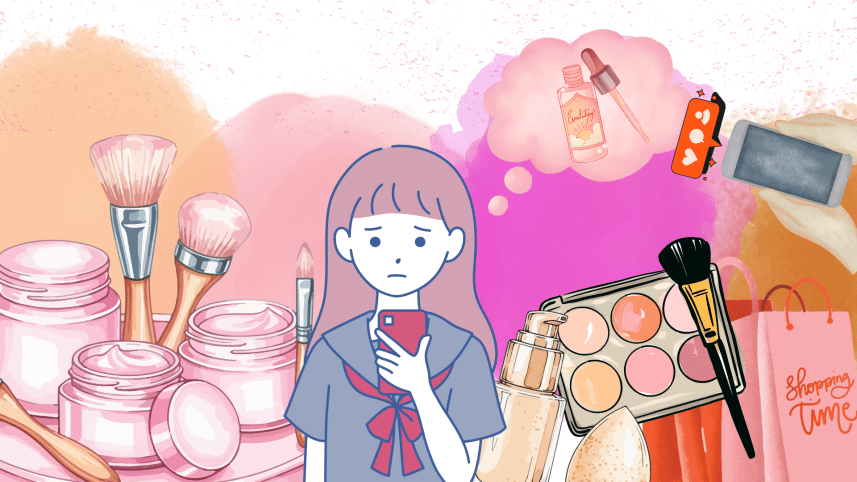
Across the globe, and as a booming trend even in Bangladesh, young girls are being drawn into a dimension that was never intended for their delicate skin or developing minds. This is not just about beautification and concerns over remaining youthful; it’s more about premature consumerism without an ounce of thought given to necessity, commercialising insecurity by posing products as a solution, and brands discovering a new target demographic to boost sales and audience.
Today’s girls are now introduced to the beauty algorithm, which is very easily marketed via social media. Social media algorithms aggressively push skincare routines, makeup tutorials, and aesthetic “self-care” reels to increasingly younger audiences. One click on a “morning routine” video quickly turns into a feed dominated by serums, contour sticks, and anti-ageing advice. The normalisation of 10-step skincare routines for pre-teens has somewhat redefined what childhood looks like. When a 14-year-old discusses exfoliating acids, under-eye patches or non-transferable lip stains, it is no longer experimentation; it can be termed “adultification”. Slowly, but surely, the lines between playing dress-up and performing adulthood have blurred.
 For all latest news, follow The Daily Star's Google News channel.
 Abroad, the term “Sephora Kids” has emerged to describe high-end cosmetic stores being crowded by pre-teens and them purchasing products meant for mature skin. What once seemed like a Western consumer culture anomaly is now swiftly transcending borders and reaching Bangladeshi urban regions. Luxury skincare brands, serums, and cosmetics that are influencer-endorsed are increasingly visible in the hands of secondary school pupils. This has become very common as online marketplaces and international shipping have erased barriers. It has also given rise to the idea that owning trendy products is about belonging. This is how brand literacy now starts in childhood.
Like in all eras, insecurity is one of the greatest weapons of the beauty industry, which at times is induced by them in others to pose themselves as the solutions. Even the modern marketing strategies do not simply sell products; they manufacture problems. Advertisements subtly frame pores as flaws, texture as imperfection, and normal acne as a crisis requiring immediate correction or cover-up. High school dramas and films further romanticise hyper-polished appearances. Teenage protagonists are rarely the age they portray with real skin, real bodies, or real imperfections.
The concept of self-care was once considered a balance between adequate sleep, a nutritious diet, physical activity, emotional well-being, hygiene, and skill-building. Today, it has been reduced to aesthetic rituals, fancy GRWM videos, that is, “get ready with me” for the day. Face masks replace fitness, serums replace sleep, and makeup replaces confidence. Self-care is increasingly mirrored with consumption. A generation is being taught that well-being comes in a bottle instead of through discipline, creativity, restraint, or education. This reframing is particularly dangerous in developing societies, where access to nutritious food, sports facilities, and skill-building opportunities should be prioritised over imported beauty trends.
Makeup and skincare today are no longer marketed by distant, unattainable adults; they are increasingly promoted by younger models and influencers. These fresh-faced brand ambassadors with flawless lighting, carefully curated routines, and thousands of followers are positioned as relatable “big sisters”. However, in reality, they are celebrities trying to promote products.
For pre-teens, admiration quickly turns into imitation. When someone who looks 17 speaks about “colour correcting” or “fixing texture", the message feels like advice from a trusted peer. Moreover, there has been a rise in child influencers who receive public relations or PR packages to advertise cosmetic products, making pre-teens believe that buying these products is not optional and it is necessary to “glow up” instead of growing up correctly.
It needs to be stated very clearly that this is not an argument against makeup. Nor is it a call to police self-expression. Experimentation can always be creative and joyful. But when beauty becomes obligation rather than play, when self-care becomes consumerism, and when childhood becomes a marketplace, society must pause. It is necessary to reconsider how aggressively beauty culture is influencing young spaces and minds. Most importantly, it is necessary to make young girls aware that their value and confidence cannot be bottled.
Farheen Rahman is an IR student who occasionally wonders why some people suffer from colour-blindness and see everything in black and white when it comes to analyzing global events. Reach her at farheen.subah@gmail.com.
Comments