


Bangladesh wants fair business, not charity

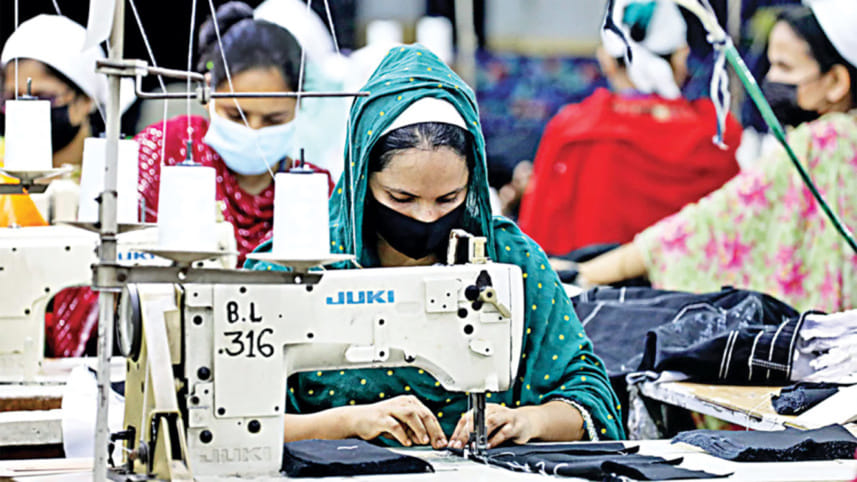
For two decades, I have watched global fashion brands speak the language of responsible business conduct—human rights due diligence, living wages, supplier partnerships, climate transition, social compliance, transparency, and shared responsibility. As a Bangladeshi garment manufacturer, I have welcomed that language and believe in it, as do most serious manufacturers in the country.
But the contradiction at the heart of the global garment industry is that responsible business cannot be built on irresponsible purchasing. It is now 2026, and we are still seeing brands asking suppliers to work miracles by doing more with less. Brands ask suppliers to invest, document, audit, decarbonise, trace, report, and comply with more. At the same time, commercial teams continue to demand lower prices, shorter lead times, longer payment terms and greater flexibility. How can that be called a partnership?
 For all latest news, follow The Daily Star's Google News channel.
 A recent Public Eye and Clean Clothes Campaign report, titled “Squeezed Dry,” reveals some solid numbers in line with what many Bangladeshi manufacturers have experienced for years. It found that major buyers continue to source standard cotton T-shirts at around $2-3 per piece, with unit prices below $1 still found in parts of the market. It also found that in 2025, the average EU import price for cotton T-shirts was $16 per kg, while imports from Bangladesh averaged about $13 per kg.
The most important finding in the report is that real prices (prices adjusted for inflation) have gone backwards. According to the report, EU buyers now pay roughly a quarter more in nominal terms for imported cotton T-shirts than they did 25 years ago. But after adjusting for inflation, they are actually paying around 30 percent less. Adjusted for global inflation, average sourcing prices have fallen by roughly half in real terms. No serious conversation about living wages, “responsible sourcing,” or “just transition” can ignore these alarming pricing dynamics.
Bangladesh has become central to this model. The same report says 61 percent of T-shirts imported into the EU in 2025 were sewn in Bangladesh. This business has brought jobs, foreign exchange, and industrial growth—which we are proud of. Bangladesh’s garment industry has changed millions of lives. But concentration around the lowest-cost production base also creates dependency. It gives buyers huge leverage. It means that a factory can be technically free to reject an order, but commercially unable to do so if it wants to keep lines running and workers employed. This is a huge power imbalance.
Manufacturers do not want charity from brands. We are asking buyers to recognise that a factory is more than a production unit at the end of a spreadsheet. It is a workplace that employs people, pays wages, and carries bank loans. It pays utility bills, invests in fire safety, wastewater treatment, certification, audits, training, energy efficiency, and compliance systems. If the price paid for the garment does not reflect those realities, then all the language of responsible business conduct goes out the window.
The UN Guiding Principles on Business and Human Rights require companies to avoid infringing the rights of others and address adverse impacts. The Organisation for Economic Co-operation and Development (OECD) guidance for the garment and footwear sector is clear that due diligence applies across supply chains. It is designed to help companies identify, prevent, mitigate, and account for adverse impacts linked to their operations, products, and business relationships. The OECD has also identified low wages as a major risk in garment supply chains. To be clear, purchasing practices are not separate from human rights. They are one of the main ways brands influence human rights outcomes.
If a buyer sets a target price that does not cover the cost of compliant production, that is not a neutral commercial decision. If a buyer negotiates after production has begun, delays payment, demands discounts, changes specifications late, or refuses to reflect wage increases in the free on board (FOB) price, those decisions have consequences. The pressure moves downwards and affects factory margins, production intensity, overtime, and wages.
Responsible business conduct is now a market access imperative for Bangladesh’s manufacturers, not a voluntary aspiration, especially as we face LDC graduation, tighter global regulation, and new expectations under EU due diligence rules. But responsible business conduct cannot be one-sided. It cannot be imposed on suppliers while buyers retain the right to purchase in ways that make responsible conduct commercially impossible.
For a garment worker, the difference between responsible and irresponsible business is not a supplier code on a website. It is whether wages can support a decent life, overtime is manageable, work is safe, and the factory has enough margin to invest rather than survive from order to order. Poverty wages in global supply chains should not be a fact of life in 2026.
No brand can credibly speak about human rights while relying on prices that help lock poverty wages into the system. No retailer can credibly speak about sustainability while treating labour as the only flexible cost left in the chain. And no company can claim partnership while transferring risk downwards and keeping value upwards.
This is not an argument against competitiveness. We compete every day with China, Vietnam, India, Pakistan, Cambodia, and Turkey. But competition should not mean a race to the bottom. At the same time, fairness does not mean brands paying whatever suppliers ask. It means open costing and prices based on the real cost of responsible production. It means recognising wage increases, respecting agreed terms, and not using one country’s economic vulnerabilities as a bargaining tool. It also means buyers accepting that sustainability has a cost.
Manufacturers in Bangladesh are not asking to be excused from responsibility. We are asking for responsibility to be shared honestly. We want to build better factories. We want skilled workers and stable orders. We want to invest in cleaner production and meet global standards. We want Bangladesh to be known not only for scale and price, but for quality, reliability, innovation, and decent work. But that future requires buyers to change, too.
Mostafiz Uddin is managing director of Denim Expert Limited. He is also founder and CEO of Bangladesh Denim Expo and Bangladesh Apparel Exchange (BAE).
Views expressed in this article are the author's own.
Follow The Daily Star Opinion on Facebook for the latest opinions, commentaries, and analyses by experts and professionals. To contribute your article or letter to The Daily Star Opinion, see our guidelines for submission.
Comments