


Prioritising reforms over governance: Putting the cart before the horse


To misquote Shakespeare,
"The fault, dear Yunus, lies not in our laws but in their implementation."
 For all latest news, follow The Daily Star's Google News channel.
 The cart before the horse
Every day our newspapers carry some story or op-ed article about why laws or regulations are not being implemented, projects are facing cost and time overruns, and completed projects are not delivering the outputs of products and services that they were expected to deliver. For instance, The Daily Star, on the front page of its November 25 issue, carried a story about how earthquake shocks may lead to building collapses across Dhaka due to the failure to observe and enforce building regulations. It also ran a report showing how women continue to be exposed to violence, both physical and digital, in spite of the numerous agencies and initiatives that have been put in place to provide them with protection.
Hardly a day goes by without some report of illicit land grabbing or encroachment on water bodies and other natural resources, in clear violation of the laws and regulations already in place. Failures in administrative compliance are compounded by reports of violence against vulnerable groups while law enforcement agencies remain ineffective. Governance inertia extends to judicial inaction or to the practice of one-eyed justice, where people continue to be incarcerated and denied bail for political or even personal reasons, and languish in jail without exposure to due process.
In all of those cases cited above, laws, policies, and regulations already on the statute books—generated by various reform initiatives undertaken by successive governments—are being ignored or abused. Implementation agencies, regulatory bodies, judicial institutions, and law enforcement agencies tend to demonstrate little capacity to discharge their designated responsibilities.
While such forms of governance failure were rife across the ousted Hasina government, and also those of its predecessors, we have sadly observed little noticeable improvement in addressing such governance malfunctions under the incumbent interim government of Prof Muhammad Yunus. The government has instead demonstrated, perhaps inspired by the expectations of the student-led mass uprising, a preoccupation with commissioning a plethora of reform initiatives related to the constitution, public administration, the judiciary, electoral system, police, Anti-Corruption Commission (ACC), healthcare, local government, women's concerns, the economy, and so on.
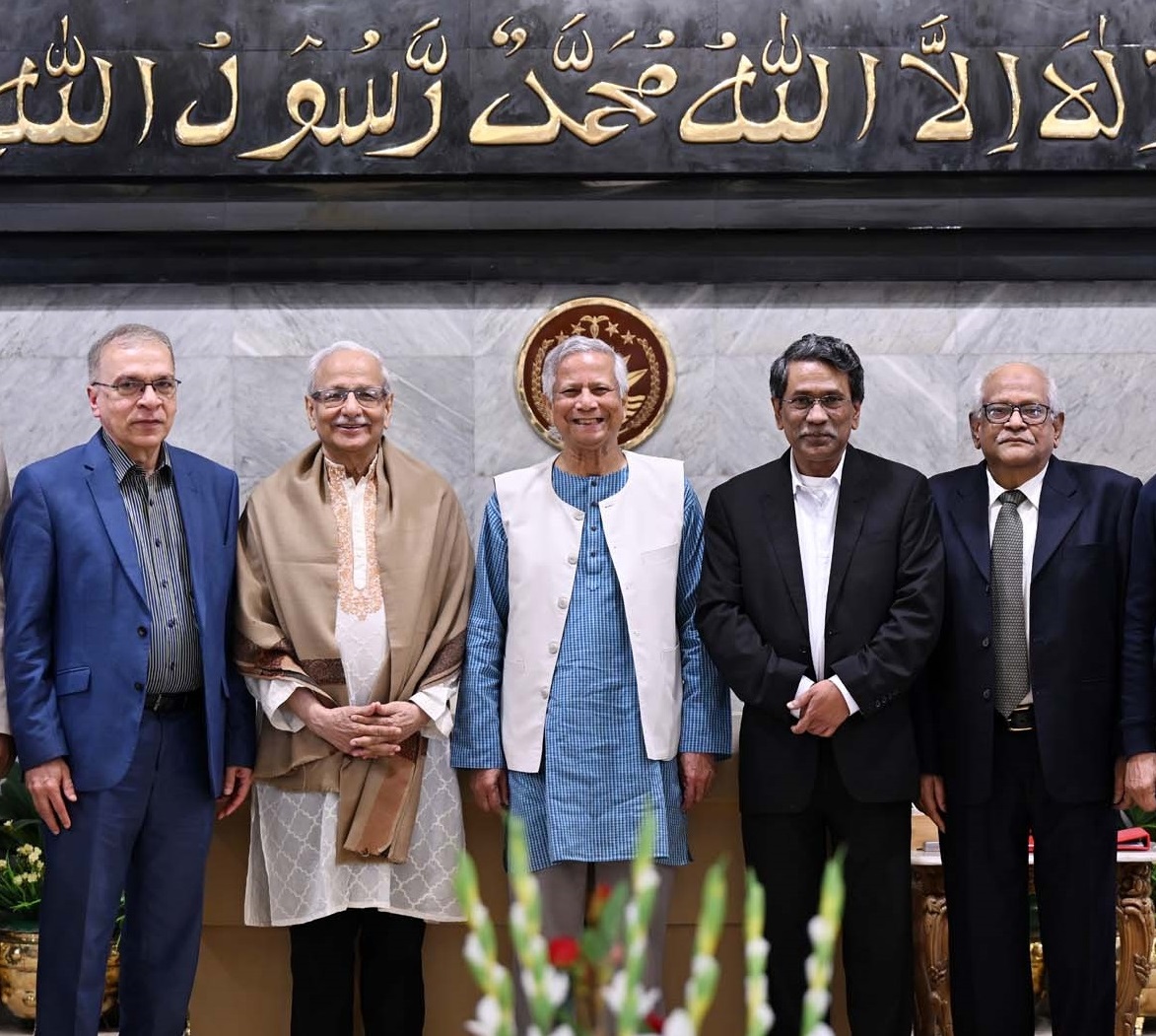
While much time was devoted to preparing and then building a consensus around the reforms (the latter covering the first six of the reform areas cited above), less time appears to have been invested by the National Consensus Commission (NCC) and the interim government in substantively diagnosing and addressing the myriad governance failures that had provided the basis for some of those reforms. Closer attention to why laws and regulations relating to women's rights, the environment, or the banking sector—in place for many years—have not been properly implemented would have given us a better insight into our priorities and likely better guided the actions of the interim government. Such an understanding would have provided a clearer idea of how, and by whom, the reforms would eventually have to be implemented.
A quest for legitimacy
What little political capital was available to the interim government appears to have been misspent in securing commitments from the political parties to enact particular reforms. Measures to commit or bind a prospective elected regime to implement the reforms proposed by a medley of commissions, and prioritised by the NCC, appear to be based on hope triumphing over experience. In its anxiety to invest the reform agenda with some legitimacy, the government has annexed a proposal for a referendum held along with the forthcoming national elections, now scheduled to take place on February 12. Through the referendum, voters will be expected to express their opinion by voting "yes" or "no" to a set of four blanket propositions that obscure a more complex sub-text of 48 proposals containing the meat of the reform agenda.
How far the nearly 12.8 crore voters can reasonably be expected to apply their minds to such an opaquely designed referendum—and the legitimacy derived from such a process—remains questionable. Whatever the outcome of the referendum, it is far from clear whether an elected government will feel committed to enact the full package of 48 reforms. An incoming government, hopefully elected through a free and fair election, may feel inclined to enact reforms that are politically convenient for them. Regardless of what the parties say now, the priorities set for them by their voters, expressed through an election manifesto and articulated in parliament by their elected representatives, will be expected to receive precedence over any referendum imposed on them by an unelected interim government. In any elected Jatiya Sangsad, prospective reform priorities are more likely to emerge out of the dialectic between the ruling party and the opposition, based on their respective elective strength in the House.

Once the elected government decides to adopt a particular reform or set of reforms, they will need to operationalise this through legislation. This will apply to such constitutional issues as an Upper House, which can only be set up through a constitutional amendment drafted by the elected government in parliament. Preparing such a bill will require detailing the small print of the amendment for incorporation into legislation, which will also involve consultations with bureaucrats and concerned stakeholders who will be involved in the actual logistics and administration of a prospective Upper House. This will further involve such issues as the modalities of identifying who will be put up by their respective parties, the possible composition in terms of gender and other identity issues, the specific powers located within the House, its budget, and administrative arrangements.
The tabled legislation will then be exposed to parliamentary debate on particular clauses of the bill. This will need to include the opposition, whether on the floor of the Parliament or within a parliamentary committee, prior to a final vote to enact it into law. The post-election reform enactment process may thus be both labour- and time-intensive, with wide variations in the time required for the legislative process involving particular bills, whose introduction on the floor of the House will need to be prioritised and sequenced by the government.
The chimera of implementation
Legislating and enacting a reform proposal into law may turn out to be the least of the problems, however. The principal challenge for any government will be to implement the reforms over time and deliver the promised outcomes. It is in this area that successive governments have failed to deliver over the years, whether because of administrative incompetence or malfeasance or due to political resistance by particular groups who may be impacted by a reform. It should be kept in mind here that those who oppose a particular reform do not always do so during the legislative process—which is more open to public scrutiny—but during the implementation stage, where the public is largely kept in the dark about what goes on behind the scenes.
Many examples can be cited where popular legislation or policies negotiated with international development partners have been sabotaged during the implementation process. For instance, financial sector reforms negotiated with the International Monetary Fund (IMF) over the years, going back to the 1990s, remain a case in point. The current Bangladesh Bank governor is largely having to draw upon financial sector reforms that have been taken up by previous governments but have only been superficially implemented.
In such circumstances, the outcomes from a particular reform can only emerge over a protracted period of trial and error. Any realistic assessment of the reformist commitment of any regime will thus hardly be possible in 120 or even 180 days but will need to be evaluated three or four years down the line. By that time, we may get some idea of how effectively an Upper House elected through proportional representation (PR) has met the expectations of its proponents, or whether an "empowered" president is able to exercise some restraint over an elected prime minister.
Muhammad Yunus and his interim government are to be commended for their good intentions in seeking to carry out reforms that would forestall a return to the bad old days of "fascism." Given the track record of past governments—including those who have held and expect to hold office—in implementing their own laws, policies, and regulations of the time, it remains to be seen what the current reform package tabled through a referendum will eventually manage to deliver.
If any part of the interim government's reform agenda is to be implemented at all, much will depend on: the credibility, inclusivity, and eventual legitimacy of the scheduled February 2026 elections; the political compulsions of the elected ruling party to carry out particular reforms; the presence of a strong, proactive, and committed opposition willing to intelligently use the parliamentary system to oversee the implementation process; the effectiveness of parliament as an institution in exercising oversight and accountability over the machinery of government; the sincerity and capacity of the bureaucracy to implement rather than frustrate reforms; and the oversight and activism exercised by civil society and the media in tracking the reform process from enactment to implementation.
If hope is indeed to triumph over experience, we will need to look forward not just to a new government but to a new political, bureaucratic, and civic culture to bring about the social transformation we all want, and for which so many young people shed their blood during the 2024 July Uprising.
Prof Rehman Sobhan, one of Bangladesh's most distinguished economists and a celebrated public intellectual, is founder and chairman of the Centre for Policy Dialogue (CPD).
Views expressed in this article are the author's own.
Follow The Daily Star Opinion on Facebook for the latest opinions, commentaries, and analyses by experts and professionals. To contribute your article or letter to The Daily Star Opinion, see our guidelines for submission.
Comments