


Can any power now kidnap a head of state?
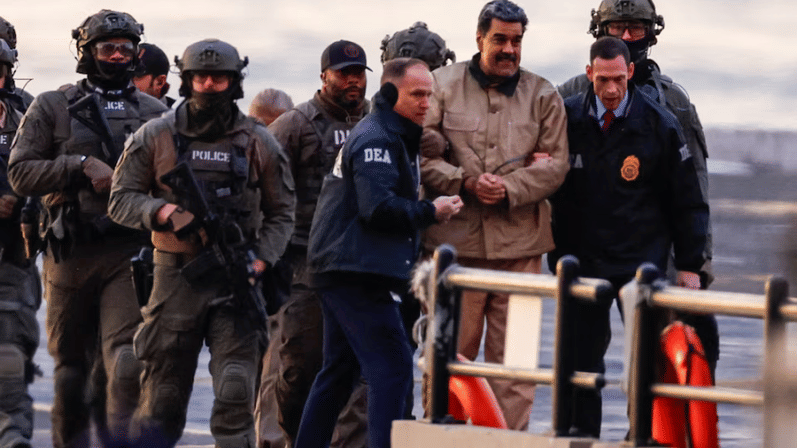
It seemed almost miraculous when the east coast of the US transitioned into 2026 on a pleasant note, occasioned by the inspiring inauguration of New York City's young mayor. Any joy was short-lived. A couple of days later, Zohran Mamdani felt obliged to inform the president of his discomfiture over the display of predatory imperialism in Caracas last Saturday. Less clear-headed Democrats have also expressed their alarm at the abduction of a sitting head of state in a military raid, and the concomitant violation of both the US Constitution and the UN Charter.
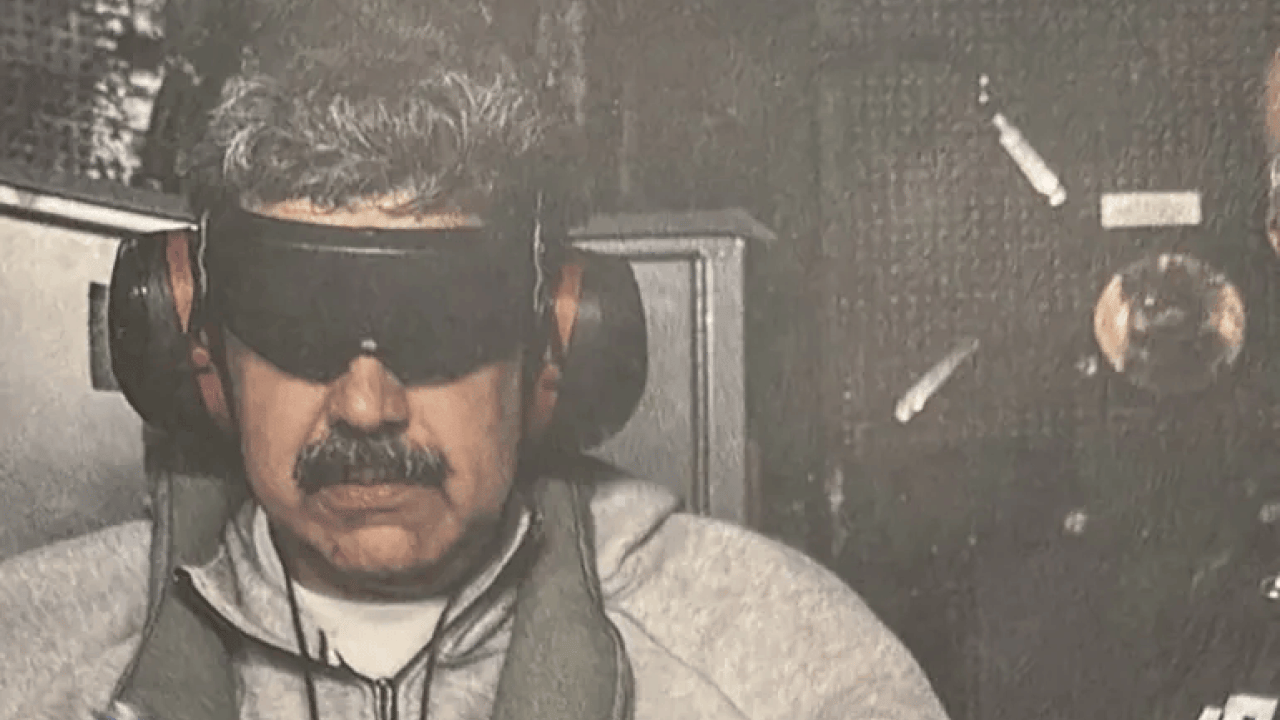
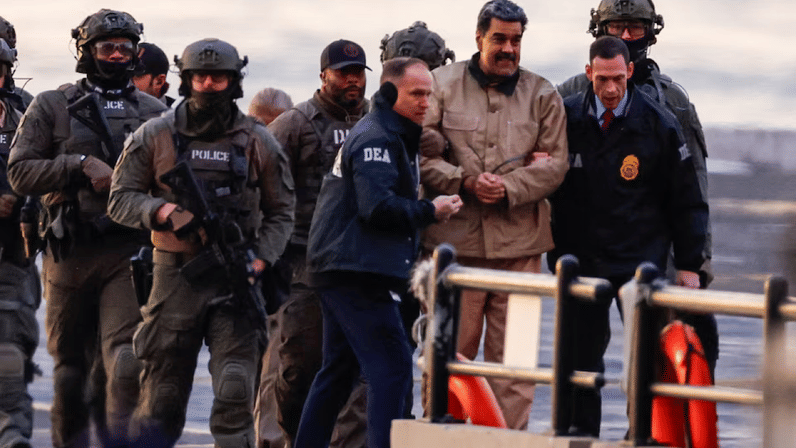
Donald Trump's excitement over last Saturday's successful bout of thuggery has spurred wild threats against Colombia, Mexico and Iran, not to mention Greenland. President Nicolás Maduro and his wife, Cilia Flores, were meanwhile arraigned in a federal court in Manhattan.
 For all latest news, follow The Daily Star's Google News channel.
 US attorney general Pam Bondi announced on X that Maduro "has been charged with Narco-Terrorism Conspiracy, Cocaine Importation Conspiracy, and Conspiracy to Possess Machineguns and Destructive Devices against the United States". Putting aside her illiteracy, she might have noticed how her boss has stepped back from the absurd "narco-terrorism" allegation — which has been deployed to justify, without evidence, the extra-judicial execution of over 100 people in small boats off the coasts of Venezuela and Colombia — and is now focusing mainly on an oil grab.
Trump has claimed that Venezuela stole "our" oil, and that his mission is to win it back. His oft-expressed greed for all manner of resources is taken for granted, but questions have been raised about the decade or longer it might take for US firms to resume their theft of Venezuelan oil at a lucrative scale. Venezuela's oil industry was nationalised 50 years ago; Hugo Chávez merely sought to close the loopholes in 2007. His aim, at least partially successful, was not only to redistribute oil wealth for the national good, but to offer it at discounted rates to Caribbean neighbours — not least Cuba.
Fidel Castro looked upon Chávez as an heir — regionally and on the global stage. It wasn't just in return for cheaper fuel but out of a moral obligation that Cuba helped Venezuela to impressively raise its levels of healthcare and education — not coincidentally, these are precisely the spheres in which some of the current US administration's worst domestic instincts are deployed. Chávez survived a US-backed attempt by the economic elites to replace him, but the socialistic basis of chavismo began to wither away not long after his death in 2013.
Maduro was the designated successor, but it was a poor choice: he evidently lacked the capability to carry on his predecessor's mission. Between 2012 and 2024, Venezuela's GDP dwindled from over $372 billion to less than $120bn. Millions made their way out of the country, mostly into Colombia and Brazil. Repression grew, directed more against the dispossessed than the exploiting class. US-led sanctions and attempts at regime change played a part in the downward spiral, but the Maduro administration has much to answer for, including last year's apparently stolen presidential election. But it should be answerable to the Venezuelan people. The US should mind its own business, as proposed by the America First doctrine, detestable as it may be in other ways.
To the consternation of some US allies, notably in Europe, the abduction of the Maduro couple has not been followed by the installation of their conservative adversaries as the new rulers, notwithstanding María Corina Machado's full-throated backing for an invasion and her kowtowing to Trump after winning the Nobel Peace Prize, a patently stupid gesture for which the Norwegian committee ought to be deeply ashamed.
But then, it's obvious that the Trump regime cares little for democracy, whether at home or abroad. For the moment it has picked Maduro's vice-president, Delcy Rodríguez, as its preferred conduit for meeting Washington's needs. Her defiant public statements might be sharply at variance with what she says to Marco Rubio, the abhorrent ideologue who has long sought to abolish all left-leaning tendencies in the region, beginning with Cuba. His conduit is his boss.
What's hugely appalling, but not particularly surprising, is the refusal on the part of most European nations to challenge their American ally's barefaced banditry. Barring a clutch of justifiably concerned Latin American nations, much of the Global South seems equally reluctant to question the would-be global hegemon's return to naked imperialism. China and Russia have expressed their consternation, but what will they do as "anarchy is loosed upon the world", as W.B. Yeats put it? What comes next will depend on the whim of a demented emperor, but the rest of the world will at best merely grumble and watch from the sidelines.
Mahir Ali is an Australia-based journalist. He writes regularly for several Pakistani publications, including Dawn. He can be reached at mahir.dawn@gmail.com
The article was first published in Dawn on January 7, 2026. The original title of the article was Wild, wild west.
Send your articles for Slow Reads to slowreads@thedailystar.net. Check out our submission guidelines for details.
Comments