


We must not leave the economy on autopilot
The interim government has stopped the economic bleeding, but now the nation faces a nervous wait for a turnaround after the February election. Having navigated a period of acute political upheaval, the economy has regained a semblance of stability, yet it now stands at a perilous crossroads, according to a candid report from the General Economics Division (GED). Economists warn that the risk is not immediate collapse but stagnation. The diagnosis was reinforced by the Asian Development Bank, which cut its growth forecast for the current fiscal year to 4.7 percent, down from an earlier optimism of 5.1 percent. The downgrade is particularly stinging given the neighbourhood context: while Bangladesh stalls, the outlooks for Pakistan and Sri Lanka are improving.
The vulnerabilities cited by the GED are symptomatic of an economy caught in a bind. Investment is subdued amid uncertainty ahead of the national election. Private sector credit growth has slumped to 6.23 percent, the slowest pace in at least 20 years. Businesses are effectively sitting on their hands, spooked by high borrowing costs and political jitters. Although foreign exchange reserves have stabilised, the broader outlook remains dismal. As an economist observes, while the situation has not collapsed, the "negative basket outweighs the positive."
 For all latest news, follow The Daily Star's Google News channel.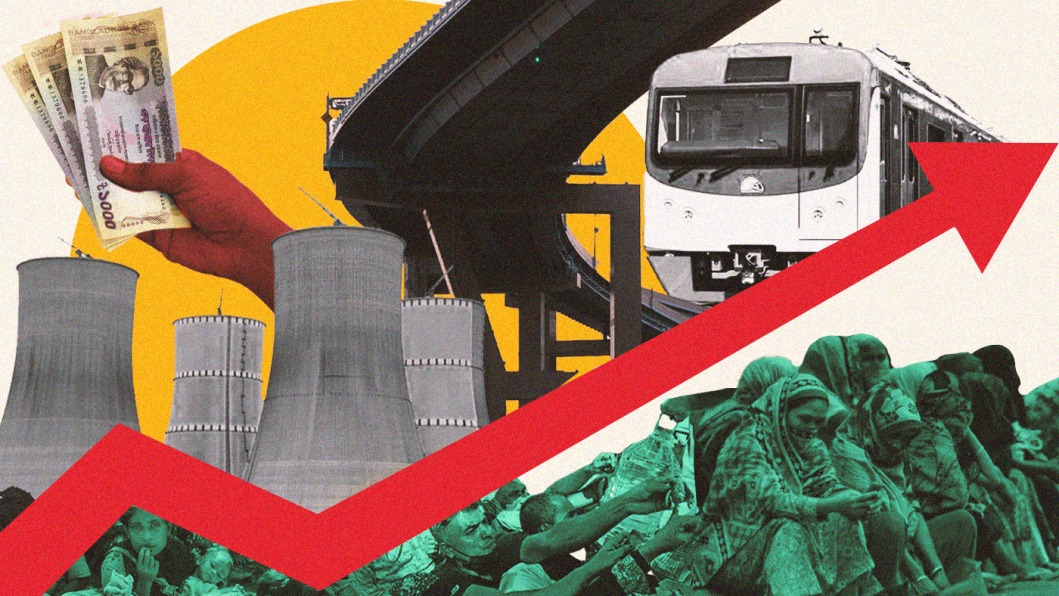
Nowhere is this clearer than in the export sector, the engine of Bangladesh's historic rise. Government officials speak of modernising the Chattogram port, but the reality on the ground has been less rosy. A major strike at the port in October, which handles over 90 percent of the country's trade, severely disrupted supply chains. At the same time, Bangladesh saw an anaemic export growth of just 0.62 percent year-on-year in the July-November period. A question remains: will reliance on the ready-made garment sector provide sufficient insulation against domestic disruptions and global headwinds?
The central dilemma is a classic policy bind. To curb inflation, the central bank has maintained high policy rates. This is orthodox and necessary. Yet, as noted by Mustafizur Rahman, distinguished fellow at the Centre for Policy Dialogue, high rates are feeding a "vicious cycle." The cost of capital is high, but the "cost of doing business"—a euphemism for governance failures—is higher still. With entrepreneurs squeezed at both ends and the political sky overcast, investment appetite has evaporated. Without structural reforms to reduce corruption and streamline bureaucracy, monetary tightening merely strangles growth without fully curing the inflationary disease.
The era of autopilot growth is over. For years during the past regime, GDP figures were massaged while revenue collection withered. The post-election period will determine whether the economy can truly reset. The new government must not view reforms as mere technical exercises designed to flatter statistics. Without rapid structural changes and a robust effort to mobilise domestic revenue, Bangladesh risks sliding into a debt trap. This is an unsustainable path: unless the state can generate the resources to fund its own recovery, today's stagnation could calcify into a permanent crisis. Bangladesh has a genuine opportunity to re-accelerate the economy, and we must not squander it.
Comments