


E-waste management must be prioritised
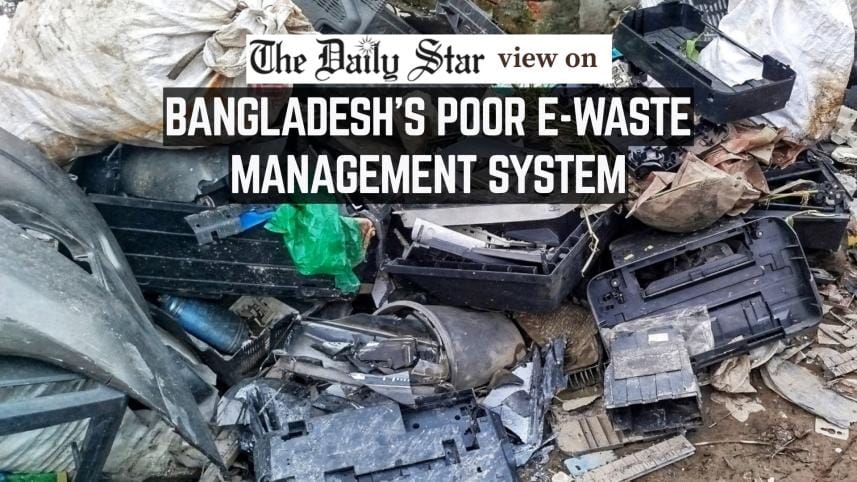
Despite the threats that improper handling of hazardous waste, particularly electronic waste (e-waste), poses to human health and the environment, it is concerning to see how governance failures continue to cripple Bangladesh's e-waste management system. The matter has come to light following the unveiling of a new study by Transparency International Bangladesh (TIB) that examined the current state of e-waste governance and found serious gaps in enforcement, coordination, and accountability.
At the centre of the problem lie the flawed design of the Hazardous Waste (E-waste) Management Rules 2021 as well as their poor implementation, with key agencies such as the ministry of environment, the Department of Environment (DoE), and customs failing to treat this issue as a priority. TIB's study finds that the scope of the rules is limited, and that many targets outlined in them remain unmet. One of the most glaring shortcomings is the continued exclusion of the informal e-waste sector from regulation. Informal collectors, dismantlers, and recyclers, despite operating across the country, remain outside the DoE's monitoring framework even four years after the rules were introduced. The risk of unregulated exposure to toxic substances for workers—especially women, who are disproportionately involved in collecting and sorting e-waste—cannot be overstated.
 For all latest news, follow The Daily Star's Google News channel.
 Moreover, the continued illegal import of e-waste and old electronic equipment, despite explicit bans, points to what TIB has rightly described as "gross negligence" by the relevant authorities. Weak inter-agency coordination, the failure to hold local government institutions accountable, and the absence of reliable and comprehensive data, along with the lack of any clear action plan or technical guidelines, have further compounded the problem. Adding to this is the fact that the rules were formulated without adequate stakeholder consultation, resulting in unrealistic provisions that do not reflect the ground realities.
Given this, TIB has placed a set of key recommendations that deserve proper follow-up. These include amending the 2021 rules to expand the definition of e-waste, particularly by including emerging sectors such as electric vehicles and solar panels. Introducing clear incentives and penalties, forming a national coordination committee for e-waste management, and issuing specific provisions for e-waste export are also essential. Equally important are detailed technical guidelines covering environmental protection and safe handling of hazardous components and disaster-related e-waste, as well as a dedicated Extended Producer Responsibility (EPR) framework for all involved, including manufacturers, importers, and marketers. Properly managed e-waste could be an important source of national revenue rather than the hazard it currently is, so the government must take it seriously.
Comments