


Dhaka’s footpath dilemma must be solved for good
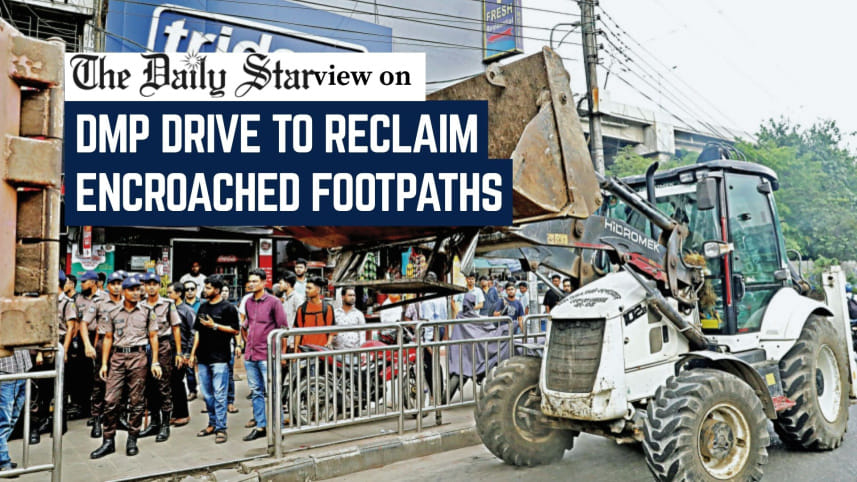
The image is familiar in Dhaka: a footpath meant for pedestrians being occupied by a row of makeshift stalls selling everything from mobile phone accessories to fried snacks. Pedestrians, squeezed onto the road, often compete with a torrent of rickshaws, autorickshaws, and buses. The pavement has thus become a marketplace, and the road essentially a pavement. The Dhaka Metropolitan Police's recent eviction drive, launched across Farmgate, Gulshan, Jatrabari, and more than a dozen other areas, is a welcome attempt to reverse this mess. The government has set a one-month deadline for visible improvement. The political will, for now, appears genuine. The question, however, is whether the authorities can continue to keep pavements clear.
Before assessing the merits of the ongoing crackdown, we must acknowledge that street vending in Dhaka is a vast, functioning, self-organised economy. Informal workers account for 84 percent of total employment in Bangladesh. A significant slice of that informality lives on the footpaths of the capital. On a single busy stretch of Farmgate, hundreds of vendors may turn over transactions worth millions of taka each day by selling goods. The supply chains feeding these stalls run deep. Behind each cart lies a wholesaler, a transporter, a smallholder farmer, or an entire household. It is an intricate web of low-margin commerce that keeps a significant portion of Dhaka fed, clothed, and employed. Street vending serves as a critical buffer for rural migrants unable to find formal employment in Dhaka. The pavement, in this sense, is a lifeline for them.

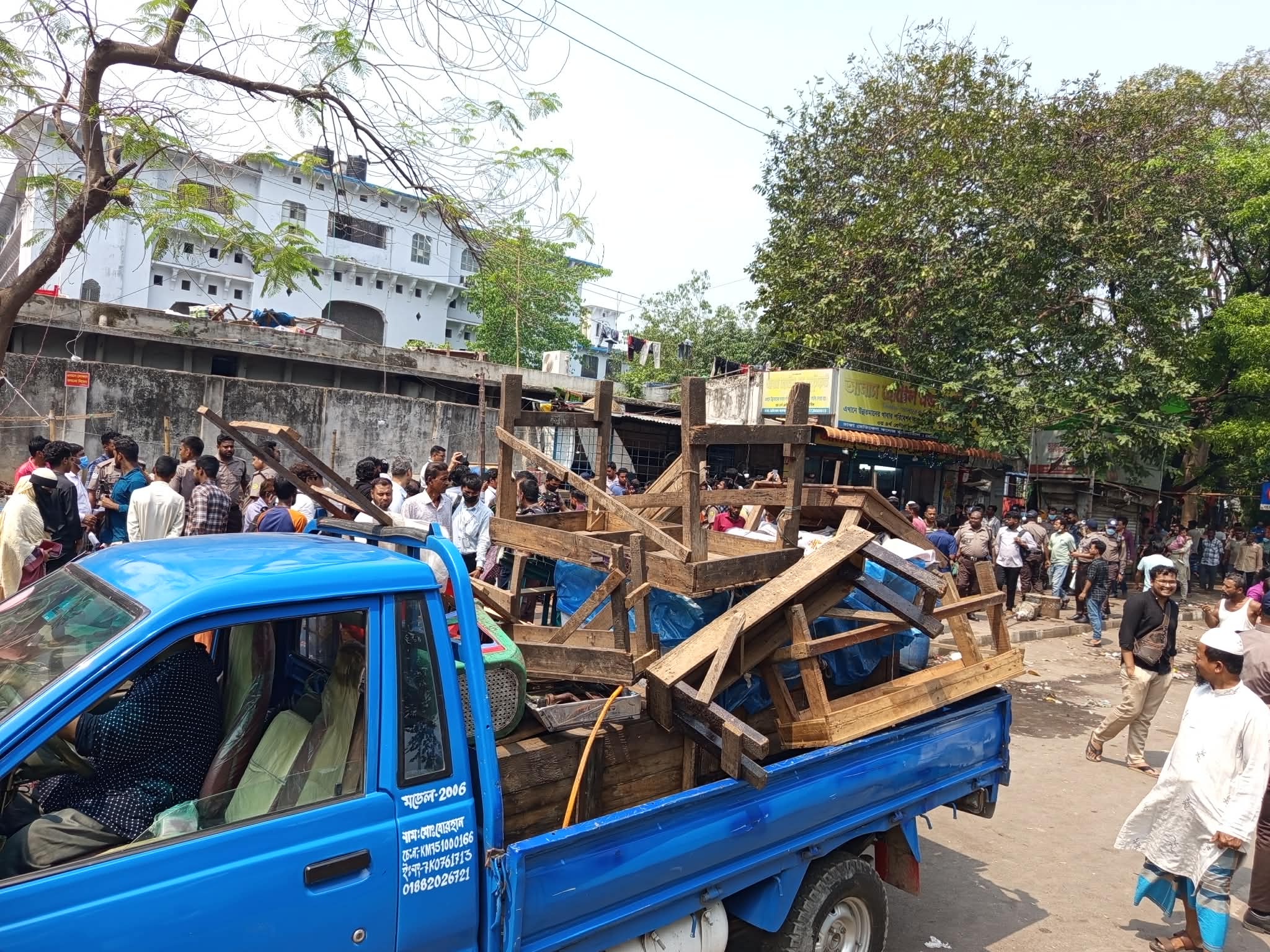
None of this is an argument against reclaiming footpaths. It is an argument for taking seriously the economic shock that evictions inflict. Many of these traders lack the capital for formal retail space, the connections to secure licences, or the savings to absorb even a week's disruption. When their stalls are dismantled, they do not disappear. They return because the footpath is often the only viable path they can afford. The city administrator's promise to "provide alternative spaces" in consultation with law enforcement is promising in principle, but the record of such promises gives little ground for optimism.
Three things are needed if the current drive is to mean something beyond the next news cycle. First, the alternative vendor markets must be in accessible locations and with affordable terms. Second, the monitoring must be institutionalised rather than episodic. The DMP's commitment to "regular monitoring" will be tested not this week but three months from now, when the political spotlight has moved elsewhere. Third, and most ambitiously, Dhaka's urban planning apparatus must begin to treat street vending as a feature to be managed rather than a problem to be periodically swept away.
The city must not leave the question of where its poor workers conduct their livelihoods perpetually unresolved. The vendors will be watching. So will the pedestrians. So, indeed, will the many thousands of families whose daily bread depends on whether the city can clear its footpaths without clearing away their livelihoods.
 For all latest news, follow The Daily Star's Google News channel.
Comments