


Selling diseased meat as 'beef' undermines public trust: Obhoyaronno
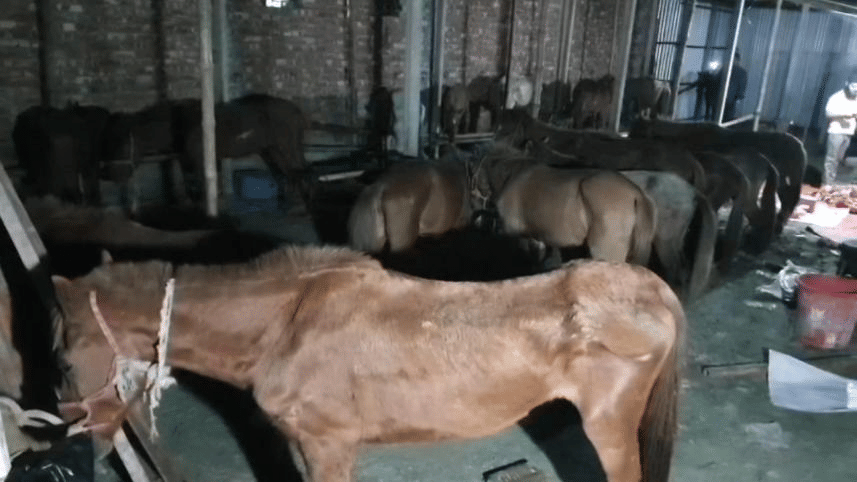
Obhoyaronno - Bangladesh Animal Welfare Foundation has raised concerns about food safety and public health after an illegal horse-slaughtering and meat-processing operation in Gazipur was exposed in November 2025.
According to a recent press release issued by the animal welfare organisation, a mobile court raid uncovered a covert slaughter site inside a cotton factory in Hydrabad, Gazipur.
 For all latest news, follow The Daily Star's Google News channel.
 Authorities found dozens of critically ill horses, carcasses, and large quantities of processed meat allegedly prepared for sale as beef.
The release mentioned that the district administration requested Obhayoronno to take emergency custody of the surviving animals.
Subsequent veterinary and laboratory examinations revealed severe health conditions, including bacterial infections, parasitic contamination, and suspected tuberculosis -- a disease transmissible to humans.
Experts cautioned that horse meat, once processed, is visually indistinguishable from beef, leaving consumers unable to detect fraud or contamination.
Officials reported that the site lacked basic sanitation, drainage, and separation between carcasses, waste, and raw meat, creating conditions conducive to contamination and zoonotic disease transmission. Risks extend not only to consumers but also to those handling and processing the meat.
“This is food fraud with serious public-health implications,” said Rubaiya Ahmed, founder of Obhayoronno.
“Consumers have the right to know what they are serving their families. When diseased animals are slaughtered in secret and sold as ‘beef,’ public trust in the food system is undermined,” she added.
The release said that the authorities acknowledged several enforcement actions against illegal horse-slaughtering operations in Gazipur since March 2025, suggesting the practice is not isolated.
However, no arrests have been reported, and the absence of supply-chain traceability makes it difficult to assess how much contaminated meat may already have entered the market.
Obhayoronno urged authorities to expand surveillance, strengthen penalties, and improve coordination among public-health, livestock, and law enforcement agencies to prevent unsafe meat from reaching consumers.
Comments