


Pets are not accessories

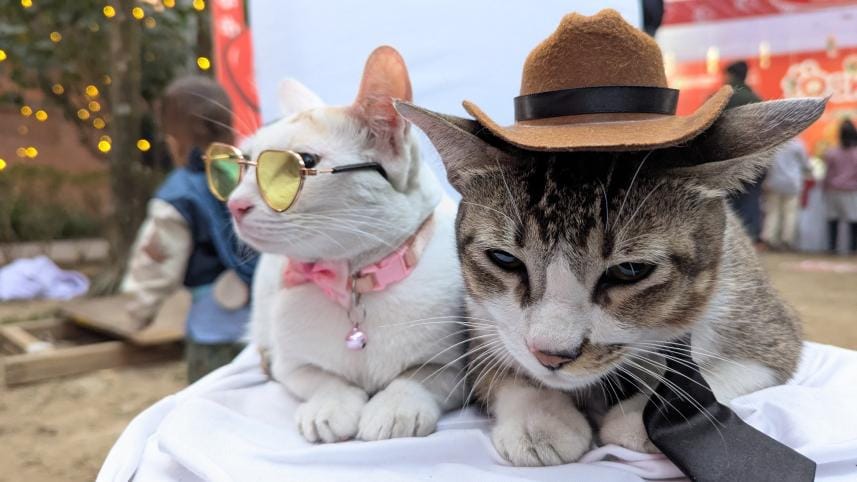
Dhaka does not easily make room for animals. It honks at them, steps around them, feeds them sometimes, and forgets them often. Yet this year, Paw Carnival 2026 arrived with colour and conviction.
On January 9, Gulshan Society Lake Park brimmed with leashes, paw prints, music, and genuine concern. For a moment, it felt less like a carnival and more like a small disruption -- the kind Dhaka so often needs.
 For all latest news, follow The Daily Star's Google News channel.
 From morning to evening, pet parents, volunteers, artists, and the simply curious gathered under the theme “An Animal-Friendly Bangladesh.” It promised celebration, but also carried a quieter question: what does kindness toward animals looks like once the music stops?
Children answered first, with paint. During Paint for Paws, they drew dogs with names, cats with attitudes, and animals that clearly belonged somewhere. Judged by artist Rakibul Amil and cartoonist Morshed Mishu, the artworks revealed honesty adults often lose -- animals were not accessories here, but companions.
The afternoon grew more serious. In a brief Healthy Paws discussion, veterinarians and welfare advocates spoke plainly about adoption, feeding, and long-term care. There were no grand declarations, just reminders: animals grow old, get sick, cost money, and need patience. Loving pets, it turned out, is less about Instagram moments and more about routine responsibility -- an idea that does not always sit comfortably in a city addicted to convenience.
Then came the Adoption Awareness Drive, hosted by Peya Jannatul. Live performances by Sovvota, Mila, Avoid Rafa, and Black Zang pulled in the crowd, but the real spotlight remained on rescued animals waiting quietly nearby. Adoption, the message insisted, is not a feel-good gesture; it is a decision that rearranges daily life.
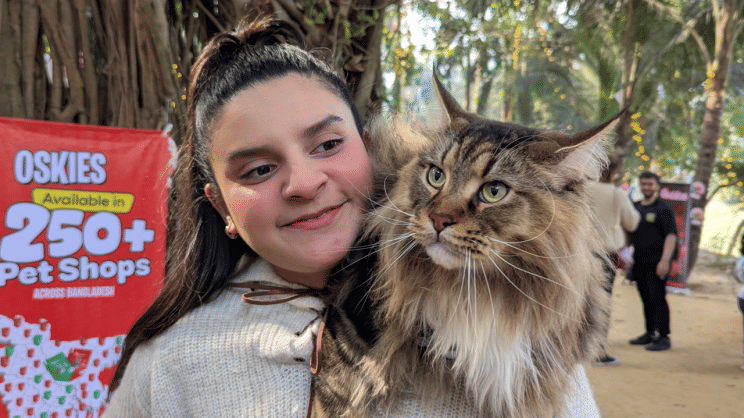
Later, a Pet Fashion Show and DJ sets kept the energy buoyant, while stalls from local food and lifestyle brands created a temporary marketplace. And that alone may have been Paw Carnival’s quiet success: it didn’t isolate animal rights as a niche concern. It folded the cause into music, art, shopping, laughter, and leisure -- reminding visitors that empathy doesn’t have to arrive as a lecture.
Organisers later described the carnival as a movement rather than an event, and for once, the phrase didn’t feel inflated. Movements often begin like this: with people showing up, staying longer than planned, and leaving with a slightly altered sense of responsibility. The sceptic, however, lingered: how many of these pets will still be wanted when they are older, noisier, or less charming?
Some owners, mercifully, answered that question before the sceptic could finish his thought. Sadia Ashraf, a development worker, spoke of her cat with a kind of solemn devotion. “I don’t see my cat as my pet. As much as she needs me, I think I need her more. She is my companion, my family. I even sold my inherited jewellery to give her the best treatment. I will probably do it again if needed,” she said.

Another young man, pausing beside a French bulldog, added a note of blunt common sense. “One thing I want to urge is that let’s not treat them like another iPhone to flex around. Owning a foreign breed has become a fashion these days. Let’s rescue and adopt the ones around us, and treat them like they have a life too, just like ours.”
Paw Carnival 2026 did what such events do best -- it created a moment. A good one. A hopeful one. For a few hours, it reminded Dhaka that empathy, however fleeting, is real.
Comments