


Iran's rulers face legitimacy crisis amid spreading unrest
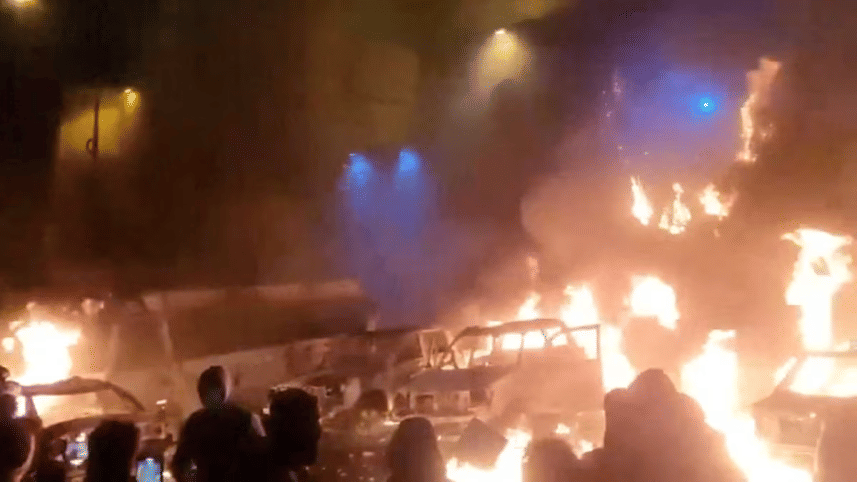
With Iran's anti-government unrest evolving rapidly and foreign pressure mounting, the clerical establishment appears unable, for now, to tackle what has become a crisis of legitimacy at the heart of the Islamic Republic.
The demonstrations, which began in Tehran last month, have spread to all of Iran's 31 provinces but have yet to reach the scale of the 2022–23 unrest sparked by the death of Mahsa Amini while in detention for allegedly violating Islamic dress codes.
Starting in Tehran with shopkeepers in the Grand Bazaar angered by a sharp slide in the rial currency, the latest protests now involve others – mainly young men rather than the women and girls who played a key role at the Amini protests.
The US-based Human Rights Activists News Agency (HRANA) has reported at least 34 protesters and four security personnel killed, and 2,200 arrested during the unrest, which analysts say highlights a deeper disillusionment with the Shi'ite status quo.
"The collapse is not just of the rial, but of trust," said Alex Vatanka, director of the Iran Programme at the Middle East Institute in Washington DC.
 For all latest news, follow The Daily Star's Google News channel.
 Authorities have tried to maintain a dual approach to the unrest, saying protests over the economy are legitimate and will be met by dialogue, while meeting some demonstrations with tear gas amid violent street confrontations.
Nearly five decades after the Islamic Revolution, Iran's religious rulers are struggling to bridge the gap between their priorities and the expectations of a young society.
"I just want to live a peaceful, normal life … Instead, they (the rulers) insist on a nuclear programme, supporting armed groups in the region, and maintaining hostility towards the United States," Mina, 25, told Reuters by phone from Kuhdasht in the western Lorestan province.
"Those policies may have made sense in 1979, but not today. The world has changed," said the jobless university graduate.
Protesters Take Over the Streets
A former senior official from the establishment's reformist wing said the Islamic Republic's core ideological pillars — from enforced dress codes to foreign policy choices — did not resonate with those under 30, nearly half the population.
"The younger generation no longer believes in revolutionary slogans — it wants to live freely," he said.
The hijab, a flashpoint during the Amini protests, is now being enforced selectively. Many Iranian women now openly refuse to wear it in public places — breaking with a tradition that has long defined the Islamic Republic.
In the ongoing protests, many demonstrators are venting anger over Tehran's support for militants in the region, chanting slogans such as "Not Gaza, not Lebanon, my life for Iran," signalling frustration at the establishment's priorities.
Tehran's regional sway has been weakened by Israel's attacks on its proxies — from Hamas in Gaza to Hezbollah in Lebanon, the Houthis in Yemen and militias in Iraq — as well as by the ousting of Iran's close ally, Syrian dictator Bashar al-Assad.
Comments