


Why Bangladesh needs a coherent maritime policy
Strategically positioned along the northern edge of the Bay of Bengal, Bangladesh exercises jurisdiction over roughly 118,813 square kilometres of maritime space. Its coastline extends more than 700 kilometres, encompassing 12 nautical miles of territorial waters and an Exclusive Economic Zone that reaches 200 nautical miles from the shore. Owing to Bangladesh’s deep dependence on international trade, with maritime ports handling about 94 per cent of all foreign commerce, the sea has become a national economic corridor.
The country’s major seaports—including Chattogram, Mongla, and Matarbari—serve as strategic gateways connecting Bangladesh with the West, the Middle East, Southeast Asia, and beyond. These ports handle the majority of international cargo, including imports of petroleum products, chemicals, machinery, and consumer goods, as well as exports of agricultural products, textiles, and garments. Notably, the garment industry alone accounts for nearly 80 per cent of total export earnings. Bangladesh’s two principal Sea Lines of Communication—one oriented towards Southeast Asia and the other towards the Middle East—are vital for ensuring the uninterrupted flow of essential commodities and energy supplies.
In recent years, Bangladesh’s major seaports have experienced significant improvements in efficiency, operational capacity, and overall performance. As the nation’s principal maritime trade hubs, these ports have strengthened their ability to manage growing volumes of cargo and container traffic through better coordination, upgraded infrastructure, and enhanced service delivery. Steady growth has also been observed across the port network, supported by ongoing modernisation initiatives and improved connectivity with national transport and logistics systems. Together, these advancements reflect Bangladesh’s expanding maritime capabilities and highlight the strategic role of its ports in facilitating international trade, attracting investment, and bolstering the country’s economic resilience and long-term development ambitions.
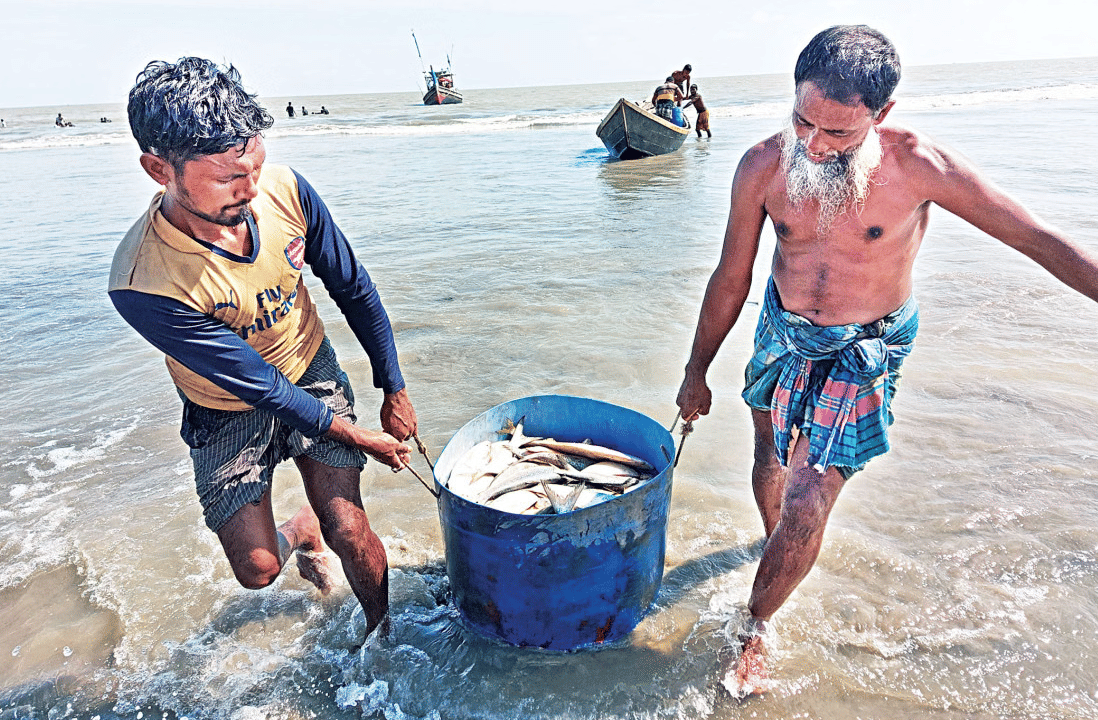
Bangladesh’s Exclusive Economic Zone is rich in fisheries, offering substantial potential for sustainable Blue Economy development. The maritime space maintains a vibrant and expanding fisheries sector, which plays a vital role in national food security, employment, and economic growth. A significant portion of the country’s total fish production is derived from its marine waters, reflecting the richness of the Bay of Bengal and its importance to coastal livelihoods. Marine fisheries continue to contribute meaningfully to domestic supply, export potential, and the overall resilience of the national economy. This growing reliance on marine resources underscores the need for sustainable management, enhanced monitoring, and capacity development to fully harness the opportunities offered by the maritime domain.
Bangladesh’s offshore oil and gas prospects present a significant opportunity to strengthen the country’s long-term energy security. The government has already designated multiple offshore blocks in the Bay of Bengal, and effective exploration of these areas holds the potential to lessen dependence on imported energy. Harnessing these resources could not only diversify the national energy supply but also enhance economic stability, support industrial growth, and reinforce the strategic importance of Bangladesh’s maritime domain. Realising this potential, however, will require sustained investment, advanced technology, and strong regulatory frameworks to ensure responsible and efficient development.
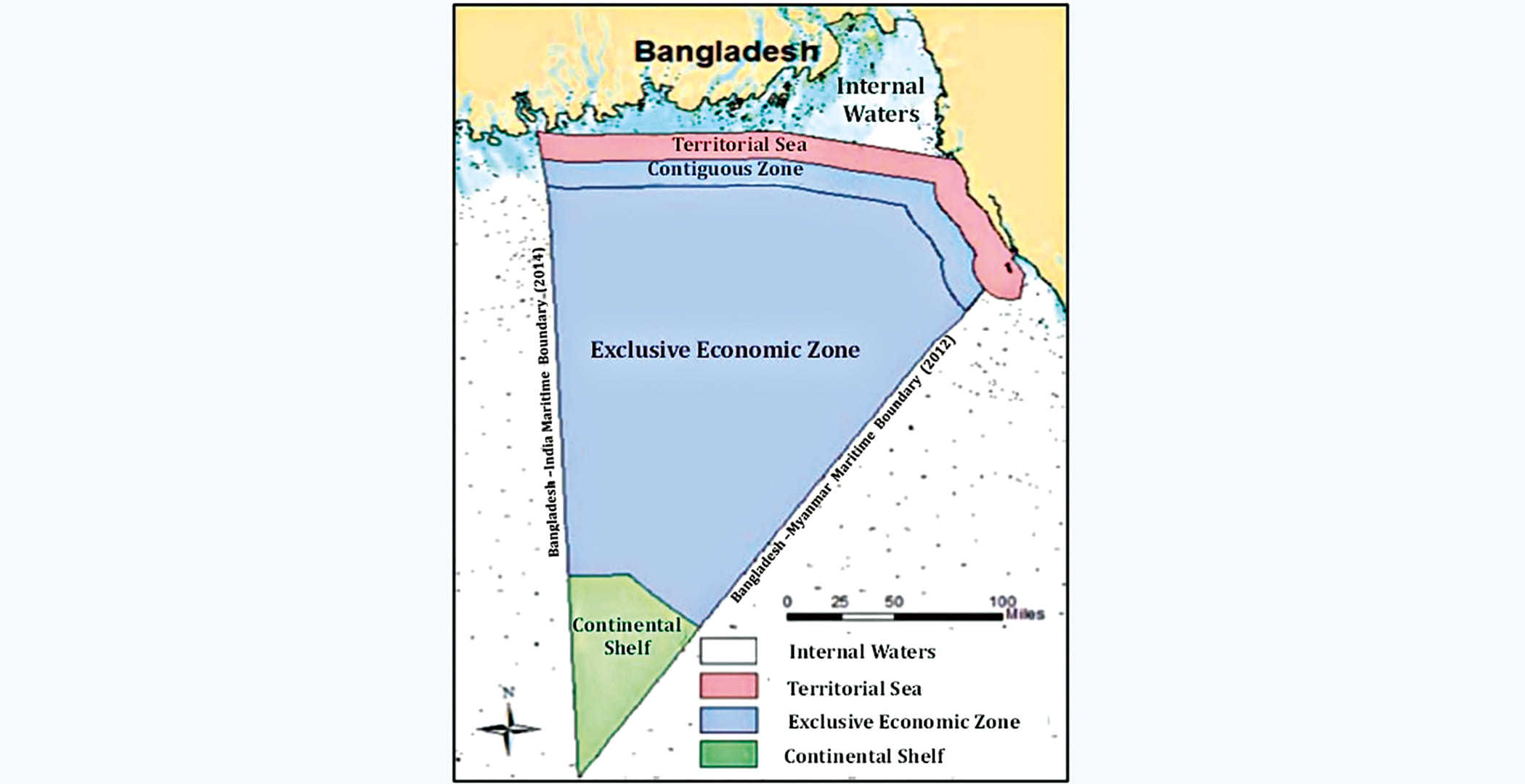
The security front in Bangladesh’s maritime domain presents a challenge that is multidimensional in nature, requiring serious vigilance and adaptive responses on a day-to-day basis. The Bangladesh Navy and Coast Guard have shown firm commitment to addressing piracy, armed robbery, and petty theft incidents around major anchorages, establishing a full presence to protect commercial shipping activities. In combating smuggling and drug trafficking, maritime security forces have stepped up patrol operations and strengthened surveillance capabilities along coastal and offshore routes, especially in potentially exploitable areas.
The humanitarian situation presented by forcibly displaced nationals of Myanmar has added layers of complexity to border security operations, requiring a balanced approach that respects both security imperatives and international obligations. In addition, the Bangladesh Navy has increased monitoring and enforcement activities in territorial waters in view of the potential threat from illegal, unreported, and unregulated fishing to fish stocks, local livelihoods, and marine biodiversity. Meanwhile, environmental and climate-related challenges, including coastal erosion, flooding, and saltwater intrusion, have called for integrated responses that combine maritime security operations with disaster preparedness initiatives to protect vulnerable coastal communities.
The Bangladesh Navy and Coast Guard are continuously developing their operational capabilities through improved coordination, technological upgradation, and regional cooperative arrangements. These ongoing efforts reflect Bangladesh’s commitment to strengthening maritime governance and developing comprehensive policies that ensure the security, sustainability, and prosperity of its maritime domain in an increasingly complex regional security environment. Although the Bangladesh Navy and Coast Guard are working relentlessly, these scenarios underscore the need for more coordinated maritime governance and comprehensive policies to ensure the security and sustainable management of Bangladesh’s maritime domain.
The vast and largely untapped maritime potential of Bangladesh, if strategically managed through a comprehensive maritime policy and a well-defined long-term strategy, could serve as a cornerstone for effective maritime governance. A robust policy framework would not only provide strategic guidance on key priorities but also facilitate systematic inter-agency cooperation, ensuring that all relevant authorities work in a coordinated and synergistic manner. So far, the Bangladesh Navy has acted as the lead agency in advancing and coordinating the country’s maritime affairs. However, establishing a central coordination mechanism would be particularly valuable in integrating the activities of various maritime agencies, thereby addressing overlapping jurisdictions and fragmented responsibilities.
The effectiveness of government policies and priorities in maritime management could be significantly enhanced through sustained investment in maritime research and development. One notable challenge is that deep-sea fishing in Bangladesh has remained largely confined to relatively shallow waters, limiting the country’s ability to fully harness its marine resources. Expanding deep-sea fishing operations to the full extent of Bangladesh’s Exclusive Economic Zone could generate significant economic and employment benefits. Furthermore, integrating more maritime-related subjects into university curricula would help develop a skilled workforce capable of supporting future growth, innovation, and sustainable development in the maritime sector.
In essence, a combination of well-articulated policy, strategic planning, scientific research, and human resource development can enable Bangladesh to fully harness its maritime resources, strengthen governance structures, and achieve sustainable and inclusive maritime development. Bangladesh has already taken important steps by establishing legal and institutional frameworks that provide a foundation for maritime management. The Territorial and Maritime Zones Act 2021 offers a legal basis for defining and administering the country’s maritime zones and jurisdiction. The Blue Economy Cell, operating under the Cabinet Division, has identified multiple sectors with the dual objectives of promoting national prosperity and addressing challenges such as climate change and poverty. Additionally, the Coastal Zone Policy, approved in 2005 under the Integrated Coastal Zone Management framework, provides general guidance for sustainable coastal management, supported by a Coastal Development Strategy that outlines policies for implementation through mainstreaming, investment, and governance measures.
In academic discourse, Bangladesh is often described as a ‘sea-blind’ nation, reflecting a long-standing land-centric mindset that has traditionally constrained the country’s engagement with maritime affairs. Although maritime issues have recently gained some attention through seminars and symposiums, these discussions have largely remained confined to academic circles. Limited maritime education and public outreach have contributed to generally low levels of maritime awareness among the population. Nevertheless, as terrestrial resources gradually decline, the nation will inevitably need to turn to the sea to sustain future economic growth, ensure food security, and support overall national development.
Given current and future demands, adopting a whole-of-government approach is essential for Bangladesh to manage its maritime affairs in a coherent, integrated, and strategic manner. Such a framework would enable the country to fully harness its maritime potential, strengthen national resilience, and advance progress towards the Sustainable Development Goals. This could be realised through the establishment of a dedicated Ministry of Maritime Affairs, under which all dimensions of maritime governance—including ports and shipping, marine energy and mineral resources, fisheries, the marine environment and climate change, coastal tourism, marine scientific research and education, and maritime policing—could be effectively coordinated.
Centralising these functions under a single authority would help reduce duplication, enhance policy coherence, and support the efficient implementation of strategic objectives. While the authority may not directly execute policies, it would coordinate and oversee the activities of multiple agencies involved in sectors such as natural resources, transportation, energy and mining, tourism, foreign investment, and environmental management. The primary goal would be to ensure that all activities are aligned with national strategies and do not conflict with one another. The authority would promote inter-agency collaboration, oversee the progress of joint programmes, track the implementation of national strategic policies and projects, and report any delays or underperformance, thereby ensuring accountability and effective governance across the maritime domain.
Adopting coherent maritime policies through a whole-of-government approach would not only demonstrate Bangladesh’s commitment to effectively managing its maritime domain but also bring together all relevant stakeholders under a unified framework to advance national interests. Well-formulated strategies are essential to clearly articulate objectives related to securing trade and commerce, safeguarding maritime resources, and ensuring the safety of life at sea. By implementing contemporary offshore policies and strategic frameworks, Bangladesh can fully realise its vast maritime potential, transition from its traditional land-centric orientation, and unlock the opportunities offered by the blue economy, fostering sustainable economic growth and national resilience.
Commodore Masudul Karim Siddique is a serving naval officer.
Send your articles for Slow Reads to slowreads@thedailystar.net. Check out our submission guidelines for details.