


How does the Eurofighter Typhoon stack up against other fighter jets?

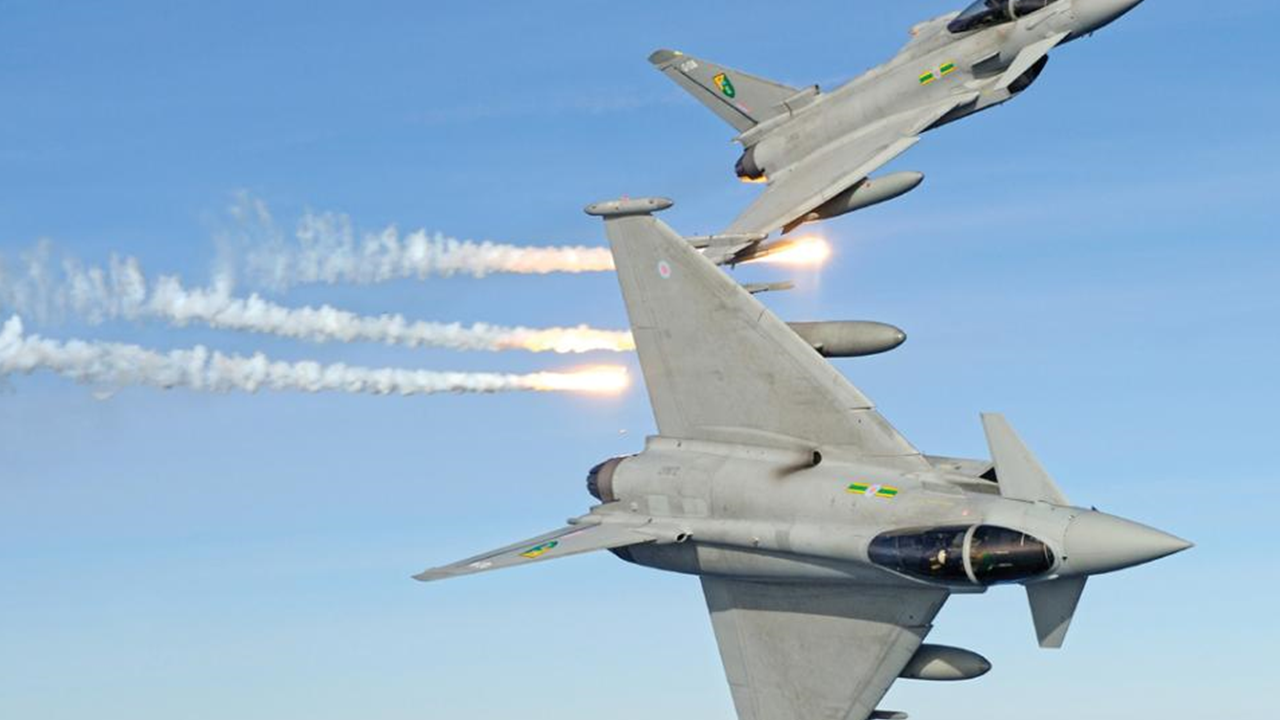
The Eurofighter Typhoon is a highly capable 4.5‑generation multirole fighter built primarily for air superiority with a strong secondary strike role, according to defence and aviation news outlets.
Developed under the Future European Fighter Aircraft programme led by Germany, the UK, and France, the Typhoon is a twin‑engine, canard‑delta aircraft designed for high thrust‑to‑weight performance, rapid acceleration, sustained supersonic flight and excellent manoeuvrability.
 For all latest news, follow The Daily Star's Google News channel.
 These characteristics make it especially effective in dogfights, quick‑reaction interceptions and high‑tempo air combat, while modern sensors and weapons give it credible ground‑attack capability.
A key distinction between the Typhoon and fifth‑generation fighters such as the F‑35 is stealth and sensor fusion.
Sensor fusion in fifth‑generation fighters, such as in the F‑35, means the jet's many sensors and data links are automatically combined into a single, clear picture for the pilot, giving faster, more accurate situational awareness, lower pilot workload, and superior networked combat effects compared to legacy fighters. The Eurofighter Typhoon lacks such advanced sensors.
The Typhoon has received upgrades -- improved radars, electronic‑warfare suites and datalinks -- that narrow the gap, but it does not offer the low observability or the deep, software‑driven fusion that make fifth‑generation superior to the 4.5.

How the Typhoon compares with other major fighters depends on mission and configuration:
F‑35 Lightning II: The F‑35's stealth, integrated sensors and networking give it an advantage for penetrating heavily defended airspace and for force‑level situational awareness. The Typhoon counters with higher top speed, strong turn performance and larger non‑stealth payload options, making it well suited to air superiority and conventional strike missions where stealth is less critical.
Dassault Rafale: Both are advanced European 4.5‑generation multirole fighters. The Rafale is often praised for multirole flexibility and sensor‑weapon integration; the Typhoon is frequently rated higher for pure air‑to‑air performance.
F‑15 variants and Su‑35: These heavy twin‑engine fighters offer long range, heavy payloads and powerful radars. The Typhoon matches or exceeds them in agility and has modern avionics, though some rivals can carry heavier loads or field longer‑range sensors depending on configuration.
Strengths
High agility and acceleration, ideal for air superiority and close combat.
Flexible weapons options, supporting a wide range of air‑to‑air missiles and precision‑guided munitions.
Mature European logistics and support networks that aid sustainment and upgrades.
Limitations
Not a stealth platform; larger radar cross‑section reduces survivability in dense A2/AD (anti‑access/area‑denial) environments.
Lacks the deep sensor fusion and low‑observable features of fifth‑generation fighters, which can limit performance in networked, contested operations.
Which aircraft is "better" depends on the mission. For stealth‑dependent penetration and highly networked operations, fifth‑generation types like the F‑35 lead. For air dominance, rapid interception and high‑tempo combat, the Typhoon remains highly competitive.
Key specifications
- Length: 15.96 m (52 ft 4 in)
- Wingspan: 10.95 m (35 ft 11 in)
- Maximum speed: ~Mach 2.0 (≈2,495 km/h)
- Range: ~2,900 km (1,800 mi)
- Service ceiling: Above 15,240 m (50,000 ft)
- Thrust: EJ200 engines, total ~90 kN combined
Sources: TurDef, Simple Flying, Aero Corner
Comments