


Water chestnut cultivation turns wetlands into profit
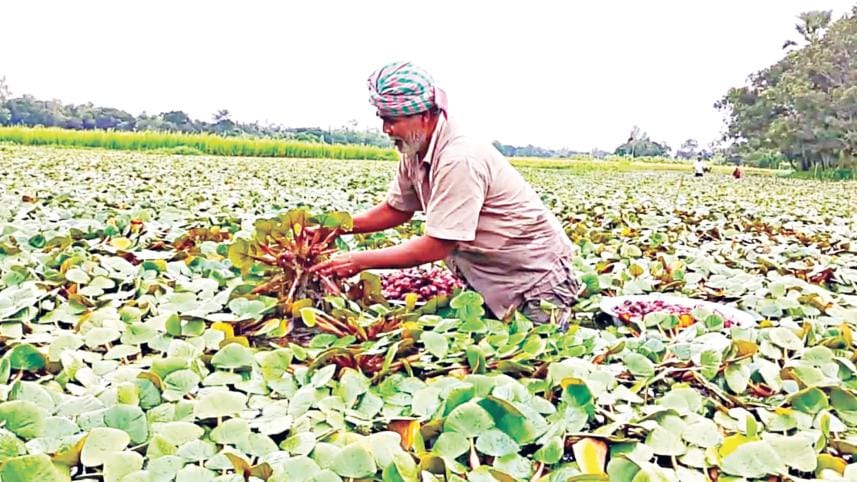
Farmers in Jamalpur's Dewanganj upazila are turning fallow, waterlogged lands and marshes into productive fields by cultivating water chestnuts (Eleocharis dulcis).
As a result, neglected wetlands are becoming a steady source of income for many families.
 For all latest news, follow The Daily Star's Google News channel.
 Water chestnut is a grass-like sedge native to Asia, tropical Africa and Oceania. It grows in marshes, underwater or in mud, and is cultivated as an aquatic vegetable in many countries for its edible bulbs.
Dewanganj upazila, surrounded by rivers and vast wetlands, offers ideal conditions for its cultivation.
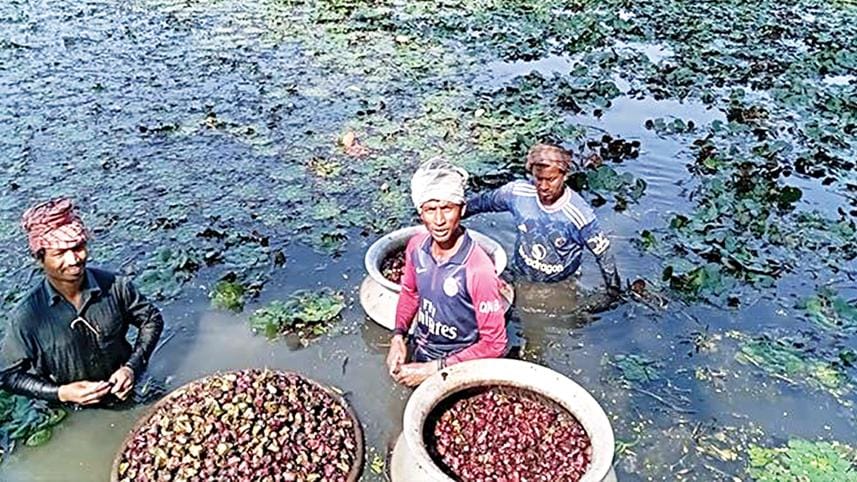
With production on the rise, a wholesale market has sprung up beside Dewanganj Railway Station, drawing traders from across the country. According to the market's leaseholder, 8 to 10 tonnes of water chestnuts are sold daily.
Data from the Dewanganj Upazila Agriculture Office show water chestnut has been cultivated on 39 hectares this season.
"I cultivated water chestnut on four bighas, spending Tk 7,000. I have already sold bulbs worth Tk 35,000 and expect to earn another Tk 35,000 from the remaining 25–26 maunds in the field," said Alfaz Hossain of Dalbari village.
In retail markets, ripe water chestnuts sell for Tk 30 and unripe ones for Tk 20 per kilogramme, while wholesale prices range from Tk 1,300 to Tk 1,400 per maund for ripe ones and Tk 500 to Tk 600 per maund for unripe bulbs.
The seasonal market runs from early October till late December.
"Water chestnuts can be cultivated in any waterlogged land or wetland. We are encouraging farmers to expand cultivation to make better use of fallow land in the upazila," said Ratan Mia, upazila agriculture officer in Dewanganj.
Comments