


Rising salinity threatens lives and livelihoods in coastal Bangladesh
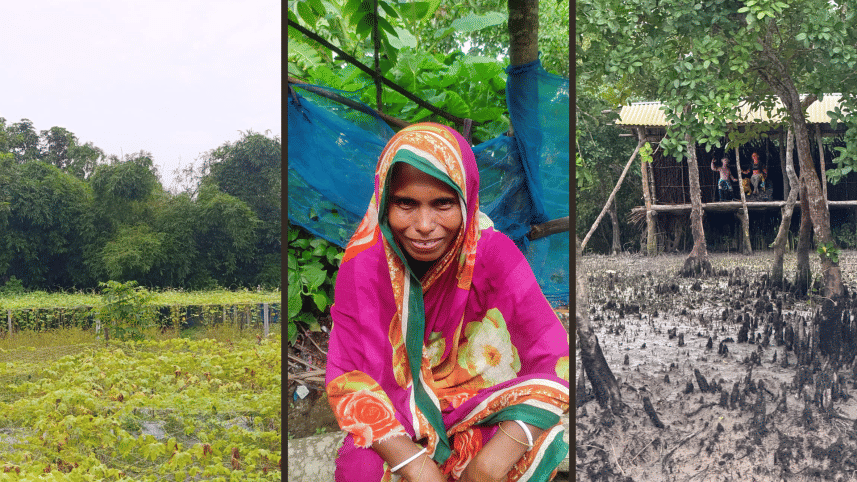
Imagine waking up after a long night's sleep and heading to the washroom to freshen up. You turn on the tap to brush your teeth, only to find that the water tastes like the sea, as if you've swallowed a mouthful of saline solution. Hoping for a better start, you set a pot of water on the stove for your morning coffee, but even that first sip is ruined by the same briny taste lingering in your mouth. Within half an hour of waking up, your morning feels spoiled. For the people of Gabura Union of Khulna's Shatkhira district, however, this is not an occasional inconvenience; it's their everyday reality. The water they depend on for drinking, cooking, and bathing carries the sting of salt, a constant reminder of the worsening salinity intrusion in Bangladesh's coastal belt.
Home to 38,825 men, women, and children, as of 2023, water is a significant challenge for the remote island union of Gabura in Shyamnagar Upazila. Saltwater intrusion, coupled with rising sea levels, is a silent threat that is seeping into the low-lying homes and fields of residents in coastal areas. From the winding rivers of Khulna to the shrimp farms of Satkhira, saltwater is steadily pushing inland, not just into the soil and shrimp ponds, but into the very water people drink and bathe in.
 For all latest news, follow The Daily Star's Google News channel.
 Where does the salt come from?
The entirety of Khulna and its constituents are extremely low-lying areas, with studies suggesting an average elevation or height from sea level of 2-6 meters. When river flows shrink in the dry season and sea levels rise, salty seawater pushes inland through rivers and canals, turning wells, ponds, and irrigation systems salty and threatening clean drinking water. Exacerbating the situation, research shows that the region is sinking faster than the global average rate at 6-21 meters. These areas are currently experiencing salinity levels of 10 ppt or parts per trillion, which may increase to 15-25 ppt by 2050.
A daily battle for fresh water
One report by the World Bank calculates that by 2050, soil salinity in parts of Bangladesh could rise by more than 25 per cent, threatening rice yields and reducing farmer incomes. However, the females of the coast are grinning and bearing the load of salt, as they are the only medium of freshwater for many families of Gabura. Thousands of women have to invest several hours every day in the pursuit of a few liters of fresh water, surrounded by the salty tides of the Kholpetua and Kapotaskha rivers-a task that has turned grimmer with each passing year. During the dry season, when rivers and ponds become brackish, women are often forced to walk distances of two to five kilometers with heavy pots to fetch fresh water. Many spend as much as 20 percent of their income buying treated water from vendors. Others rely on unsafe ponds, exposing them to skin diseases, stomach infections, and reproductive health problems.
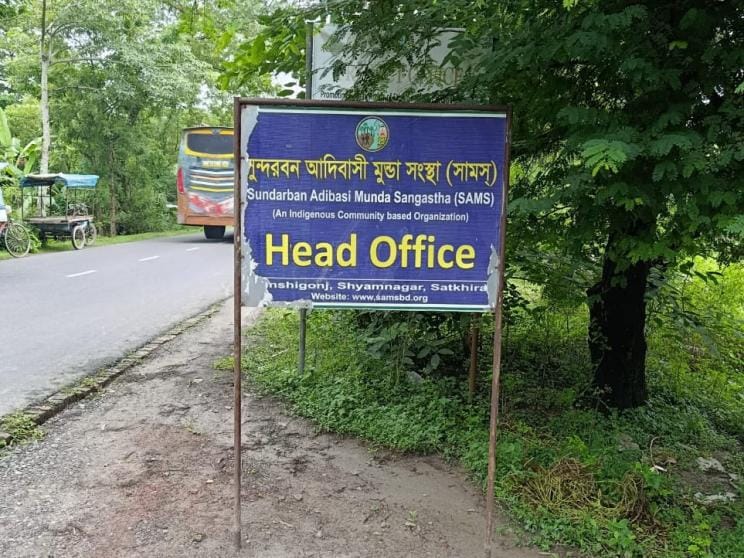
"This salty water is killing us, destroying all our dreams," said Asma Akhter, 25, of Gabura, who has suffered chronic health problems from using saline water.
Salt in her cup, weight on her shoulders
Women bear the hidden cost of saltwater intrusion, not just in their homes, but within their bodies. The stakes are particularly high for expectant mothers. Research shows that women who drink highly saline water (over 300 mg/L of salt) face a 3.3 to 5.5 times higher risk of pregnancy-related hypertension than those who consume less saline water. In coastal areas, women during the dry season can ingest 5–16 grams of sodium a day just from drinking water, compared to only 0.6–1.2 grams in the wetter months.
Durga Rani Munda, 47, broke down in tears as she described her helplessness and frustration. Skin infections and salt rashes are common, she said, but what hurts more is how men and society often ignore the more intimate struggles women endure. "We rarely have access to sanitary pads," she explained softly. "Most of us use old pieces of cloth, wash them in salty water, and reuse them. Some even take period-stopping pills just to avoid the pain and shame."
Salted water, silenced women
We all discuss the economic losses; how salty water is going to destroy our agriculture and our shrimp industry, how the call for action is getting louder with each passing day, but no one has the slightest idea about how such a disaster is a gendered disaster. A gendered disaster is any natural event that negatively affects one gender disproportionately than the other. A gendered disaster is one that quietly erodes women's health, dignity, and agency. While men often migrate or find new livelihoods, women remain behind to manage households, fetch water, and care for the sick, absorbing the brunt of the crisis in silence. Yet their suffering rarely enters public conversation. Cultural taboos around menstruation and reproductive health keep many women from voicing their pain, even when it turns chronic or life-threatening. In this silence, salt doesn't just corrode the water; it corrodes women's confidence, rights, and their place in decision-making.
Turning the tide
Bangladesh's coastal crisis is can be reversed with commitment, coordination, and compassion. The first step is to protect freshwater sources through sustainable embankment repair, better river flow management, and stricter control of unplanned shrimp farming that accelerates salt intrusion. At the community level, rainwater harvesting, pond-sand filters, and solar-powered desalination plants have shown promise — but these must be scaled and maintained, not left to decay after project cycles end. The most impactful initiative would stem from the international community. A victim of climate injustice, Bangladesh bears the burden of damage done by developed countries. This exacerbates the need for a Loss & Damage Fund. A Loss & Damage Fund, or L&D, is a financial mechanism introduced by the UNFCCC to combat the losses of unavoidable climate change events. As of 2023, only $700 million, or 0.2 per cent of the targeted fund, has been pledged.
The promises may have dried up, but hope has not. The saltwater may rise, but so do the voices of women like Shefali Bibi — strong, tired, and unyielding. Unless these voices guide the response, our solutions will stay half-built. It is time to listen, to act, and to let equity, not technology, be the current that turns despair into resilience.
Photo: Raina Mahzabin
Comments