


Ezmat Naz Haque reveals the reality of fashion business
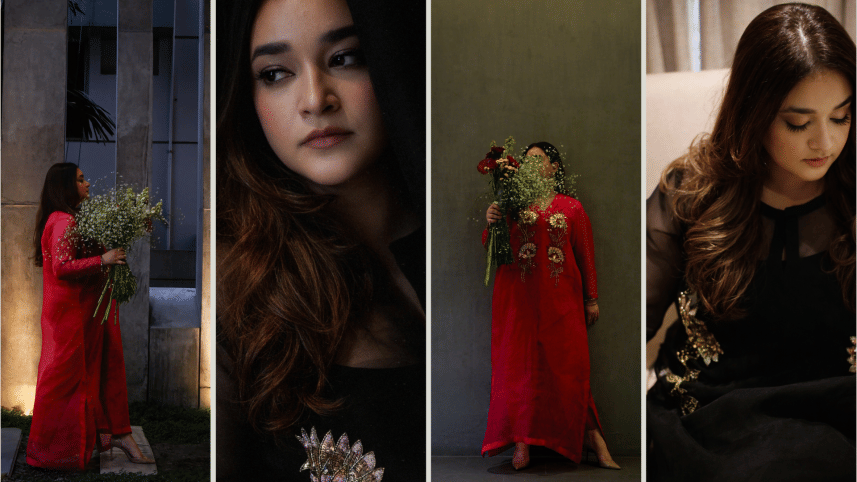
For nearly a decade, Ezmat Naz Haque, the founder of clothing brand Rima Naz, has existed between two identities: the designer who loves experimentation and the entrepreneur who must make practical decisions to keep a business alive. Today, as she rebuilds her brand after a break, that tension has become the most defining part of her story.
Her first venture was not clothing but handmade clutch bags. Working from home with the help of a friend, she experimented with colour combinations and fabric choices, eventually creating small collections that she displayed through informal exhibitions during Pahela Baishakh, Ramadan, and Eid.
 For all latest news, follow The Daily Star's Google News channel.
 Those exhibitions taught her something important: creativity could become a profession.
That realisation led her to study fashion design at Raffles Design Institute, eventually completing her graduation in Bangkok before returning to Bangladesh to establish her brand, Rima Naz, named after her nickname and family name.
While many young designers spend years trying to get their work noticed, Ezmat's journey unfolded differently.
While still studying, she began participating in fashion shows. One of her earliest independent showcases was in 2012. More opportunities followed.
By the time she formally launched her business in 2015, her work had already appeared on major platforms, including Bangladesh Fashion Week and Fashion Design Council of Bangladesh (FDCB) showcases.
"My business was not that developed then," she recalls, "However, my brand became very well-known because of the shows."
Those years shaped her identity as a designer. They also exposed her to some of the country's most respected names in fashion.
"I was the youngest among the senior FDBC designers," she recalls. "I learned a lot from people like Maheen Khan, Shahrukh Amin, and Emdad Hoque."
Rima later discovered that creative success and business success are not always the same thing. "The creative side was much more prominent before," she says. "Now that I'm doing business, things feel very different," she informs.
The fashion industry she returned to after her break was not the same one she had left. Social media has become the dominant marketing tool. Competition has intensified.
At times, she found herself worrying less about design and more about operational realities.
"Sometimes, instead of enjoyment, I feel tension about rent, staff, customer demands, and maintaining creativity." The experience forced her to rethink her role. No longer just a designer, she had become a manager, recruiter, strategist, and problem solver.
One of the designer's most difficult experiences occurred while preparing an Eid collection. She had developed plans, invested in production, and hired workers to execute the designs. Then everything began to unravel.
Workers failed to meet deadlines. Communication broke down. The workplace atmosphere became increasingly toxic. Eventually, she had to let several employees go, bringing production to a standstill just before one of the most important retail periods of the year.
"It was a huge setback," she shares.
The experience was painful, but it also changed how she approaches business. "Now I know there must always be a backup plan."
For Ezmat, entrepreneurship has become an education that no fashion school could provide. Interestingly, she has little interest in chasing trends simply because they are popular.
She points out that many of the materials currently receiving attention, such as Jamdani, Khadi, Rajshahi Silk, and Katan, are fabrics she has worked with for years.
"The exposure is different now," she says. Her view of fashion is refreshingly pragmatic. Trends come and go. Silhouettes disappear and return. History constantly repeats itself.
Rather than obsessing over novelty, she focuses on interpretation.
"There isn't much left to create that's completely new," she says. "We get inspired, and history repeats itself."
Today, Ezmat is focused on rebuilding.
She wants to expand her audience, collaborate with artisans, and create work that balances commercial success with artistic expression. "I don't want it to be just business," she says. "Alongside business, I want to see my brand artistically."
For someone who began by decorating scraps of fabric and selling handmade bags from home, that ambition feels consistent.
After all, her story is not really about fashion. It is about persistence.
The runways, the collections, the trends, and the social media campaigns may change. What remains constant is the willingness to begin again, even when starting over feels harder than starting for the first time.
Photo: Courtesy




Comments