


When a small crack becomes a crisis: The truth about giant toenail infections
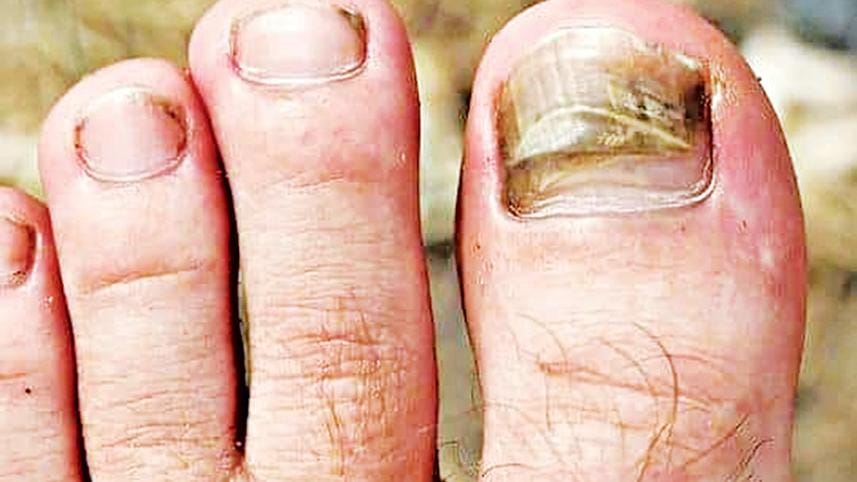
Toenail infections might seem like minor inconveniences, but medical experts warn they can spiral into severe complications if ignored. Known in medical terms as onychomycosis or paronychia, these infections occur when fungi, bacteria, or sometimes even viruses invade the nail structure, particularly the nail bed, nail fold, or nail plate.
Most people dismiss early signs like nail thickening or mild discolouration. But those small changes often mark the beginning of a deeper infection that can affect walking, mobility, and even general health in diabetic patients.
 For all latest news, follow The Daily Star's Google News channel.
 How the infection begins: The infection usually starts when small cracks, cuts, or injuries develop around the nail fold or nail bed. These tiny entry points become gateways for fungi or bacteria, especially when the feet are kept in damp, warm conditions.
Hidden causes beneath the nail: Several key factors that increase vulnerability: prolonged moisture, poor foot hygiene, and tight footwear that compresses the nail fold. Many patients unknowingly damage their nails by cutting them too short or rounding the edges, which leads to ingrown nails and infections.
Underlying health conditions like diabetes, circulatory disorders, or weakened immunity can further elevate the risk. Shared nail tools or footwear, particularly in gyms and salons, also act as silent carriers of fungal spores.
The infection cycle: What begins as a small injury can rapidly progress. First comes nail fold damage, followed by microbial invasion of the nail bed. The area becomes painful and inflamed, then the nail thickens and discolours, turning yellow, brown, or chalky white. If neglected, secondary infections involving bacteria or even viruses may develop.
Expert-backed management: Early detection is crucial. If the nail starts thickening or separating from the bed, don't wait. Start treatment immediately. Basic hygiene is the first line of defence: washing feet daily, drying between toes, and wearing breathable footwear.
For mild cases, topical antifungal creams or medicated nail lacquers containing terbinafine or ciclopirox can help. For more advanced infections, doctors may prescribe oral antifungal medications.
Some natural remedies, such as tea tree oil and diluted vinegar soaks, have shown mild antifungal effects in research. However, home remedies can complement medical treatment but should never replace it. If the infection causes severe thickening, pain, or discharge, a podiatrist may need to partially or fully remove the affected nail to allow healthy regrowth.
Prevention is easier than cure: Healthy nail care habits are the simplest protection. Keep toenails clean and dry, avoid walking barefoot in communal areas like pools or locker rooms, and disinfect nail tools regularly. Always choose shoes that allow adequate air circulation and toe space.
Toenail infections are not merely cosmetic. They are a reflection of how well we care for our feet, one of the most neglected parts of the body. The takeaway is clear: a toenail infection does not start as a giant problem, but it can quickly become one. With attention, hygiene, and timely medical care, it is entirely preventable and curable.
The article is compiled by Raisa Mehzabeen, founder & CEO of Nutrition For Change. E-mail: raisameh20@gmail.com
Comments